In this guide 6 sections
Compression needs preform weight and cutting records, transfer adds pot and sprue handling, and injection depends on shot size, barrel temperature and cure time per cycle. The differences change how you schedule presses, cost scrap and track mould changes, so record each process on its own terms.
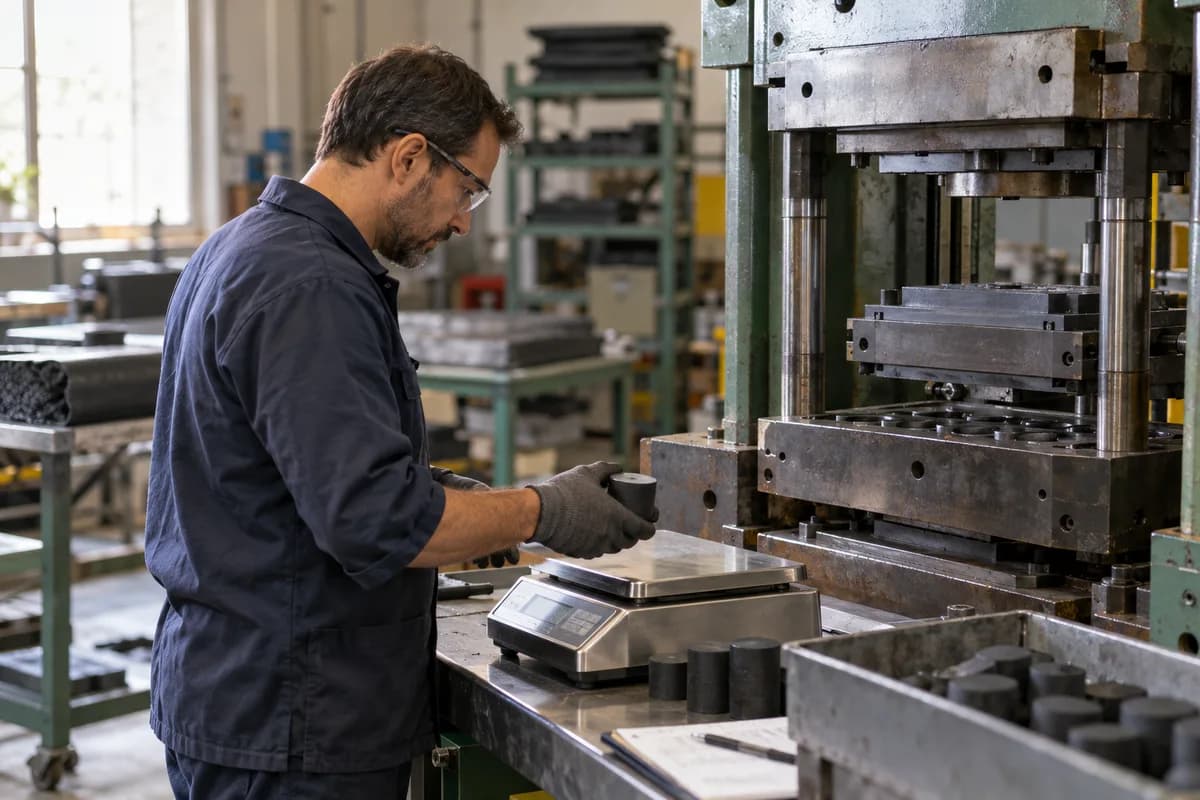
Compression moulding records the preform
In compression moulding a cut slug of compound sits in the open cavity and the press closes on it. Weight is everything. Too light gives short fills, too heavy gives flash and wasted compound.
Record the preform weight band, the cutter or extruder used and the compound batch. Add press platen temperature, cure time and bump count. Loading is manual, so also note the operator, since that is where most variation enters.
Because the press is open when loading, small mistakes show immediately in the first part. Ask the operator to weigh the first preform of each run and note it. That check takes seconds.
- Preform weight band and cutting method
- Platen temperature and cure time
- Number of bumps or breathes
- Operator and cavities loaded
Transfer moulding adds the pot and sprue
Transfer moulding places compound in a pot above the cavity and a plunger pushes it through sprues. It suits inserts and bonded parts. The mould is more complex and it leaves a cull and runners.
That waste has to be recorded or your costing will be wrong. Weigh the cull and runner per cycle against the part weight. Record insert lot, adhesive batch and pre-bake for bonded work, because rubber to metal bond failure is the defect customers hate most.
Bonded work needs the metal pre-heated and the adhesive layer within its open time. A cold insert in the cavity gives a weak bond that passes visual checks and fails later in service.
Injection moulding records the shot
Injection forces warm compound from a screw barrel into a closed hot mould. Cycles are short and automatic, so records come from the machine. Capture shot size, barrel zone temperatures, injection pressure, mould temperature and cure time.
Cold runner or hot runner design affects waste. Alongside the cycle data, log mould changeovers and the time to reach cure temperature. A mould that takes long to heat after a change eats into the run that follows.
- Shot size and cushion
- Barrel zone and mould temperatures
- Injection pressure and speed
- Cycle time and changeover time
What the differences mean for scheduling and costing
Compression suits short runs and large or low-volume parts, with labour as the main cost. Injection suits long runs of small parts, with the cost carried by the mould and the machine hour. Transfer sits between, and its waste lands in compound cost.
So the costing sheet changes. Compression costs per operator hour and preform loss. Transfer adds cull weight. Injection costs per machine hour and mould changeover. Scheduling follows the same split: batch compression by compound and cure temperature, and group injection jobs by mould and compound.
Do not forget tooling cost per part. A multi-cavity injection mould is expensive, so a worn cavity hurts more there. A compression mould is cheaper to replace but is handled by people more often, which brings dents and drops.
Pick records before you pick the line
If you are choosing or expanding a line, ask which records your customers will demand for each part family. Parts with metal inserts or tight tolerance lean on transfer or injection data.
List your three highest-volume part families and mark the process each one uses. Then check whether the records above exist for each today.
Moulding process record comparison
One worksheet page with three columns for compression, transfer and injection. Rows cover the key control, the weight or shot record, temperature fields, cure time, waste per cycle, mould handling, and the costing basis. A blank fourth column lets you mark which fields you capture today.
Open a blank worksheet to printQuestions owners ask
Which moulding process creates the least waste?
Injection with a cold-runner-free or hot runner design usually wastes the least compound. Transfer wastes the most through cull and runners, so record it.
Why is preform weight tracked so closely?
Because it sets fill and flash in compression work. A tight weight band reduces both short parts and wasted compound.
Can one mould record work across all three processes?
The mould identity, shot count and repair history can be shared. The process fields differ, so keep separate process sections under one mould record.
How does software help with costing here?
It can apply the right basis to each job, such as operator hours for compression or machine hours for injection, and add measured waste automatically.