Technology that
moves your
business forward.
Business software. Custom engineering. Practical AI. We connect the technology behind your business, so your people can get on with their work.
Built in Bengaluru. Working with businesses worldwide.

One technology partner.
Built around your next step.
Start with a specific need. Bring the right software, engineering and support together as your business grows.
Business software
Industry products and connected modules for the work your team does every day.
Custom engineering
Web platforms, mobile apps and custom systems shaped around your business.
AI & automation
Practical AI for repetitive work, with people in control of important decisions.
Cloud & reliability
The infrastructure, security and ongoing care behind dependable software.

to the final delivery.
Connect the work.
See the whole business.
Sales in one tool. Stock in another. Reports in a spreadsheet. We help you bring the records, handoffs and decisions into a system that fits your team.
- Sales & customer relationships
- Finance & accounting
- People & everyday operations
- Inventory & fulfilment
What would you like
to make work better?
You don’t need a technical brief.
Start with the challenge in front of you.
Bring the everyday work together.
Start with software for your trade, then shape the records, approvals and reports around your team.
- Orders, billing and stock
- Clear responsibilities
- One view of the business
Real businesses.
Useful software.

PetSeva: matching owners to the right vet, at any hour
A two-sided veterinary platform where vets are searchable by specialisation and bookable outside clinic hours. It now carries more than 2,000 veterinary doctors.
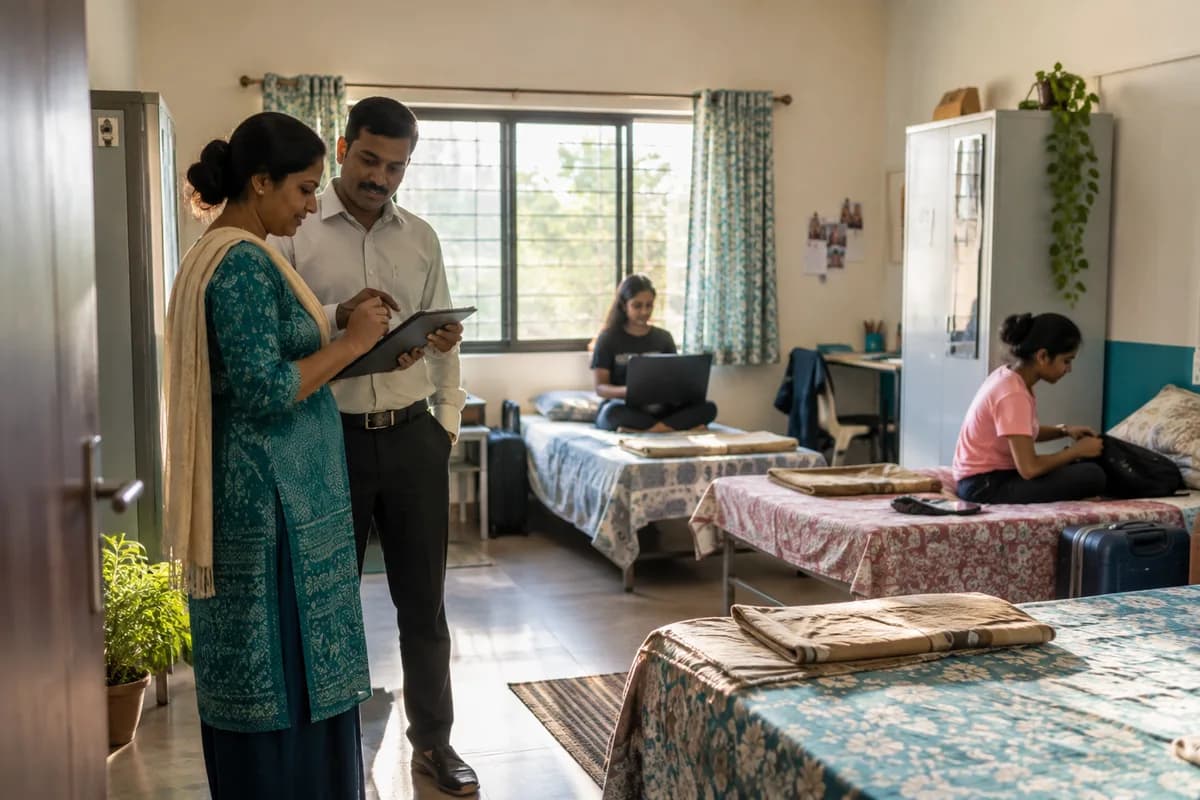
SAM Atithi Pavathi: bed-level occupancy as the source of truth
PG management software where allocation, rates and invoices are derived from bed-level occupancy and not maintained in parallel spreadsheets.
Different businesses.
The details matter.
A clinic, a factory and a distributor work differently. Start with the workflows that matter in your industry.
Clear decisions.
Visible progress.
Work directly with the people building your software. See what is happening and know what comes next.
- 01
Understand the work
Walk us through your process, your tools and the bottleneck. We start with the people doing the work.
- 02
Agree the first release
Review the scope, screens and priorities. Know what is included before development begins.
- 03
Build and review together
See working modules, test them with your team and make informed decisions as the system takes shape.
- 04
Launch with a plan
Move your data, train your people and receive the code and documentation, with support agreed in advance.
Your scope, source code, documentation and handover belong in the plan from day one.
A little clarity.
A better next move.
Tally XML, TDL and ODBC: what each integration route involves
Read the guide From the journalTally and WooCommerce integration: orders, taxes and stock
Read the guide From the journalTally and Shopify integration: orders, fees and payouts
Read the guideWhat does GullySystem do?
GullySystem is a software company in Nagarbhavi, Bengaluru. It builds custom management systems and web platforms for small and mid-sized businesses in India and abroad. The work comes in two forms: ready-made industry products for trades such as paying guest accommodation, clinics, bakeries and pest control, and engineering services, which cover custom development, e-commerce, MVPs, AI, cloud and DevOps.
Is custom software needed, or will an off-the-shelf tool do?
An off-the-shelf tool suits a process that looks like most other businesses’. Custom software suits cases where the tool forces a change to how the business already works, where the real numbers sit in a side spreadsheet, or where two essential systems do not connect. If none of these applies yet, we say so.
Do you build AI into business software?
Yes, for specific jobs such as answering customer questions, reading invoices, ranking enquiries, forecasting stock or flagging unusual payments. Each one works from records the business already keeps, and a person approves anything that matters. There are pages for each department, from sales and support to finance and procurement.
How long does it take to get something working?
Three things decide it: how many of your forms and registers the first version must carry, which systems it has to connect to, and how quickly your side can answer questions and check screens. The first usable version covers the part that hurts most today and goes into daily use before the rest is built. The proposal names what is in that first version, what follows it, and the dates for each. Nothing is promised before the scope has been read.
What does it cost, and how is the quotation made?
A quotation is built from the scope rather than a rate card: the modules in the first version, the number of sites and users, the systems to connect, and whether records must be moved from Excel, Tally or an older system. A ready industry product starts from a configured base, so it is quicker to quote than a custom build. The proposal shows the price against each part, so you can take a part out and see what changes. No figure is given before the scope has been read.
Does it handle local taxes and payment methods?
Billing is set up for the tax and payment rules where you trade: tax invoices and the splits a trade uses, wholesale and retail tiers where relevant, and payment by card, bank transfer, wallet or cash. For businesses in India that includes GST invoices and UPI. Rent, fees and instalments are collected and reconciled the way your customers already pay. What applies to a given business is a matter for its own accountant.
What happens after launch?
The team that designs and builds a system also maintains it, including backups, server uptime, updates and fixes. The code is documented and owned by the client, so a later developer can continue the work.
Do you work with small businesses or only large companies?
Small and growing businesses are the core of the work, including hostels, distributors, clinics, bakeries, transport operators and self-help groups. The usual starting point is a business that has outgrown Excel sheets and paper registers.
Do you work with businesses outside Bengaluru?
Yes. The office is in Nagarbhavi, Bengaluru, and the team works with businesses across India and in other countries, including systems running in rural Karnataka. Projects run remotely through calls, shared demos and written updates.
How does a project start?
Describe the process that costs time or money. A senior engineer reviews what is sent and replies within one business day, and no commitment is needed to start the conversation.
Choose the right starting point.
The first useful decision is which part of the operation needs to change.
A product when the workflow already fits
Compare an industry product with your records, user roles and exceptions. Identify configuration and data preparation before assuming a custom build is needed.
An engineering engagement when the gap is specific
Bring the system you already run, the task that breaks and the result you want. The scope can focus on a connection, a new workflow or a safer way to maintain existing software.
Let’s build what your business needs next.
Tell us where you are today and what you want to improve. We’ll help you work out a practical way forward.
What happens after you share your requirements
- A senior engineer reads your answers. Nobody phones first.
- Within one business day you get a written note: what we understood, what we would start with, and the questions we still have.
- If it fits, a proposal follows with the order of work, what we need from you and what you receive at each step.
- No call is booked and nothing is paid until you have read the note. Your details stay with us.
Start with your requirements
Seven short steps that tell us what you need. A senior engineer reads them before anyone gets in touch.
Share your requirements