In this guide 6 sections
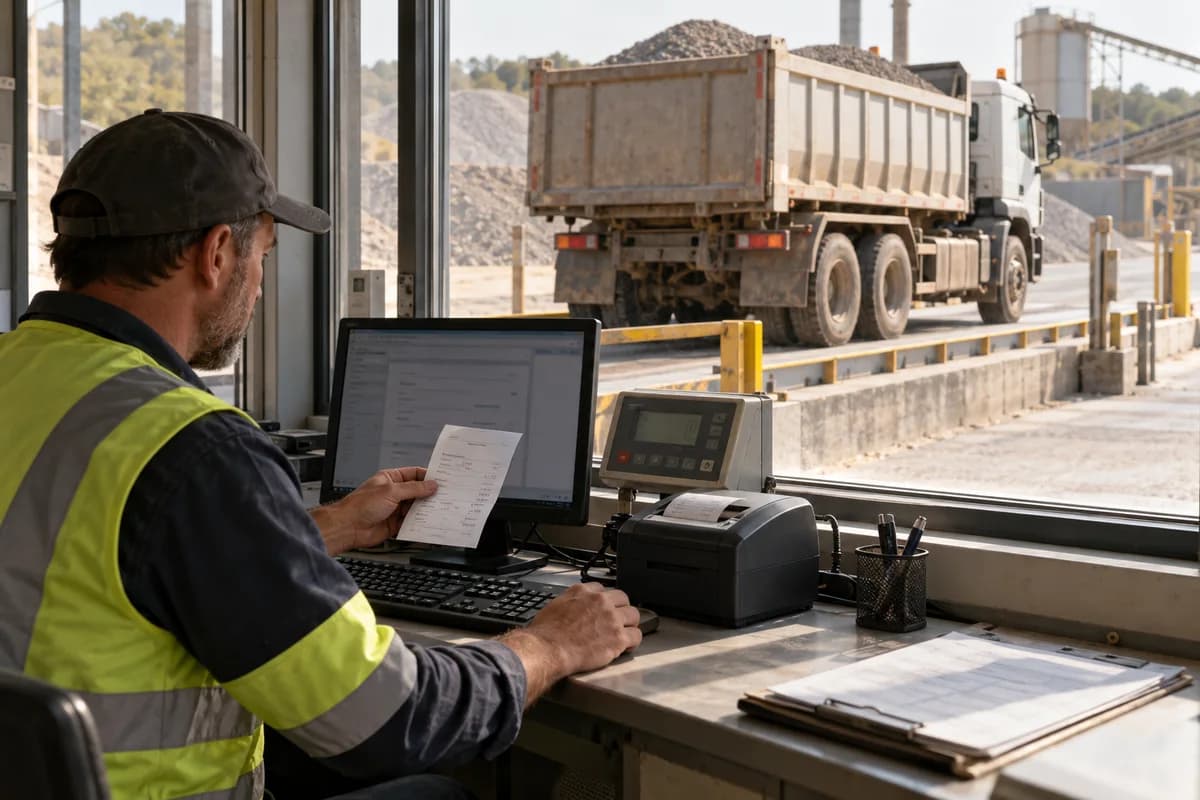
Let the weighbridge write the weight once, then make every later document read it. The gross and tare readings tie to a vehicle and an order, the net weight feeds the gate pass, and the invoice and grade-wise stock pick it up. Nobody retypes a figure from a slip.
Where the retyping happens today
Walk the path of one outbound truck. The driver weighs empty, loads sponge iron lumps at the product yard, weighs again and collects a printed slip. The dispatch clerk then copies the net figure into a gate pass. Accounts copies it again into the invoice.
Three copies, three chances to slip a digit. A lump load becomes a fines load in the stock register because the clerk was in a hurry. Nobody notices until the monthly physical count.
Inbound is worse. Iron ore, non-coking coal and dolomite arrive by truck all day, and weights from the gate register often differ from the slip in the purchase office.
- Slip number typed by hand into the gate pass
- Vehicle number spelt two ways across documents
- Net weight rounded differently by dispatch and accounts
- Grade chosen at the invoice, not at the loading point
Make the weighbridge the first record
Start the trip at the gate, not the scale. The security desk logs the vehicle, driver, transporter and the sales order or purchase order it is meant for. The weighbridge operator then picks that open trip instead of typing a vehicle number again.
Gross and tare get stamped with time, scale ID and operator. A second weighing of the same vehicle on the same trip is flagged, not overwritten. Net weight is calculated by the system, never keyed.
Most indicator boards can send readings through a serial or network port. If yours cannot, a camera on the display with a manual confirm step is a fair stopgap.
From net weight to gate pass, e-way bill and invoice
Once the second weight lands, the gate pass prints itself. It carries the order, grade, net tonnes, vehicle and exit time. The security guard scans it at the exit and the trip closes.
The invoice draft appears at the same moment, with the rate from the order and the net weight from the scale. The e-way bill details, including vehicle number and distance, come from the same record. Accounts reviews, adds freight or loading charges, and releases it.
If the customer’s unloading weight is lower, a short-receipt note links to the original slip. The dispute starts from one trusted reading.
- Order, grade and party carried from the gate entry
- Net weight copied to the invoice line unchanged
- Vehicle number reused on the e-way bill
- Rounding rule set once for the whole plant
Grade-wise stock and rake receipts
Sponge iron leaves as lumps, fines and char, and each has its own yard bay. Pick the grade at the loading point so stock reduces from the right bay on the day, not at month-end. Dolo-char and kiln accretion sales follow the same route.
Rake receipts need a different pattern. A railway siding weighs wagon by wagon on an in-motion weighbridge and the railway receipt carries its own figure. Capture both. Wagon-wise weights go against the receipt, and the difference shows up as transit shortage you can claim.
Truck receipts of the same raw material then sit beside rake receipts in one coal and ore ledger, with moisture or grade deductions applied from the lab entry.
A rollout that does not stop dispatch
Run the new flow on one scale for one shift, with the old register kept in parallel. Compare the printed slips with the system’s net figures each evening. Differences will point to a calibration issue or a habit, and both are worth knowing.
Then add the second scale, the inbound lane and the siding. Train the operators first, because they carry the most weight in this flow.
This week, list every place a weighbridge figure is typed by hand. That list is your project plan.
Weighbridge to invoice mapping sheet
The sheet gives each document its own row: gate entry, weighbridge slip, gate pass, e-way bill, invoice and stock register. Columns show who creates it, which fields are typed, which are copied and which should be pulled automatically. A last column records the owner of each fix.
Open a blank worksheet to printQuestions owners ask
Can an old weighbridge indicator feed software directly?
Many can, through a serial port or a small converter box. Check the model and what output it offers. If it cannot, a camera reading with operator confirmation keeps the data entry to one step.
How do we handle a truck that weighs twice for the same load?
The trip stays open against the same vehicle and order. The second tare or gross creates a revision with a reason, and the earlier slip remains visible for audit.
Should the invoice use the plant weight or the customer’s weight?
Follow the sales contract. Most units invoice on the plant weighbridge and log the customer’s figure as a receipt check, so any difference becomes a note rather than an edit.
What do we need before connecting the weighbridge?
A clean list of grades, vehicles, parties and open orders. Weights can only flow into documents when the master data behind them is consistent.