In this guide 6 sections
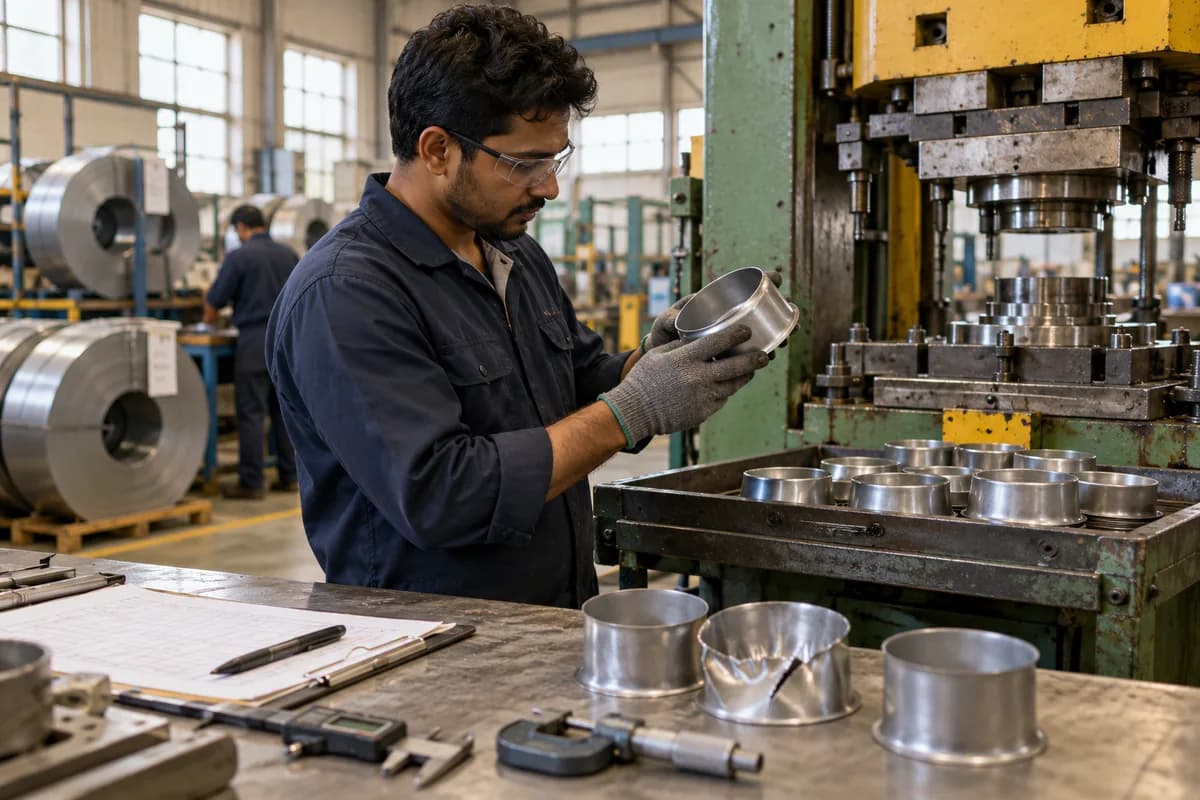
Wrinkling, tearing and thinning each point to different causes. Wrinkles suggest low blank holder force or soft material, tears suggest high strain or poor lubrication, and thinning suggests excess stretch. Record every reject with coil lot, lubricant batch, die condition and press settings, so repeat causes appear in the data.
Three defects, three different stories
Wrinkling shows up in the flange or the wall as ripples. The blank holder is not gripping. Or the sheet is thinner or softer than the drawing assumed when the die was designed and tried out.
Tearing is a split, often near the punch radius or at the cup base. The metal was pushed beyond its limit. Too little lubricant, a tight die radius or a hard coil can all cause it.
Thinning is quieter. The wall looks sound, yet a micrometer reading sits under the drawing minimum, and nobody sees it until a customer measures a sample from the delivered lot. Catch it at the press.
- Wrinkles: holder force, blank size, soft coil
- Tears: lubricant, radius, hard coil
- Thinning: draw ratio, punch speed, friction
- Earing: coil grain direction
Tie each reject to a coil lot
Sheet coils differ in yield strength, thickness and grain even under one grade name. Ask your supplier for the certificate and keep the coil number on every blank tray.
When a reject is logged, the record must carry that number. Only then can you see that three tear events in a week came from one coil, one rolling batch.
Do not rely on memory. Shifts change. A coil moved from the rack to the press line can lose its tag on the way, and the next crew then guesses which supplier it came from.
- Coil number and supplier certificate
- Thickness measured at three points
- Yield and elongation from the certificate
- Blank size and blank cutting date
Lubricant and die condition belong in the same record
Drawing oil is consumed and contaminated. A drum changed on Tuesday can explain tears that start on Wednesday. Log the lubricant type, batch and the time of its last top up.
Dies drift too. Polish on the draw radius wears. A scored die ring then scratches every cup it forms. Add the last polish date and the stroke count since then.
Together these three facts, coil, oil and die, answer most why-did-it-start questions in minutes rather than days.
Read the pattern, not the single reject
A table of rejects by defect and lot lets you test a theory. If tears rise on one coil across two dies, the coil is suspect. If they rise on one die across many coils, check the radius.
Look at timing within a shift too. Rejects that cluster after a lunch break often follow a cold press or a dried-out blank. Rejects at the start of a new coil often mean setup was not adjusted.
Keep notes on the corrective step and its result. Next time, someone can read what worked.
Make logging easy enough to happen
A six-field form at the press beats a long one nobody fills. Defect, count, coil number, die, lubricant batch and shift is enough to begin.
Paper sheets work for a month. Then someone needs last quarter’s tears on one coil, and the stack of papers fails the test. Move to a shared sheet or quality software that stores each reject as a row.
Start this week with one press and ask the operator to say, in one line, what the wall looked like.
Deep drawing reject log
A single form, one row per reject lot. Columns cover date, shift, press, die number and strokes since polish. Others take coil number, lubricant batch, defect tick boxes for wrinkle, tear and thinning, count, wall thickness and corrective action. A back block gives a small pattern table by coil lot.
Open a blank worksheet to printQuestions owners ask
How do I tell a coil problem from a die problem?
Compare the same defect across dies and across coils. If it follows the coil through different dies, suspect the material. If it stays with one die across coils, inspect the die.
How often should wall thickness be checked?
Check at setup, after each coil change and at regular intervals set by your control plan. Mark the measuring points on the drawing so every operator checks the same place.
Can lubricant really change reject rates?
Yes. Type, cleanliness and film thickness change friction at the draw radius. Logging batch and top up time shows whether tears follow a change.