In this guide 6 sections
Billet weight goes missing in four places: flash and trim, scale from the furnace, saw cuts and end pieces, and rejected forgings. Weigh the billet in, the forging out and each waste stream per job. The difference between what you charged for and what you can account for is your hidden loss.
Start with the weight on the billet tag
Every job begins with a billet weight, yet most shops work from the drawing weight plus a standard allowance that someone set years ago and nobody has checked since. It is a guess. Ask what the real figure was on last month’s jobs.
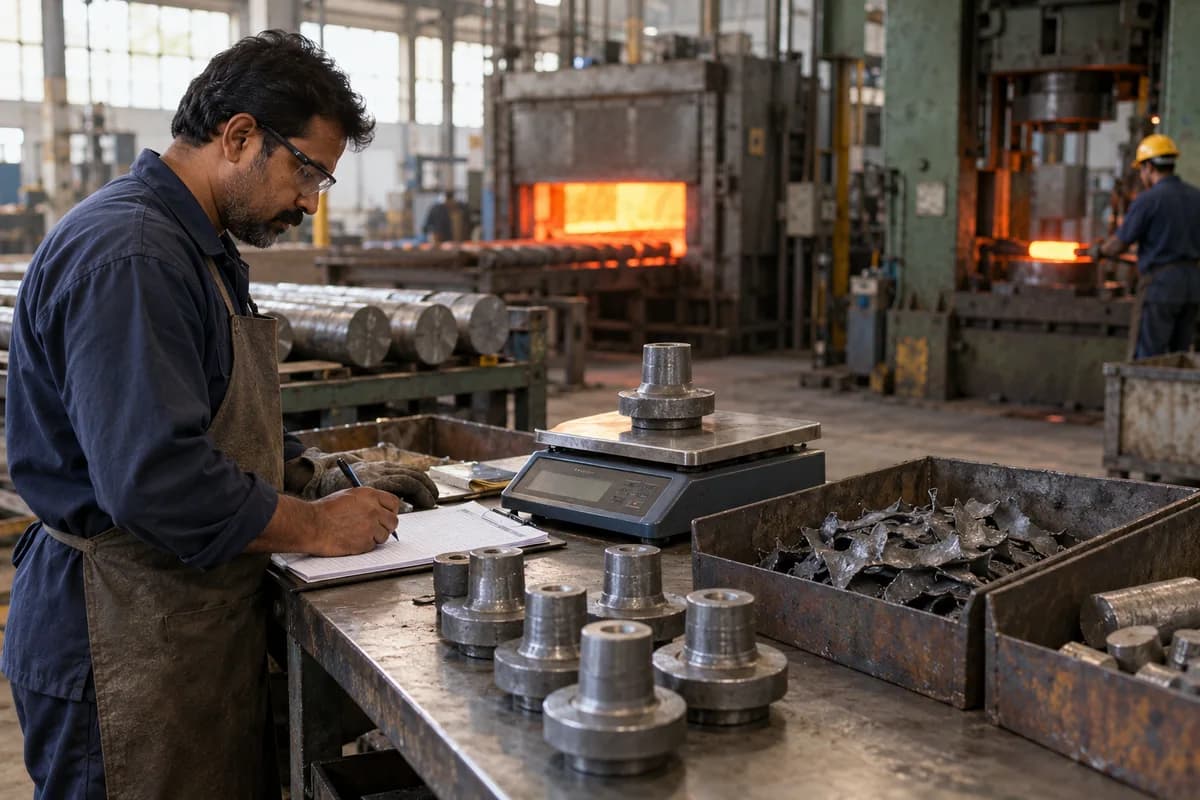
Weigh a sample of cut billets on a bench scale and write the number on the tag. Mill bars vary in diameter, and saw kerf eats length, so two billets cut to the same length can differ by a visible margin.
That tag weight is the opening balance.
- Bar diameter and heat number
- Cut length and weighed billet mass
- Saw kerf and end piece weight
- Operator and shift
Split the losses by where they leave
Flash is the thin fin squeezed between die halves. It is cut off in a trimming press and sold as scrap. A worn die or an oversized billet makes more of it, so flash weight tells you about both.
Scale forms when hot steel meets air. It flakes off in the furnace, under the hammer and in the quench tank. Furnace time and atmosphere drive it, and a long wait at the press makes it worse.
Rejects differ. A forging with a lap, an underfill or a cold shut was made at full cost. Record the count and weight against the defect name, not under a single line called scrap, and note the stage where it was found.
- Flash and trim weight per shift
- Scale estimate from furnace hours
- Saw ends and short bar offcuts
- Rejects by defect name and stage
Compare billet weight with forged weight per job
Once each stream has a weight, the sums are easy. Billet weight in, minus forged weight out, minus recorded waste, leaves an unexplained gap. Chase that gap.
A job with a large gap and low recorded scrap often points to billets issued heavier than planned, or to forgings that left the shop without being weighed. A job with a large reject weight points to die or heating trouble.
Compare like with like. Group jobs by part number, die set and press, so a small ring forging is never judged against a long shaft.
Find patterns across presses, dies and heats
One bad job teaches little. Fifty jobs, sorted by die set, show which die makes thick flash after its third polish. Sorted by heat, they may show a bar supplier whose rounds run oversize.
Check the shift view next. Night crews working a cold furnace often lose more to scale and underfill. That is a scheduling problem, not an operator one.
Keep the comparison monthly and written down. A rising flash trend on one die is a cue to schedule its rework before the next big order arrives and the press runs it hard for a fortnight.
Fix the records before you fix the process
Most shops lack the numbers, not the willingness. A bench scale at the saw, another at the trimming press and a rejects bin with a tally sheet cost little. Start with one press and one product family.
Spreadsheets cope for a few weeks. Once jobs overlap, software that links billet tags to job cards and forging counts saves the evening reconciliation and the arguments that follow it.
This week, pick your five heaviest jobs and weigh billet, forging and flash for one full batch of each.
Billet to forging loss sheet
A single worksheet, one row per job. Columns hold job number, part, heat number, billet count and billet weight. More columns hold forged weight, flash, saw ends, scale estimate and reject weight by defect. The last column shows the unexplained gap. A small second block lists the three jobs with the largest gaps.
Open a blank worksheet to printQuestions owners ask
How do I estimate scale loss without special equipment?
Weigh a billet cold, then weigh the forging plus flash after trimming. Repeat across several jobs and furnace conditions, then use the average as a working estimate.
Is flash always a loss?
It is unavoidable to a degree, since it fills the die. But excess flash signals oversized billets or worn dies, so its weight is worth tracking per job.
Should rejects be weighed or only counted?
Both. Counts show frequency, while weight shows the steel and heating cost wasted. Record the defect name beside each reject lot.