In this guide 6 sections
Check the paperwork against the purchase order, then the packaging, labels, date codes and moisture bags, then the parts or boards themselves. Record each result against the receiving lot. Quarantine anything doubtful, and release stock to stores only after the lot record is complete, with the inspector’s name, the sample size and the dry bag reading.
Paperwork first, before the box is opened
Match the packing list to the purchase order line by line, checking manufacturer part number, quantity and ship-from country on each row before anyone touches the carton. That swap is a change, not a delivery.
Look for the certificate of conformance and, for bare boards, the supplier’s test report, then confirm that the fabrication drawing revision on the paperwork matches the Gerber release. No report, no release.
Photograph the outer carton and every label before cutting any tape, because a dispute about transit damage or a wrong lot is settled by what the picture shows. Do it before the knife.
- PO number, line and part number match
- Manufacturer name and country of origin on the label
- Certificate of conformance present
- Board revision matches the released files
Reels, trays and moisture bags
Inspect the dry bag before the reel, because the seal, the humidity indicator card and any tears tell you the most about how the parts were stored. A torn bag starts floor life early.
Read the label on reel and bag, because part number, lot code and date code should agree on both, and a mismatch is the usual sign of relabelled stock.
Check how the parts sit in the tape or tray, because bent leads, shifted components and empty pockets show rough handling in transit. Then compare reel diameter and tape width against the feeders on your pick-and-place machine, since a wide tape will not run on a narrow feeder.
- Dry bag sealed, card within limits
- Date code on bag, reel and part marking agree
- Tape pockets full, covers intact, no bent leads
- ESD packaging unbroken
- MSL rating noted for the moisture log
Spotting counterfeit and remarked parts
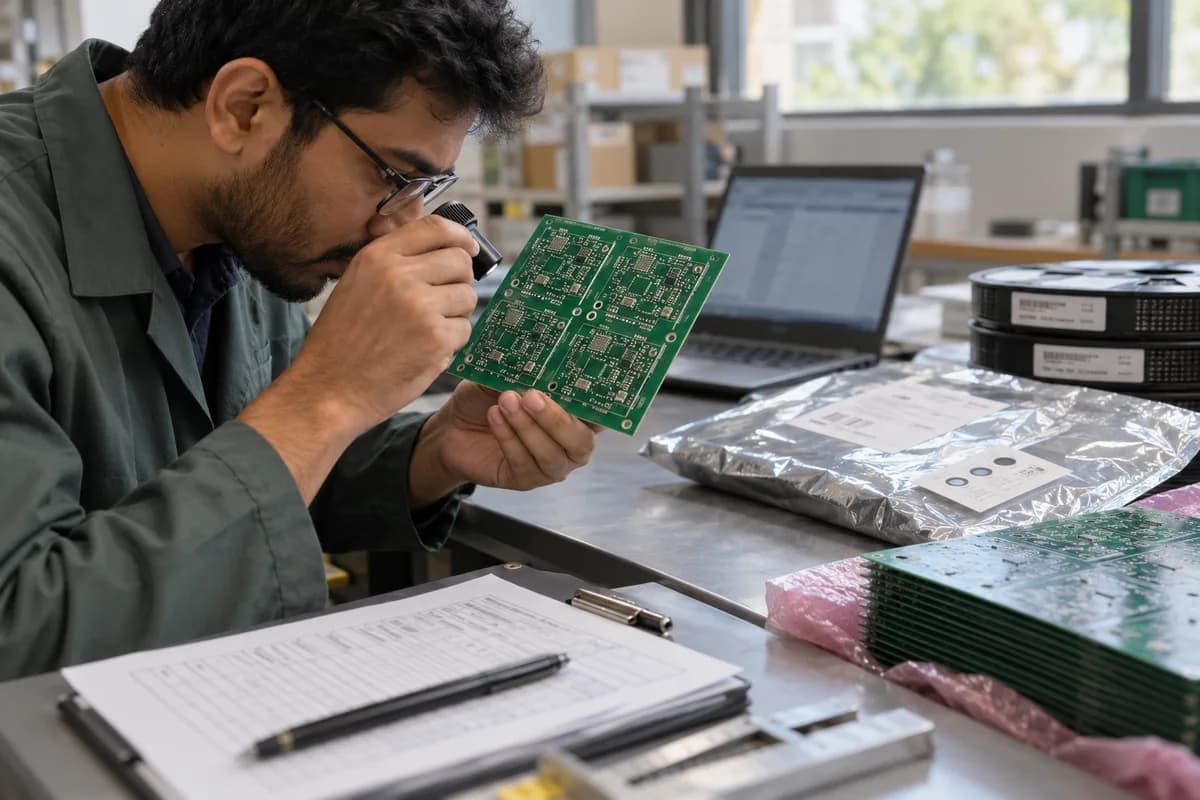
Look at the top marking under magnification, where fuzzy fonts, uneven laser etching, sanded surfaces and colour differences between parts on one reel all raise doubt. Compare against a known good sample.
Check the leads or balls under the same light, because scratched, tinned-over or oddly shiny terminals suggest reclaimed parts pulled from scrapped boards and cleaned up for resale. On high risk lines, send a sample out for X-ray or decapsulation, because a loupe cannot tell whether the die inside matches the marking on top.
Be stricter with parts bought outside the manufacturer’s authorised channel, because a spot-market buy of an obsolete microcontroller deserves more inspection, not less. Trust the channel, then verify.
Bare boards on the bench
Count and measure a sample from the lot, checking board outline, thickness, hole sizes and the plated slot positions against the fabrication drawing before anything goes to stores. Lay one on a surface plate.
Inspect pads for solder mask slivers, exposed copper and surface finish colour, and check the silkscreen legend against the assembly drawing for reversed polarity marks and missing reference designators. Check panel rails and fiducials too. The pick-and-place camera reads them.
Confirm the vacuum bag and humidity card, because bare boards absorb moisture too and a damp laminate can delaminate in the reflow oven. Read the date of manufacture as well, because some finishes, immersion silver and OSP among them, lose solderability as the board waits on the shelf.
Record against the lot, then release or hold
Give every receipt a lot number and write each result against it, including sample size, defects found, inspector name and date, then attach the photographs and bag reading.
Pass lots go to stores with moisture rating and date code on the bin, while failed lots go to a quarantine shelf marked return, rework or scrap.
Print the checklist and run it on tomorrow’s first delivery, then note every question the page could not answer, since each one is a field to add.
Incoming inspection record
A one-page form with a header for supplier, PO, part number, lot, date code and receipt date, followed by blocks for paperwork, moisture bag checks and physical checks. Boards get their own column. Each row has pass, fail and note boxes. The footer holds disposition and quarantine shelf.
Open a blank worksheet to printQuestions owners ask
Do we inspect every reel in a delivery?
Not usually. Check all paperwork and packaging, then sample the parts, raising the sample for new suppliers, spot-market purchases and part numbers with a history of counterfeit or moisture problems.
What if the date code is missing from a reel?
Treat it as a hold. Ask the supplier for the date code in writing and quarantine the reel until the reply arrives, because an unknown date code makes the floor life impossible to judge.
How do we tell a relabelled reel from a genuine one?
Compare label fonts, part markings and packaging with a known good reel from the same maker, looking for differences in print weight, spacing, bag colour and barcode format. If doubt remains, ask for confirmation. Failing that, send a sample out.
Should bare boards be inspected as carefully as parts?
Yes. A warped or mis-finished board wastes every capacitor, resistor and connector placed on it, so sample each lot and check outline, finish, mask and fiducials before release.