In this guide 6 sections
Have the vendor walk one patient from OPD token to pharmacy issue to discharge bill without a single re-key. Then ask how old paper files come across while the OPD keeps running. Three logins or three spellings of one name mean you are buying three books again.
Start with the three books you keep today
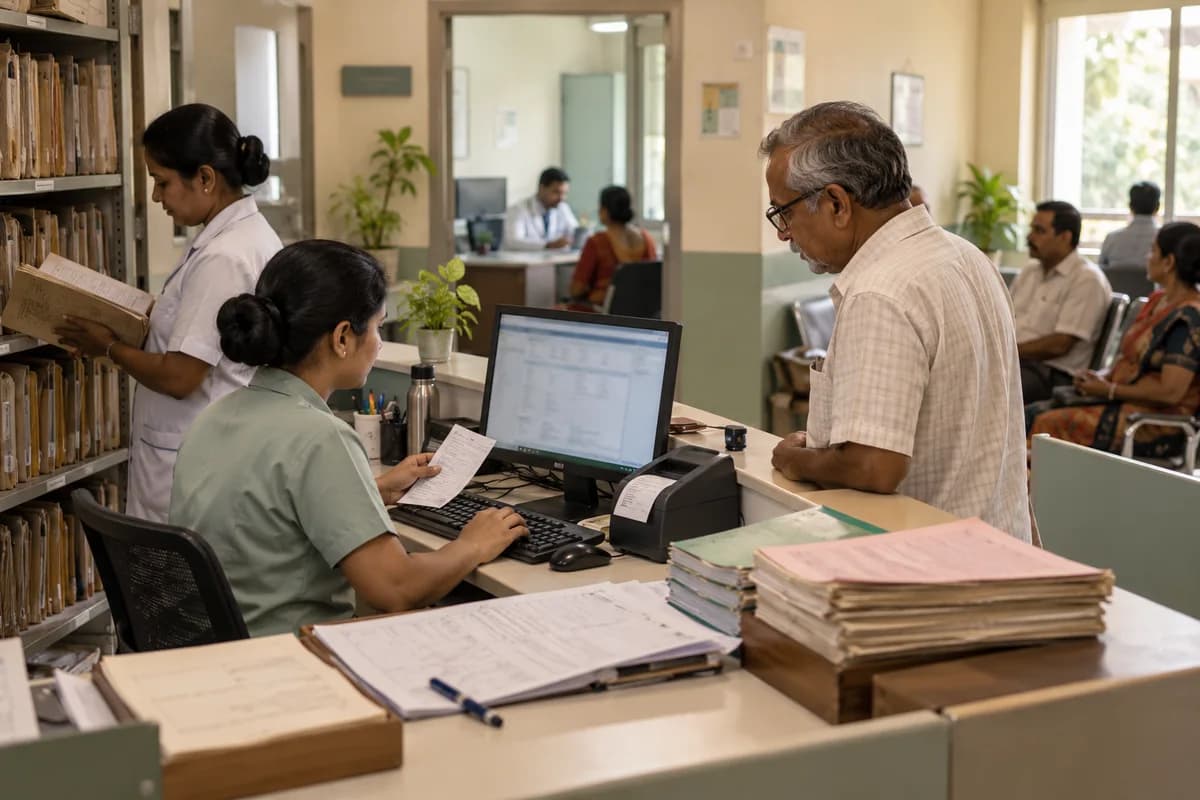
Most nursing homes run an OPD register, a pharmacy counter with its own bill book and a billing desk with a separate cash book. Each keeps its own spelling of the patient’s name. Nobody can say what one patient owes.
Write down where one patient appears. A man seen in OPD on Monday, sold tablets at the counter and admitted on Tuesday is three entries. At discharge the billing clerk joins them by memory, a stack of carbon slips and a long hunt through the pharmacy bill book.
Bring that story to the vendor. A good answer starts from the patient. A weak one starts from a module list.
- OPD register with token number and consultation fee
- Pharmacy bill book with batch and expiry noted by hand
- Ward charge slips for bed, nursing and procedures
- Final bill and advance receipts at the billing desk
Questions about the OPD desk
Ask how a token is issued. Does the reception clerk search by mobile number first, so a returning patient gets the old UHID instead of a fresh one? Duplicate UHIDs are the commonest fault. Expect them in month one.
Ask what the doctor sees. A consultation screen that needs six clicks is abandoned within a week and the prescription goes back to the pad. Insist on a demo with your own physician in the room, on a real complaint such as typhoid or a sprained ankle.
Ask whether a repeat visit inside the free review window is a rule or the clerk’s memory. Ask who can override it. Get a name.
- Search by mobile number and by attendant’s name
- Token queue per doctor, shown on a screen in the waiting hall
- Prescription printed in the doctor’s usual order of fields
- Review visit marked free by rule, not by memory
Questions about the pharmacy and the bill
The in-house pharmacy is where books drift apart. Ask whether a strip sold at the counter and a vial issued to a ward patient both reduce the same batch. Ask how the near-expiry lot is pushed to the front.
Then ask how pharmacy items reach the final bill. If a nurse copies medicine charges onto the discharge sheet, errors are certain. The bill should pull each line in with the issue date, batch number and the doctor’s order.
Ask about returns. A sealed injection pack sent back from the ward needs a credit note against the patient and a stock entry. Both must happen in one step. Never two.
Moving paper patient files without stopping the OPD
Do not scan the whole almirah of folders. Start new records on go-live day and pull an old file only when that patient walks in. The clerk keys a short history from the folder in hand, plus the old file number.
Run paper and screen side by side for two weeks in one session, say the morning clinic. Keep the evening clinic on paper until the morning staff are comfortable. Then switch it.
Pick one person. Make her the owner of file numbers. The old number stays on the new record as a field, so the shelf in the records room can still be searched.
Settle these before you sign
Find out who owns the records and what export you receive if you leave. A plain CSV of patients, visits and bills is the minimum. Then ask about a power cut. Can the pharmacy counter keep printing bills from a laptop on an inverter? Test it.
Ask for a reference you can phone in a town like yours, perhaps Gaya. Then take the same sheet to a second vendor and compare answers line by line.
Vendor question sheet for a nursing home
A single page in four blocks: OPD desk, pharmacy, billing and file migration. Each row holds one question and a column for the vendor’s answer. A third column is marked shown in demo or only promised. A fourth names the doctor or clerk who watched. The last block lists export format, power cut routine and the reference to phone.
Open a blank worksheet to printQuestions owners ask
Do we need separate software for the in-house pharmacy?
Not usually. Keep one patient record and let the pharmacy be a counter inside it, so stock, patient issue and bill all agree. Separate pharmacy software brings back the copying you want to remove.
Can the OPD run on paper while we test?
Yes. Test with one doctor or one session first. The remaining clinics stay on the pad until the first group has worked a full week without a gap in tokens or receipts.
What if the clerk types the same patient twice?
Ask the vendor how duplicates are caught at entry and how two records are merged later. Mobile number matching at the token counter prevents most of them.