In this guide 6 sections
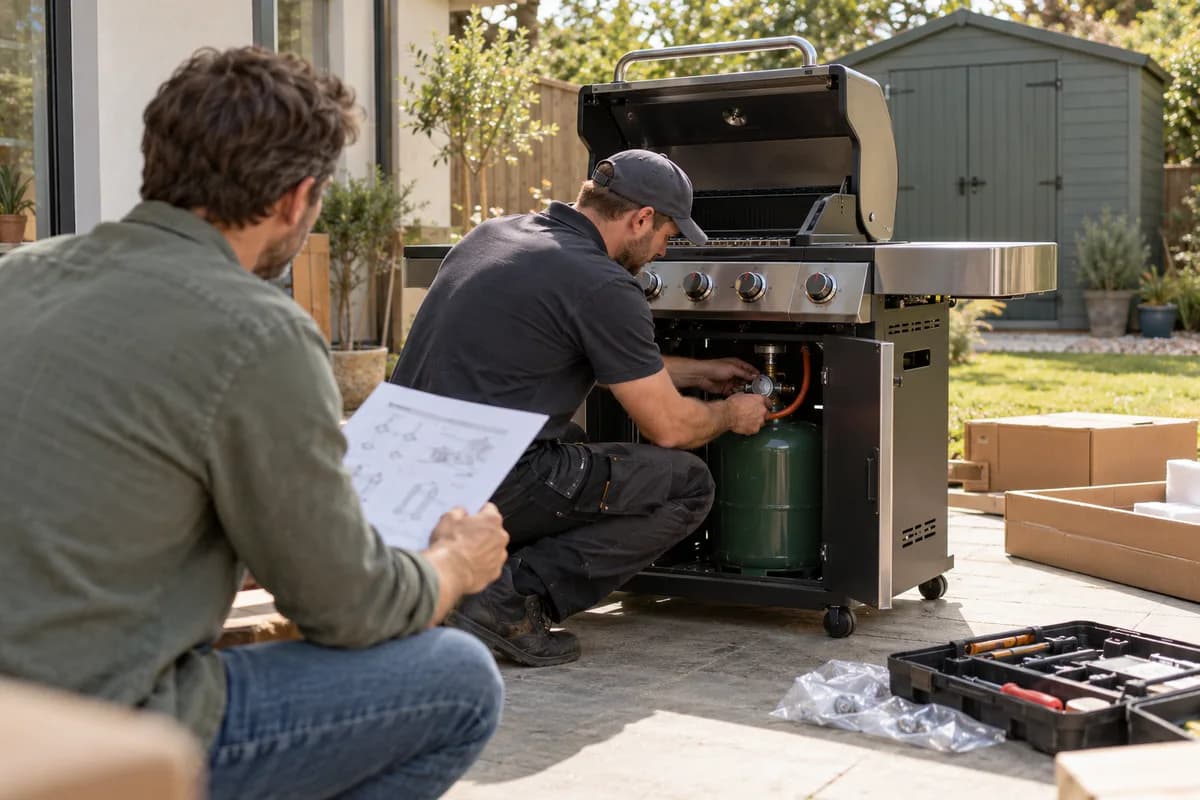
Offer assembly where a wrong build can hurt someone or void the warranty. That means gas barbecues, gas heaters and large sheds that need two people and a level base. Ship small items flat with a printed manual. Either way, show the assembly fee as its own line on the order.
Which products earn an assembly booking
A gas barbecue arrives in two or three cartons holding a burner set, flame tamers, a hose, a regulator and a bag of loose fixings. A shed arrives as panels and roof boards. A patio heater arrives as a pole, a reflector, a burner head and a base plate that must sit square on the ground.
Rank each line by its worst case. A crooked shed door is an annoyance. A loose gas fitting is a hazard. Assembly earns its place where the second kind of error is possible and the buyer has no way to judge their own work.
- Gas barbecues running from a cylinder or a mains pipe
- Sheds and log stores that need a level base and two pairs of hands
- Heaters with a gas bottle, a tilt switch or a mains lead
- Pergolas and gazebos fixed to paving with anchor bolts
Check the site before you book a fitter
Failed visits start at the doorstep. The carton will not pass the side gate, or the slab turns out to be a slope of lawn, or the only parking is three streets away. The fitter drives home.
Ask for access details at checkout, before the fitter has loaded the van and driven forty minutes to a locked side gate. A short form is enough. Photos from the buyer settle most arguments later. Keep the answers on the order, so the fitter reads them before leaving the depot and brings the right tools and a second pair of hands.
- Width of the gate or side passage, and any steps on the route
- Ground under a shed: slab, paving, decking or soil
- Gap between the barbecue or heater and fences, awnings and walls
- Where the gas bottle will stand
- Parking for the fitter’s van
Gas connections need a clear line of responsibility
Here sellers draw a hard line. Some sellers build the barbecue only up to the point where the regulator meets the cylinder, then stop and hand the connection to a fitter. A fixed supply from a mains pipe often needs a registered gas fitter, and the rules differ by country, so check with your regulator and your insurer.
Put the boundary in writing. Say who fits the regulator, who inspects the hose for cracks, who leak-tests the joints and who signs the handover sheet at the end of the visit. The maker’s safety notes stay as printed. Show them to the buyer. Do not paraphrase them.
Who carries the work, the warranty and the fee
You have three ways to staff assembly: your own fitters, a local subcontractor or the maker’s service network. Each has a price. Your own staff give you control of quality but add wages, a van, a diary and holiday cover for the busy weeks. A subcontractor needs a rate card and a checked insurance certificate, and the buyer needs a name to call when a job runs late.
Read the warranty text before you promise anything. Some makers void cover when anyone but an approved fitter builds the product, while others ask only for a dated handover sheet signed by the buyer on the day. Record which rule applies, line by line.
On the order, assembly is its own item. It is linked to the product, and it carries its own price, its own booking date and its own cancellation rule, so each can change without touching the barbecue. An unopened return takes the fee with it.
- Assembly item linked to the parent product
- Booking date and time window
- Fitter name or subcontractor code
- Site access answers saved with the order
- Handover sheet attached after the visit
Run it on one line for a season before you widen it
Flat shipping is not a failure. It suits small tables, parasol bases, planters and fire pits, where there are few parts and the worst mistake is a wobble. Pair it with a short video, a parts count printed on the carton and a phone line that is answered on Saturday afternoons, when most people build.
Start with your best-selling gas barbecue. Offer assembly as an option, log every visit, and count the callbacks, missing parts and cancellations. After one summer you will know what the fee must cover, which visits ran long and which products cause calls. Do sheds next and heaters last.
This week, list your twenty top lines and mark each one assembly offered, optional or flat only, with one sentence of reason.
Assembly decision sheet
Every product line takes one line of the sheet. Eight columns run across: carton count, people needed, tools needed, fuel or power connection, site access answers, who does the work, warranty rule and the decision. Mark the decision offered, optional or flat only. The bottom margin holds the boundary wording for the product page.
Open a blank worksheet to printQuestions owners ask
Should assembly be compulsory on gas barbecues?
Not always. Making it compulsory can send buyers to sellers who ship flat and ask nothing of them at checkout. A better default is to offer it at checkout, explain why it matters and keep the buyer’s choice on record. Ask your insurer for its view first.
Can the assembly fee be refunded if the product is returned?
Yes, if the order holds the fee as its own line. Set the rule before the first sale. A visit already made is usually charged, while a visit not yet made is cancelled at no cost to the buyer.
What if the fitter damages the product or the garden?
Agree the answer in the subcontract, and check that the insurance certificate covers damage to the product and to the garden. Photos taken on arrival and at handover show what changed. Keep both on the order record.
Do customers who build it themselves lose their warranty?
That depends on the maker’s terms. Read the warranty text for each line and copy the relevant sentence to the product page so that the buyer sees it before paying.