In this guide 6 sections
Match the channel to the buyer. A portal suits repeat buyers who reorder the same lines, and a salesman app suits small shops that need a visit and a shelf check. WhatsApp suits occasional orders, provided each message becomes an order record without retyping. Most distributors run two of the three.
Sort buyers by how they reorder
Start with the buyers, not the tools. An office manager who reorders toner cartridges, bin liners and floor cleaner every fortnight behaves differently from a workshop buyer who needs one bearing size today. A purchase engineer ordering resistor reels against a bill of materials, with a datasheet open beside each line and an alternate part approved in advance, is a third kind.
Sort your accounts into three groups. Standing buyers repeat a list, shop owners order on the day the salesman calls, and occasional buyers ring or message when the detergent runs out. The group decides the channel. Account size matters far less.
- Standing buyers with a repeat list
- Shops visited on a fixed route
- Occasional buyers who message when stock runs out
- Large accounts that send a purchase order file
Where an ordering portal wins
A portal wins when the buyer already knows what he wants. He opens last month’s order, changes two quantities and submits. No clerk touches it. The order reaches billing in the same format every time, with the buyer’s own price list already applied and the credit limit already checked.
It also shows what a phone call cannot. Pack multiples, minimum order quantities, backorder status, stock on hand, the credit limit and the next delivery slot appear before he submits, so nobody rings the office. Electronic components buyers value part numbers and datasheet links, while cleaning supply buyers want a saved list per site of toner, mop heads and sanitiser refills.
A portal loses where buyers never log in. Do not force one on a corner shop.
- Saved lists and one-click reorder
- Customer-specific price list
- Stock, pack size and minimum order shown
- Credit limit and open invoices visible
- Invoice and statement downloads
Where a salesman app wins on the route
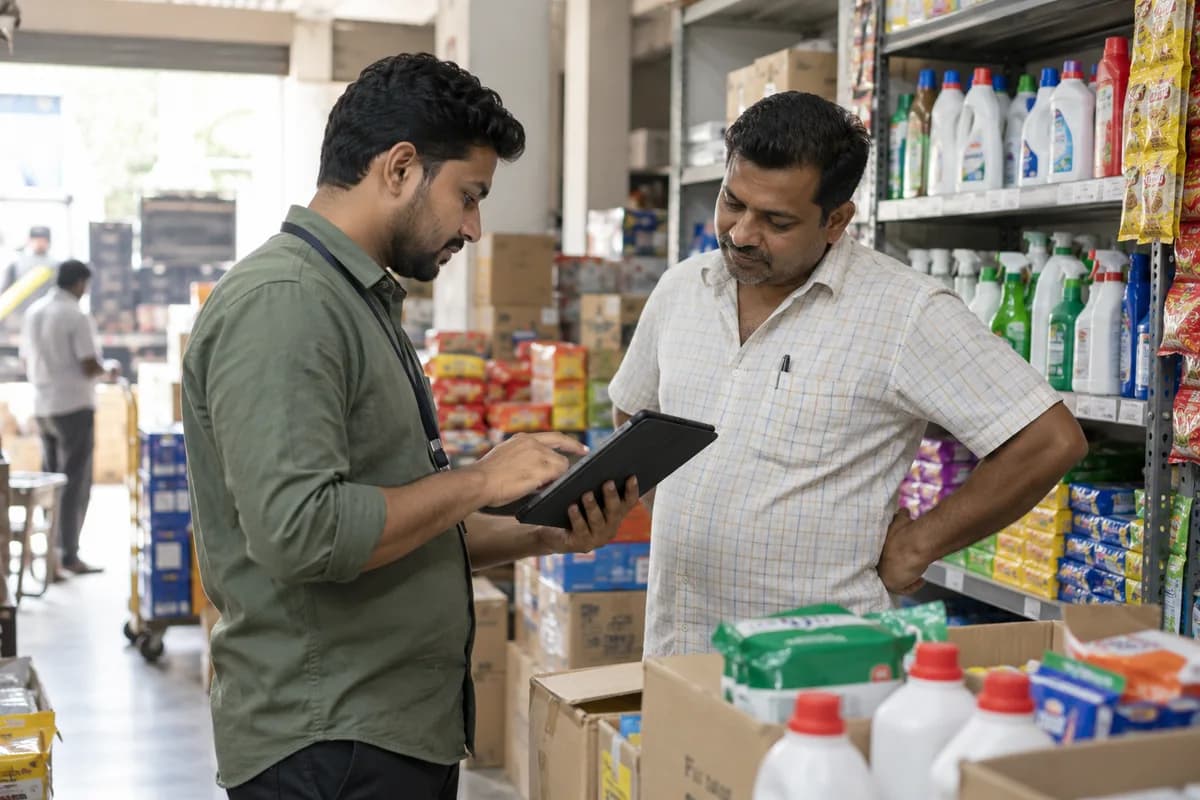
On the route, the visit itself has value. FMCG distributors depend on the visit, because a retailer cannot say what he is short of until someone counts the gaps in the detergent and biscuit rows. A phone call misses that.
The app should show the outlet’s outstanding balance before the order is taken and suggest lines the shop bought last time but not this time. It must work in a basement stockroom. It should also record a receipt for any cash or cheque collected, stamp the visit with a time and photograph the shelf against the brand’s planogram. Orders sync when the phone finds a network.
What breaks when WhatsApp orders are typed by hand
Many buyers already talk to you on WhatsApp. It will not go away. The trouble starts in the back office, where a clerk plays a voice note, squints at a photographed handwritten list and types the lot into billing.
Mistakes follow a pattern. Quantities are misheard, “same as last time” has no record behind it, and a keystroke slip turns one carton of toner into ten. Duplicates arrive after a slow reply. Credit is never checked.
None of this means banning the channel. Reply with a catalogue or a link to an order form instead of accepting free text, so the message arrives as lines and quantities. The clerk then confirms rather than types.
- Voice notes and photographed lists
- Repeat orders with no clear baseline
- Duplicates after a slow reply
- Wrong pack billed because names differ
- Credit limit checked after billing, not before
Run two channels into one order queue
Most distributors settle on two channels: a portal for standing buyers and a salesman app for the route, with WhatsApp feeding the same queue through a form. Every order lands in one list. Each carries a source tag.
The queue needs one price list, one credit check, one rule for backorders and one cut-off time, all applied the same way whichever channel the order used. Tell buyers which cut-off still gets tomorrow’s dispatch, then send a confirmation listing the lines, the expected delivery and the credit position after the order. Channels that disagree on price lose trust.
Review the source tag each quarter. If a standing buyer still orders by voice note, ask why and fix the portal rather than scold the buyer, because the portal is usually what failed.
Channel fit sheet
One worksheet page, one row per buyer group. Columns hold orders per month, lines per order, who places the order, whether the buyer has a smartphone, credit status, the channel assigned and the mistakes logged last month. A footer row records the cut-off time and who owns the order queue.
Open a blank worksheet to printQuestions owners ask
Can a buyer use the portal and still phone in urgent orders?
Yes. The clerk enters the call into the same queue with a source tag, so reports stay clean and the buyer’s price list and credit limit still apply. The portal is never the only door.
Do salesman apps work without internet?
Good ones do, keeping the price list, outlet list and balances on the phone and syncing when a network returns. Ask for a demonstration in flight mode.
Is a WhatsApp catalogue the same as an ordering portal?
No. A catalogue shows items, yet it usually cannot apply a buyer’s price list, show live stock or stop an order that breaks a credit limit. An order form linked from WhatsApp can, if it connects to billing.
Which channel should a small distributor start with?
Start where most errors happen today. For many that is WhatsApp typing. An order form that feeds billing removes the retyping long before a full portal is worth building, and it teaches buyers to send lines instead of voice notes.