In this guide 6 sections
Milling yield is what comes out of the mill against the paddy that went in, split into head rice, brokens, bran and husk. Read it per lot, not per month. Basmati yield swings with moisture, ageing and variety, so a counted stock position matters more than a formula.
The four outputs and what each tells you
Paddy goes through the husker, the paddy separator, the whitener and the polisher, then the grader. Out come husk, bran, head rice, brokens and a little dust and waste. Every one has a different value.
Head rice is the whole or nearly whole grain, and it carries the price. Brokens sell for less, and in basmati the gap is wide. A lot that mills to more brokens than usual is telling you something about the paddy or the machines.
Husk and bran are not waste. Bran goes to oil extractors and husk to boilers and brick kilns, so they belong in the same account. Weigh each output on the day it comes off. Estimating from the number of bags is how a mill ends up with a yield that nobody can defend.
- Head rice from the grader
- Brokens by size, big and small
- Bran and husk sold or used in the boiler
- Moisture loss and dust, the part nobody weighs
Why basmati yield moves from lot to lot
New crop paddy carries more moisture and breaks more easily. Aged paddy mills better and gives longer, whole grains, which is why many Karnal millers hold stock for months before milling.
Variety matters too. Pusa 1121 and Pusa 1509 do not behave the same in the whitener. Lots bought at the mandi in Karnal or Kaithal can also differ by arhtiya and by village.
So one yield figure for the whole season hides the answer. Track it per lot, with moisture at purchase and at milling, and the patterns start to show. Note the age of the paddy in the register as well. A lot bought in October and milled in March should be compared with its peers, not with the one milled in a week.
Reading yield against paddy received
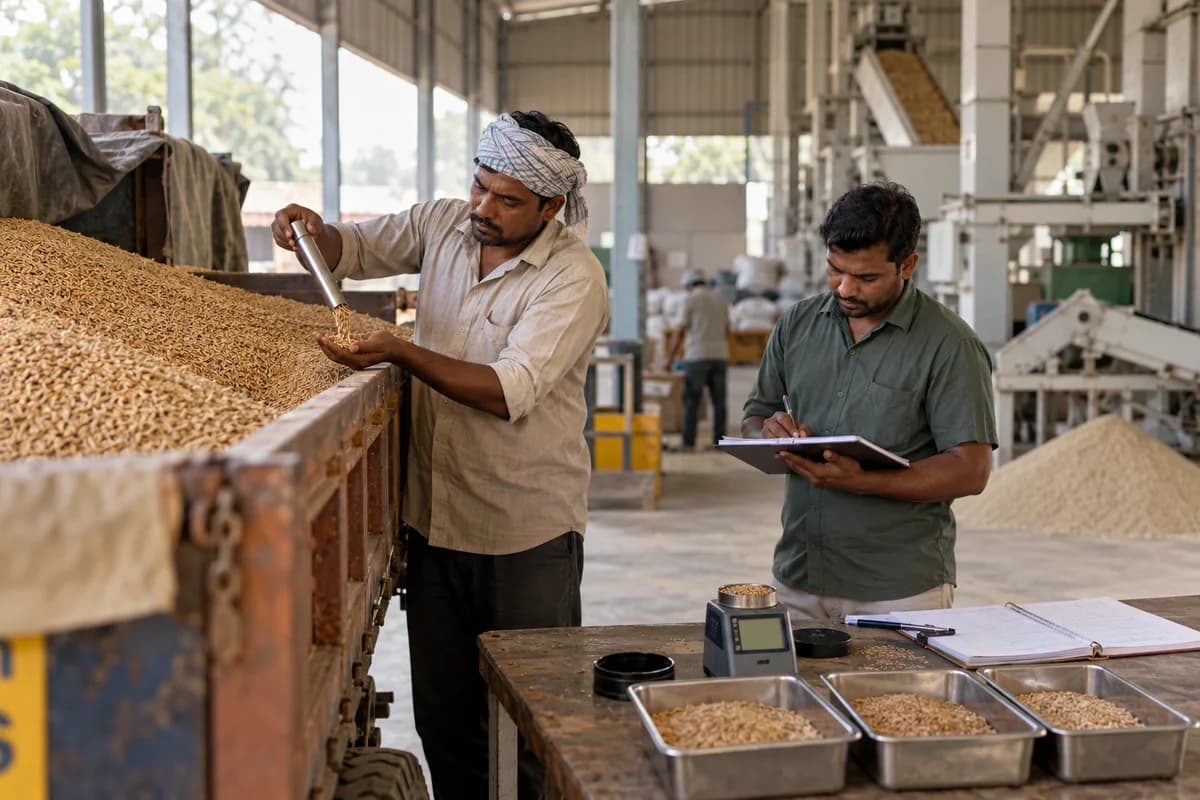
Start with weight received at the gate, with moisture noted. Subtract paddy still in the silo or in bags. What is left was milled. Add up head rice, brokens, bran and husk weighed from that milling.
The sum will not equal the paddy milled. The gap is moisture loss and dust. Compare the gap lot against lot. A gap that suddenly widens points to a weighbridge error, leakage or a pilfered bag.
This is plain arithmetic. It becomes useful only when every weight is written down at the time it happens. Use the weighbridge slip number as the key. Paddy in, rice out and bran out then tie back to one lot, and the mill accountant stops reconciling from memory.
Replacing an estimated godown stock with a counted one
Many mills carry a stock figure that is really a calculation: paddy bought minus rice sold, adjusted by an assumed yield. It drifts, and the godown looks different from the book at every inspection.
Count instead. Stack paddy in numbered rows with a tag per lot. Weigh a sample of bags, count the stack, and record it. Do the same for bagged rice by grade and for brokens and bran.
Then let the book follow the count. Differences between the count and the book are your real shortage or surplus.
- Row and stack number with lot tag
- Bags counted and average bag weight
- Moisture reading on the day
- Name of the person who counted and who checked
Making the counted stock easy to repeat
A count that happens once a year is a ritual. A count that happens each week on one row at a time is a control. Rotate rows so that every stack is checked within a month.
Enter each count on a phone or a simple form at the stack itself. Software then compares it to the book and flags lots where the yield looks off. Start with your oldest lot this week.
Lot milling yield sheet
A one-page sheet per lot. The top block holds paddy variety, source mandi, weight received and moisture. The middle block lists head rice, big brokens, small brokens, bran, husk and the unaccounted gap, each in kilograms. The bottom block holds the counted stock, the book stock, the difference and the checker’s name.
Open a blank worksheet to printQuestions owners ask
What is a normal milling yield for basmati?
There is no single figure to trust. It depends on variety, age of paddy and moisture. Compare your own lots against each other, not against a number from someone else’s mill.
Why is my head rice lower than last season?
Check the paddy first: new crop, higher moisture or a different variety. Then look at the whitener settings and the sieve in the grader. Lot-wise records show which.
Should bran and husk be recorded?
Yes. They are sold output, and their weight completes the balance. A missing bran sale is often the first hint of a leak.
How often should the godown be counted?
A rotating weekly count of a few rows is more useful than one big count a year. Every stack gets checked within a month.