In this guide 6 sections
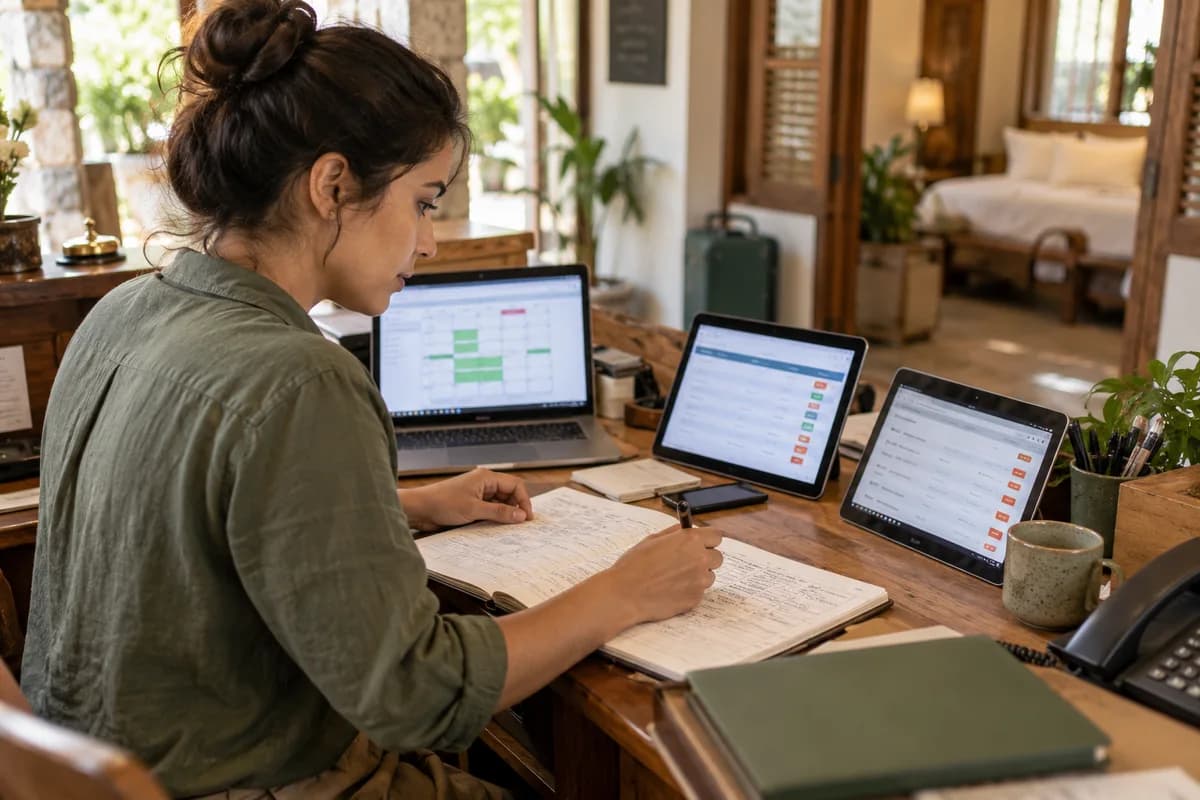
Start four weeks before the first busy weekend. Load the new rate cards, create logins for seasonal staff, check every channel connection, close out last season’s records and run a full test bill. Fix what breaks while rooms are still empty and nobody waits at the desk.
Load the rate cards before the first enquiry
Rates go wrong first. A villa still showing last March’s tariff will accept a booking that loses money, and nobody notices until the guest has paid an advance and sent flight details.
Open every room type and every plan, then hold the screen against the printed card. Check the season bands too. Peak, shoulder and the Christmas to New Year block each need exact start and end dates.
Add minimum stay rules for the long weekends, because a single night booking on a peak Saturday quietly blocks two better ones. Shacks need a different pass. Menu prices, sunbed and umbrella rates and table numbers all change once the monsoon ban on temporary structures lifts.
- Room types, extra bed and breakfast plans
- Peak, shoulder and festival date bands
- Minimum stay rules for long weekends
- Tax slab shown on each invoice line
- Menu and sunbed rates for shacks
Give seasonal staff their own logins
Seasonal hands arrive in a rush. Someone shares the manager’s password on day one. It stays shared until the season ends, which is when a discount appears on a bill and nobody can say who gave it.
Create each login before the person starts. Front desk staff get booking and billing, waiters get order entry only, and rate changes stay with the owner.
Former staff should not still see guest phone numbers and passport scans, so switch off last season’s accounts first. Write the roles on one sheet and pin it near the desk.
Test every channel connection
Channels go quiet over the monsoon. Tokens expire. A Booking.com extranet password changes, or a mapping breaks after a room is renamed, and you find out when a guest arrives at a room never blocked.
Make a test block on one date in your own system. Watch it appear on Airbnb, Booking.com, MakeMyTrip and your own booking page within minutes, then release it. Do this for each room type, not once for the whole property.
Check that the WhatsApp enquiry number is the one printed on the website. Call it once from a guest’s phone.
Close last season and restart the records
Last season’s open items follow you into October. Unpaid advances, half settled group bookings and a guest folio nobody closed will muddy every new figure, so settle each one or carry it forward on purpose.
Export the guest list, the invoice register, staff attendance and the stock count before you archive anything. Keep the export in two places. A returning guest list is worth a message before the first weekend, with the new rates attached.
Reset the invoice series only if your accountant agrees, since a restarted number can collide with last season’s bills.
- Open advances and part payments
- Unclosed folios and room charges
- Last season’s guest export, with phone numbers
- Stock count for kitchen, bar and linen
- Pending vendor bills and staff dues
Run a billing test on a quiet day
Raise a dummy booking from enquiry to checkout. Take an advance, add a restaurant order, post a laundry charge, split the bill between two guests and print the invoice. Then cancel a second booking to see what the refund screen asks for.
Check the printer. Check the tax lines, the GSTIN on the header and the QR code for UPI payments. A shack should print one bill from a handheld at the table and confirm that it reaches the cash drawer total.
Finish by choosing who is answerable for the system on the first Saturday, and put their number on the wall above the desk.
Pre season readiness sheet
A single page with five blocks, one for each stage: rates, logins, channels, old records and billing test. Each block has rows for the task, the person responsible, the date done and a pass or fail box. A final strip holds the name and phone number of whoever owns the system on opening weekend.
Open a blank worksheet to printQuestions owners ask
How early should a Goa property start preparing?
Four weeks before the first busy weekend is comfortable. Channel faults and password resets can take days to clear, so leave room for them before real bookings arrive.
Do beach shacks need the same setup as hotels?
Not quite. A shack needs menu prices, table numbers, a handheld bill and a cash drawer match. Room rates and channel blocks matter little unless it also lets rooms.
Should last season’s guest records be deleted?
No. Export them and keep two copies. Returning guests are a reliable source of early bookings, and your accountant may need the old invoices for later queries.
Who should test the billing flow?
The person who will use it on the busiest day, usually the front desk lead. They find awkward steps that an owner who rarely bills would miss.