In this guide 6 sections
A plan slips for one of four reasons. Material was never issued, two jobs wanted one machine, a rejected lot came back as rework, or a new order jumped the queue. Open work orders show which. Sort them by hold reason, then compare planned start against actual issue date.
Start from the open work orders, not the plan
The plan is only a promise, and the work orders are the evidence. Print every order that is released but not closed, and list planned start, actual start, quantity due and quantity finished beside each one. Do it on paper. Pens help.
Look at the gap between planned start and actual start first. A job that began on time and still ran late has a different disease from a job that never began. Mixing the two hides both causes. Keep them apart.
Material not issued shows up as a late first operation
Pull the material issue slip for each late order. If the slip is dated after the planned start, the store was the bottleneck, not the shop floor. The operator simply waited for a bar, a sheet, a reel or a bought-out part.
Check the bill of materials against bin stock on the day of release, line by line, including fasteners, gaskets, packing cartons and anything the supplier delivers in short lots. Short items often sit on a purchase order that nobody chased past its due date, and a shortage list sorted by order number settles the argument within minutes. Chase the buyer.
- Issue slip dated after planned start
- Open purchase order past its due date
- Substitute grade issued without approval
- Part-issued orders left waiting for the balance
Machine clashes and rework leave different marks
A clash is visible on the machine log. Two work orders hold the same press, lathe or curing oven for overlapping hours, and one of them waits. Sort the log by machine and look for stacked start times. Also check changeover gaps between a die change and the next first-piece approval, since a setup that overruns by an hour quietly pushes every job behind it.
Rework is harder to see because it hides inside a normal order. A lot fails inspection, goes back to the same operation and eats a second slot that the weekly plan never counted. Look for rejection notes and repeat operations. Each one is lost capacity. Count them.
Mid week orders break the sequence
A rush order pushed in on Wednesday does not just add work to the week. It bumps a job already released, and the bumped job loses its setup, its kitted material and often its trained operator. Count the orders released after the plan was frozen.
Tag each late job with the order that displaced it. After a month the pattern is plain. Often one or two customers, or one salesperson with a habit of promising early dates, cause most of the churn on the floor. Name them.
- Orders released after the plan was frozen
- Jobs paused to make room for a rush order
- Setups repeated on the same machine
- Promised dates changed without a note
Turn the findings into a weekly hold review
Give every hold a reason code: material, machine, quality, priority change or drawing query. A work order that cannot start must carry one, and a ten minute review of the codes every Monday morning keeps the list honest.
Fix the biggest code first. If material leads, release orders only after the store confirms the full kit is on the shelf. Take last month’s late orders and tag each with a reason today.
Late order diagnosis sheet
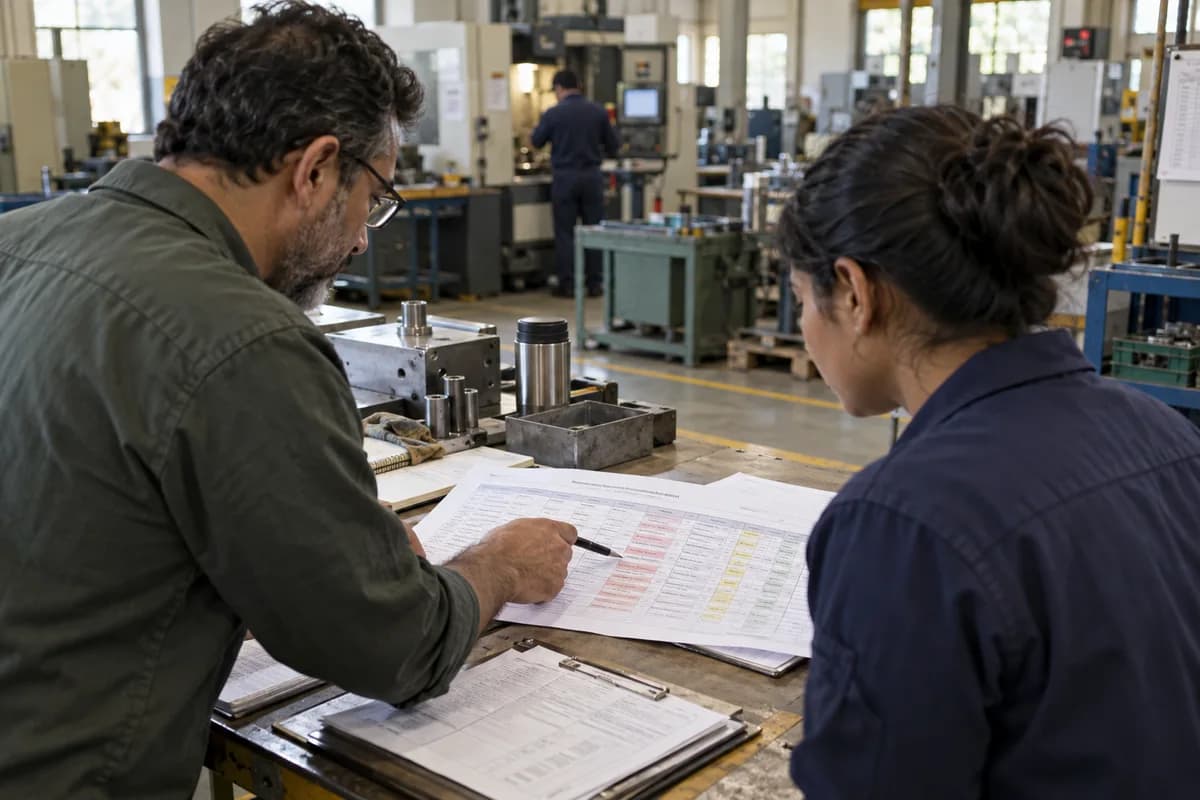
Every late work order takes a line on a single printed sheet. Columns cover order number, item, planned start, actual start, material issue date, machine, hold reason code, rework count, the order that displaced it and the revised due date. A summary block at the foot counts orders under each reason. The largest cause stands out at a glance.
Open a blank worksheet to printQuestions owners ask
How many reason codes should a hold list have?
Five to seven. Material, machine, quality, priority change, drawing query and operator absence cover most small factories. More codes get misused and the counts lose meaning.
Does a work order show rework by itself?
Only if a rejected lot is booked back against the same order as a repeat operation. If the rework is done off the books, it stays invisible until you ask the supervisors directly.
Who should own the weekly hold review?
The plant or production manager owns it, with the store keeper and the quality lead in the room. Every hold needs someone present who can clear it.
Should we freeze the weekly plan?
Yes, for jobs already released. New orders queue behind them unless the manager signs a deliberate bump. That sign-off makes the cost of rushing visible to the person asking.