In this guide 6 sections
Keep one record per shipped machine, keyed by serial number, with the as-built parts list and every change since. A spares enquiry then starts from the serial, shows the exact seal kit or bearing fitted, and produces a quote without digging through drawings or old emails.
The enquiry that starts with a photo of a nameplate
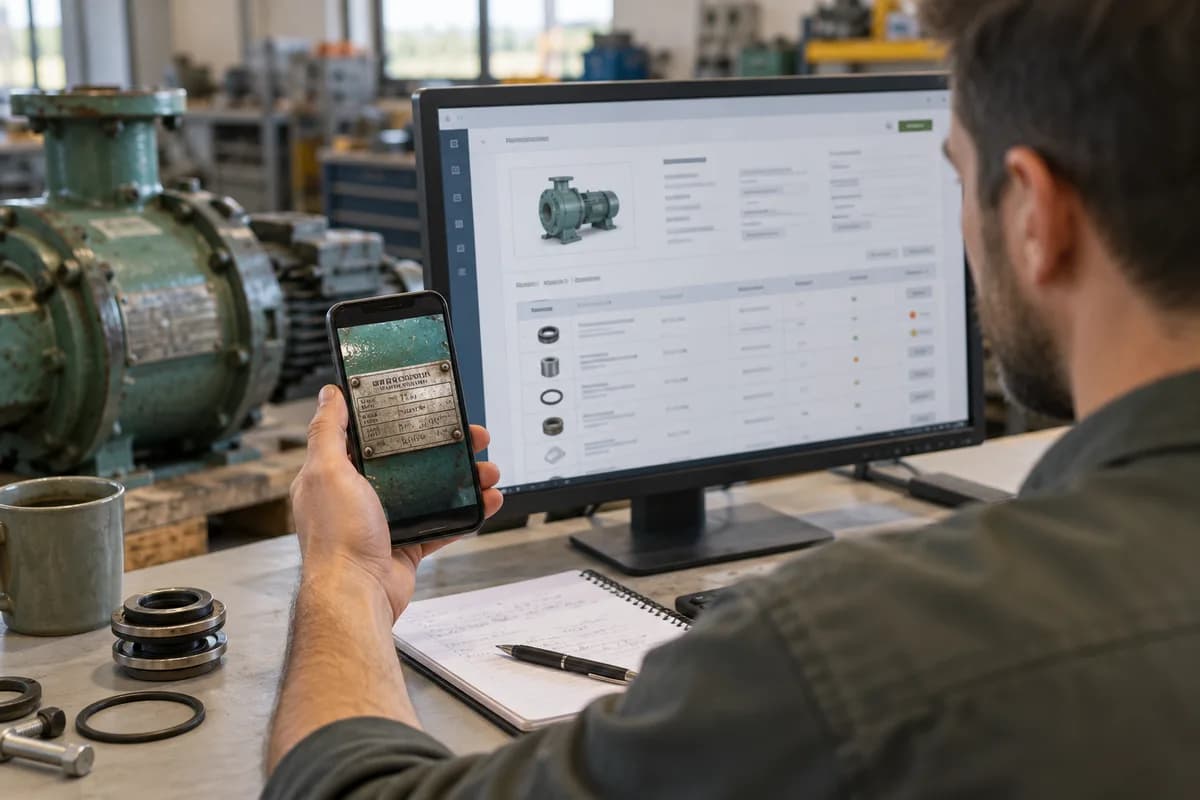
A plant sends a nameplate photo. They want a mechanical seal. The sales engineer opens a drawing folder, finds three revisions of the sectional drawing, phones the stores and waits two hours before an answer goes out.
It might be wrong. The drawing shows the design at release, not what was fitted after a field complaint led to a different seal face, a change that sits in one inbox.
Quoting from memory feels fast. Then the wrong kit comes back.
What the installed machine record holds
The record is built at dispatch. It copies the as-built bill of materials for that serial, with the revision of each part actually used, and service reports and spares sales add to it later.
Because it follows the serial, not the model, it survives design changes, so two pumps built a year apart can show different impellers.
The customer, the site and the commissioning date live in the same place, together with every modification note and the name of the engineer who approved it. Nothing lives in a drawer.
- Serial number, model and build date
- As-built parts list with revisions
- Seal kit, bearings and wear rings fitted
- Field modifications and who approved them
- Past spares orders and service visits
Turn the record into a quote
Enter the serial. See the fitted parts. Ticking the wearing parts creates quote lines with part numbers, stock and lead time, and a kit appears once with its O-rings and gaskets listed beneath.
Prices come from the current list, then the customer’s agreed discount is applied, superseded parts are flagged and the replacement is suggested with a note about fit.
The quote carries the serial. When the order arrives, the record updates itself with what was sent, so the next enquiry starts from the true history of that machine.
Handle supersessions and unknown serials
Parts get replaced by better ones. Store the supersession chain: the old part, the new part, the change date and whether the two are interchangeable in every fitted position. Some swaps are not simple. A seal that now needs a different gland plate is not a like-for-like swap, and the quote should say so plainly.
Some machines are older than your records. For those, build a stub from the nameplate, the model and any drawing you hold, and mark it unverified until a site visit confirms it.
Never record a guess as fact.
- Old part, new part and change date
- Interchangeable, or needs another component
- Marked as verified or unverified
Where to begin
Start with machines that bring repeat spares orders, such as pumps, compressors and the tooling that wears fastest, and load their last two years of orders first. Those serials sit in your emails.
Judge the result by one measure. Ask how long a correct spares quote takes from the first enquiry to the moment the customer receives a price they can order against.
Your first step this week is to choose five recent spares quotes and check each one against what was actually fitted to the machine in the field.
Installed machine record template
A one-page form. The top block holds serial, model, customer and commissioning date, and below it sits a parts table with part number, revision, description and fitted date. A final block records field modifications, past spares orders, service visits and a verified or unverified flag for the whole record.
Open a blank worksheet to printQuestions owners ask
What if we do not have as-built records for old machines?
Start a stub from the nameplate and mark it unverified, then confirm it at the next service visit or when a worn part returns to your workshop.
Does the record replace the drawing archive?
No. Drawings remain the design source, while the record shows which revision of each part was actually fitted to one particular machine in the field.
Who keeps the record up to date?
Dispatch creates it. Service engineers add field changes, and the spares desk logs each order it ships, while one named owner checks the whole record every month.