In this guide 6 sections
Sell tinted paint online only if the order reaches the tinting machine after payment clears and your returns rule covers a mixed tin. Otherwise ship base and ready-mixed tins, and finish shade matching at the counter, where the buyer can hold the colour card against a sample. A mixed tin is dead stock.
What a cancelled tinted tin costs you
A tin of plain base can go back to the depot or sell to the next painter who walks in. A tinted tin cannot. Most paint makers do not take back mixed stock, so read your dealer terms before you promise anything about returns on a website.
Online orders fall through more often than counter orders, and for duller reasons. A card is declined. The courier does not serve the postcode. A buyer who chose a shade from a phone screen sees it on her wall and changes her mind, long after the machine has run. By then the cost is yours.
What remains is a sealed tin carrying a shade code that only one buyer ever wanted, and she has gone. It takes up room. Across a season the unsold mixes build a shelf of colours that nobody remembers ordering.
The order has to become a dispensing job at the counter
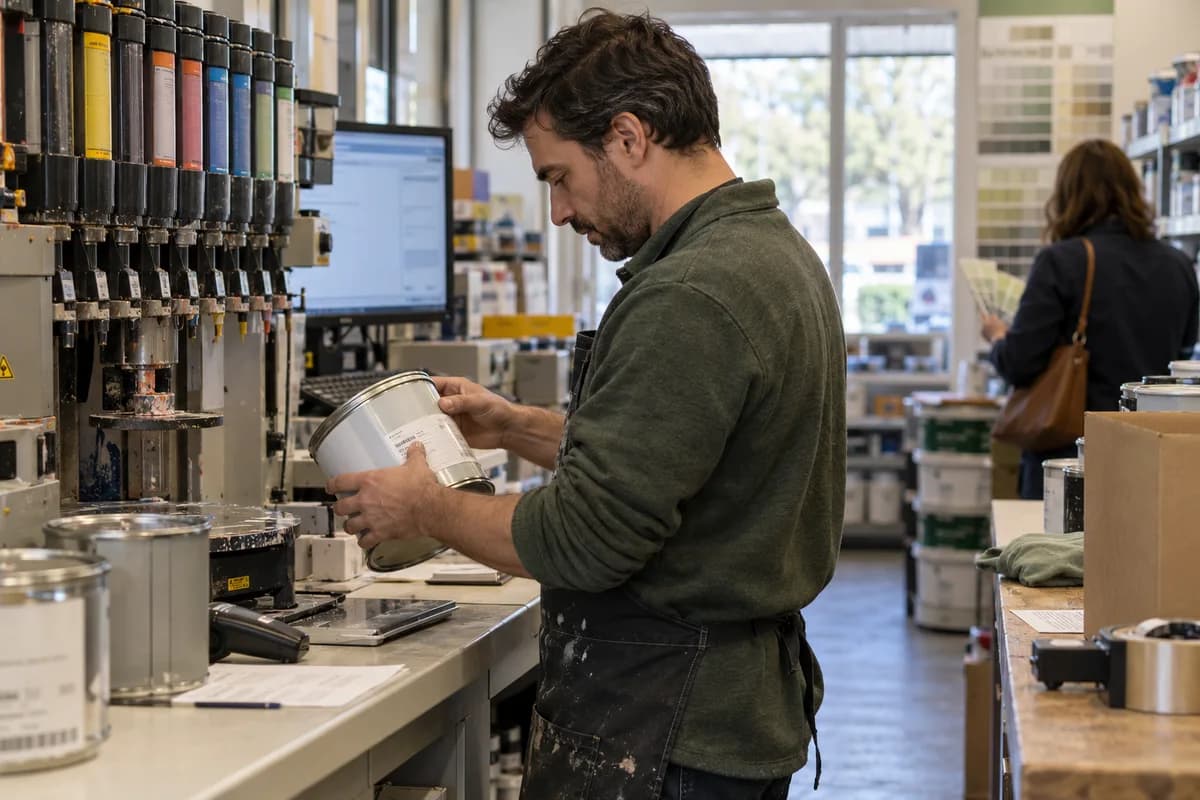
Tinting is a job done on a machine, from a formula, using a base and a set of colourant canisters that run out at awkward moments. A web order must become that job. It cannot stay a line in a basket.
Build a dispensing queue. The operator should see it from the machine. Each entry carries the shade code, the tinting system, the base, the pack size, the order number and a ship-by date, so nobody asks the buyer twice. The operator looks up the formula, runs the dispense, shakes the tin, fixes the label and photographs the closed lid before it is packed.
Hold the job until payment is final, the postcode is serviceable and the shade code has been checked against the colour book. Dispensing is the point of no return. Before it, everything is free to undo.
- Shade code and tinting system copied from the order, never retyped
- Base and pack size taken from the formula, not chosen by the buyer
- Payment status and address check shown before the job is released
- Operator, date and base batch noted when the tin is mixed
- A photo of the sealed tin and its label kept with the order
Write a returns rule that fits a mixed tin
Put the rule above the buy button. Two lines are enough. A tinted tin is made to order, so it comes back only if it leaks, arrives dented or carries a different shade from the one ordered. Consumer law treats made-to-order goods differently from place to place. Read your own local rules before publishing.
Offer something in return for being strict. A sample pot, a small tester or a printed colour card lets the buyer try the shade on her own wall before she orders the big tin. Easy samples make a strict rule fair.
Decide in advance who pays for a mis-tint and who pays for courier damage, and write both answers beside the returns rule where the buyer reads them. Photos settle most disputes, but only when the order record shows exactly which shade, base and batch went into the tin.
- Shade code, base and pack size from the original dispensing job
- Date and operator of the tint, and the batch number on the base
- Photo of the lid label, the seal and any leak
- Courier damage note and the carrier’s delivery photo
- Whether the buyer ordered a sample pot first
Three ways to sell, and what each one puts at risk
The first way is plain. Sell base and ready-mixed shades, and ship them like any other tin. Whites, off-whites and stocked colours need no machine, so a cancelled sale puts the tin straight back on the shelf.
The second way is full tint-to-order with shipping. The range is widest. So is the risk of dead stock. Every tin becomes a one-off the moment the machine stops, and a courier then decides whether it arrives intact and the right way up.
The third way takes the order and payment online, then tints at the counter when the buyer arrives to collect. She checks the shade against the card in her hand. Nothing is mixed on a guess.
Pick one route and test it for a season
A sensible start is the third way for customers near the shop and the first way for those far away. Colour matching stays beside the machine and the colour book, where a mistake costs one tin and a conversation. Only plain tins travel.
Run the choice on one brand and one pack size. Count the cancelled mixed tins. Count the damaged deliveries. Count every sample pot that led to a full order. Those three counts settle the question faster than another argument at the counter. Pin the filled table beside the tinting machine and read the counts against it when the season ends.
Online tinting decision table
Three rows, one for each way to sell, sit on a single sheet: base and ready-mixed only, tint to order and ship, and pay online then tint at pickup. The columns are who carries a cancelled mixed tin, the returns rule at checkout, the extra counter step, the transit damage risk and the shades it suits. Fill one row in pencil per brand. Circle the row you will test first.
Open a blank worksheet to printQuestions owners ask
Can a mixed tin go back to the paint company?
Usually not. Terms differ by company and by dealer agreement. Ask your area representative in writing whether any unopened tinted tin is ever taken back, before you list a tint-to-order shade online.
How do I stop a buyer ordering the wrong shade from a screen?
Screens show colour differently. Say so beside every swatch, and offer sample pots and printed cards. Put the shade name and code on the confirmation, so the buyer can check them against the card before the tin is mixed.
Should customers pay before the tin is mixed?
Yes. Take full payment first. Release the dispensing job only after it clears, because a refused cash-on-delivery parcel leaves you holding the loss. Avoid that option for tinted lines.
Who should run the dispensing queue?
Whoever already works the machine. Give that person a list sorted by ship-by date on a screen beside it, so web jobs do not compete with walk-in customers.