In this guide 6 sections
Before any quote, walk the site with a notebook. Record free panel space, cable routes, power points, network coverage, access to each machine, shutdown windows and who approves touching a running line. Some answers barely change the price. Others, like a long conduit run or a missing earth, can double the effort.
Start with panels, power and earthing
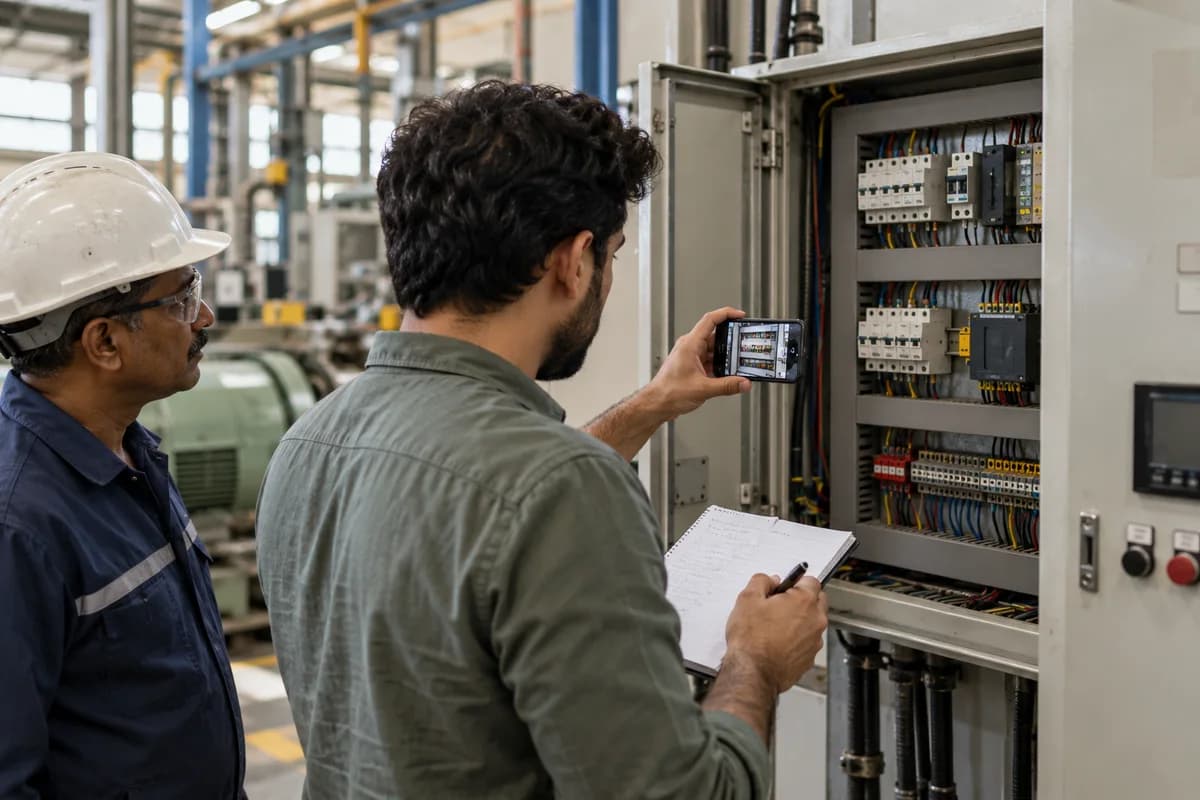
Open each control panel with the electrician present. Photograph the inside, note the free DIN rail length and check whether there is room for a gateway and a small power supply. A full panel means a new enclosure on the wall. That is a cost.
Find the nearest power point for each gateway and look for a reliable earth. Sensors on a noisy motor feed often misbehave because of poor grounding, not poor software.
Ask whether the supply is backed by a UPS or a generator changeover. A gateway that reboots on every switchover will fill the log with gaps.
- Free rail space and spare breaker slots in each panel
- Nearest socket and its supply stability
- Earth point and its resistance reading if available
- UPS or generator changeover on the same feeder
Trace the cable routes
Walk the path from each sensor to the gateway. Use a tape. Measure the distance, note the trays and conduits already in place, and look for walls, floor crossings and wash-down zones. A short run through an existing tray is cheap. A new trench is not.
Keep signal cables away from motor drives and heavy power lines. Shielded cable and a separate tray reduce the electrical noise that corrupts analogue readings.
Mark hazardous or wet areas. Photograph them. They may need rated enclosures and glands, and sometimes a certified installer.
Check network coverage where the devices will sit
Carry a phone and test signal strength at the exact spot of each gateway, not at the office door. Metal sheds, thick walls, cold stores and basements swallow Wi-Fi and cellular signals alike.
Ask the IT contact who manages the router, whether a spare port exists and whether the factory firewall allows outbound connections from a new device. Many projects stall for weeks on that single approval.
If coverage is weak, note it now. A cable to a better location or a second link costs less when planned early.
- Wi-Fi and 4G signal at each gateway position
- Spare switch port and VLAN rules
- Outbound firewall permissions
- Distance to the nearest access point
Confirm machine access and shutdown windows
List each machine to be connected and who runs it. Find out whether the controller allows read access, whether a sensor can be clamped on without opening a guard and whether the vendor warranty restricts any change.
Then agree the windows. Some lines stop only on Sunday or at a changeover. A job planned for the wrong day sits idle while the crew waits.
Name the person who can say yes to touching a running line. Get that approval before the visit, not on the day.
Mark which answers move the cost
Not every finding matters equally. A short cable run, a free panel and a good signal barely touch the estimate. A full panel, a hazardous zone, a missing network port or a one-day shutdown window each add real labour and waiting.
Write these cost movers at the top of the survey sheet so the quote reflects them. Attach photos to each line.
Send the finished sheet to two installers and ask each to price from it alone. If they need to call you back, the sheet missed something.
IoT site survey sheet
Each measurement point gets its own row. Columns cover location, machine, panel space, power source, earth, cable length and route, network signal, access notes, shutdown window and approver. A last column flags each row as low, medium or high cost impact, with a photo reference number.
Open a blank worksheet to printQuestions owners ask
Who should attend the site survey?
Bring the maintenance head, an electrician and someone from IT. Each sees a different problem, and one visit with all three saves a second trip.
How long does a survey take?
A small plant takes a morning. A multi-shed site or a farm with scattered pump houses can take a full day. Allow extra time for cold stores and areas needing permits.
Can the survey be done from photos?
Photos help, but they miss signal strength, noise and access. Use them to prepare, then confirm on site before fixing a price.
What if we cannot stop the line for installation?
Many sensors clamp on or sit beside the process without a stop. Controller connections usually need a window. List which are which during the survey.