In this guide 6 sections
A superseded part number is one the maker has retired. Store the link as a chain from the old number to the current part, so a search for the old number lands on something you can sell. Keep the number as sold on every past order, so warranty claims stay readable.
A supersession chain runs from the oldest number to the current one
Makers retire part numbers for plain reasons: a casting changes, a supplier changes, a flaw is corrected, or a left and right pair becomes one kit. The old number lives on. It stays printed on invoices, boxes and workshop wall charts for years.
Replace a number twice and you have a chain, where A became B and B became C, while a mechanic holding a workshop invoice still searches for A. Your catalogue must walk the chain to C.
Chains are not always straight. One old number can split into a left and right pair, and two old numbers can merge into one kit, so each link needs a stored type.
- One to one replacement
- One old number split into several parts
- Several old numbers merged into one kit
- Replacement out of stock, alternative offered
- Dead end, retired with no successor
Interchange and supersession are different records
Supersession is the maker’s decision that this number now replaces that one, while interchange is a cross reference saying another brand’s part does the same job. Mixed in one column, they cause wrong fitment.
Direction matters as well. A new bracket may fit the old car while the old bracket will not suit the revised body, so record whether a link runs one way or both. Add the build date or chassis range where the maker states one.
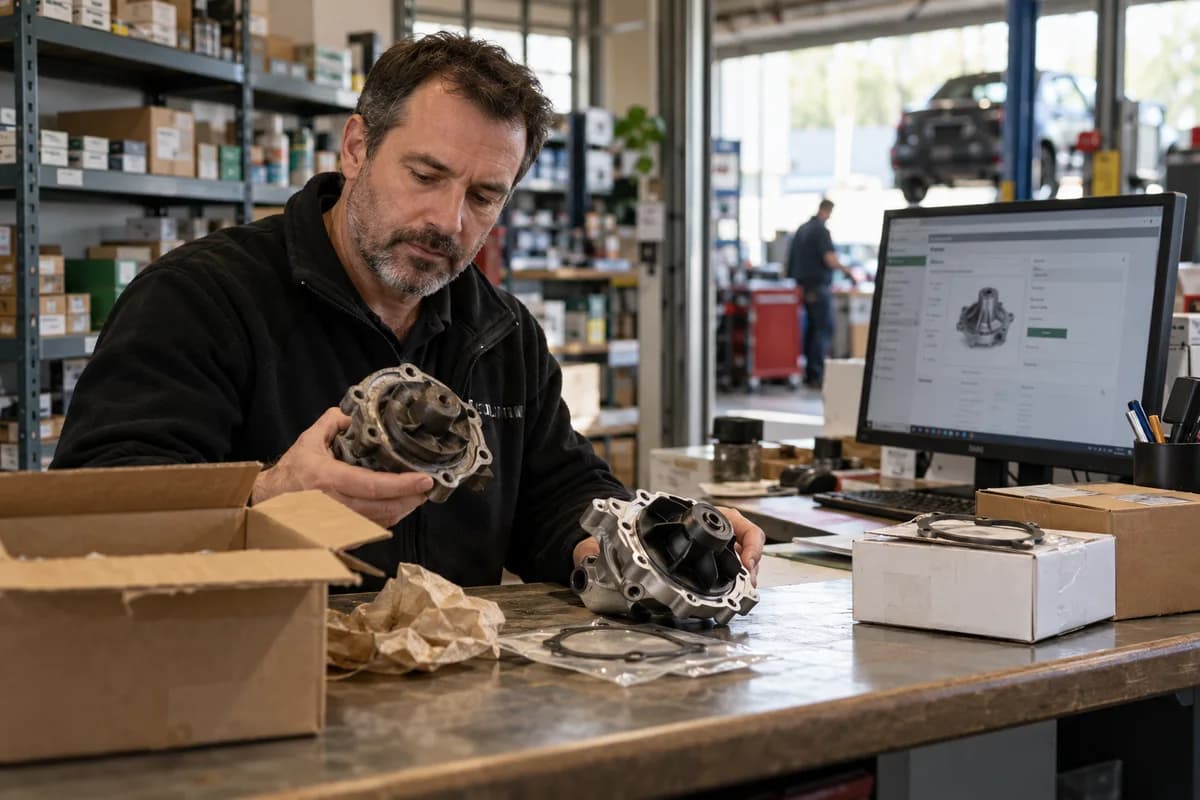
Some replacements come with conditions. The new water pump may need a fresh gasket, or the new pad set a different wear sensor, so attach those extra parts to the link. The buyer sees them before checkout.
What the buyer sees when searching an old number
Treat every retired number as a search alias that never expires, so a shopper who types the old number from a worn box still reaches the current part. Add a line reading replaces A.
Keep the old product page address alive with a permanent redirect to the current part, because bookmarks, garage forums and supplier emails still point there. A dead end needs an honest message and the nearest interchange part.
Watch the pack sizes. The old part may have been sold singly and the new one as a set of four, so show the change in the title and the price per piece. Otherwise the price looks like it rose.
Past orders must keep the number that was sold
An order line is a snapshot. It keeps the number, description and price as they stood on the day of the sale, with a link to the live part record, and nobody rewrites it later. A new supersession changes nothing there.
Warranty claims depend on this. A customer returns a pump bought two years ago, and the claim form must show the invoice number, the sale date and the warranty term that applied. The replacement shipped under the claim goes in as a new line.
Shelf stock needs a rule too. When the old part still fits, sell it first, but if a link runs one way only, never offer old stock to anyone who asked for the new number.
- Number as sold
- Description and pack size on the day
- Price and sale date
- Warranty term and start date
- Serial or batch, where the part carries one
- Link to the live part record
Build it from the searches that fail today
Export the site search log and sort it by searches that returned nothing, because many of them will be retired numbers typed from old boxes. Each one is a lost sale. It is also a first row for the map.
Load the supplier’s supersession file next. Most distributors send a replaced by column with the monthly price list, so import it, test for loops and have a parts person check the first fifty links.
Give it an owner. Supersessions arrive every month, and a map that nobody updates drifts out of date, so book a weekly half hour to clear new links and unresolved searches. Start with last month’s zero result queries.
Supersession map sheet
Each retired number gets one row. Columns hold the old number, the current number, link type, date from, fitment note, extra parts required, pack size change and stock under each number. A lower block lists five old numbers taken from real invoices, the part each should land on and whether the test passed.
Open a blank worksheet to printQuestions owners ask
Should I delete a part number once the maker supersedes it?
No. Keep it as a search alias and on every past order. Mechanics read old numbers from boxes and invoices, and a warranty claim can only be matched to its sale if the old number is still findable.
How do I show a replacement that costs more or fits differently?
Say it plainly beside the result. Show the new number, new pack size, price per piece and any fitment note, and ask the buyer to confirm the vehicle before adding it to the basket. That heads off a return.
Where does supersession data come from?
Most links come from two places. They are the maker’s catalogue and the supplier’s monthly price file, and your staff add the rest from failed searches, returns and calls from garages. Note the source and date on each link.
What if a chain loops back on itself?
A loop means a bad entry. Usually a replacement was keyed against the wrong row, so stop following the chain after a few links and flag the part for review. Show the last valid part meanwhile.