In this guide 6 sections
An estate system should hold plucking weights by section and plucker, the weekly wage and ration sheet built from them, factory output and made tea stock in one record. It must also keep working when a garden office loses power or signal for hours.
Start the record at the weighing scale
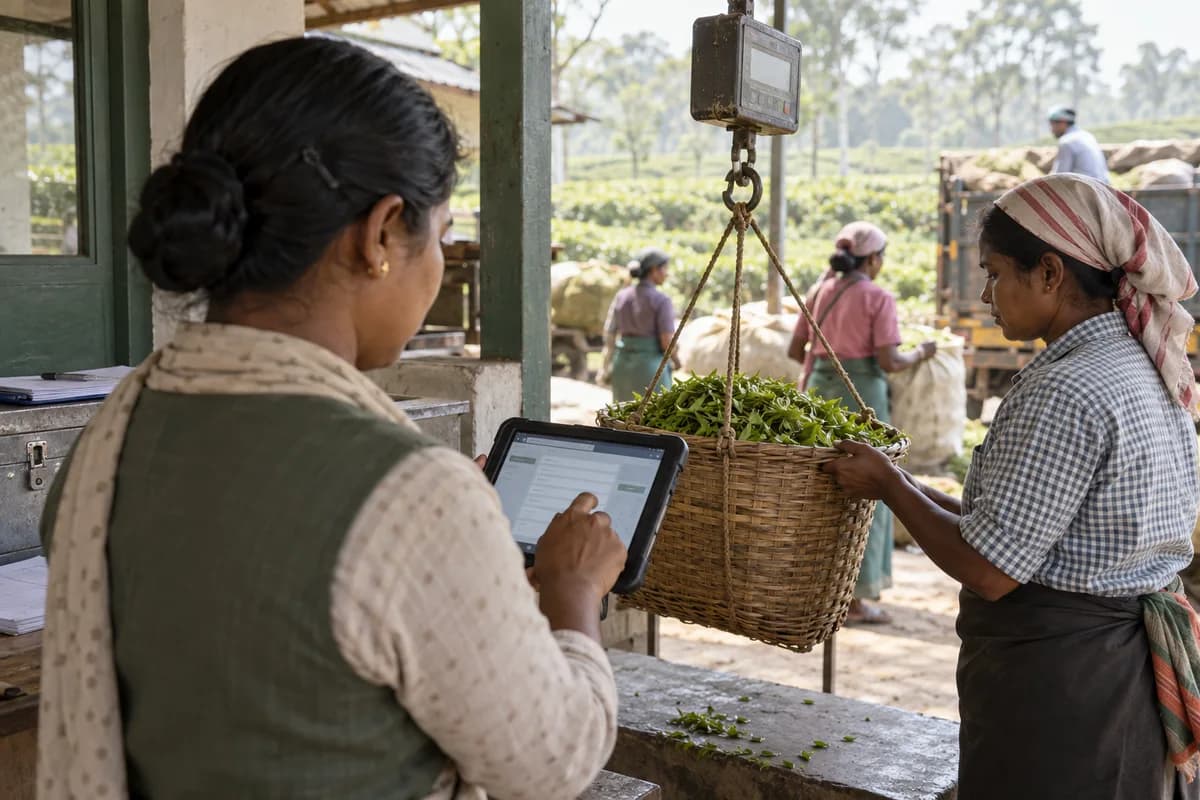
Everything on an estate begins with a basket on a hanging scale at the leaf collection point. If that weight is written on a slip and typed in later, the error is already baked in. Ask any estate system how a weight enters it.
The entry needs a plucker number, a section, a date and a gross weight. Many gardens also record the plucking round and the leaf grade seen at the scale. Fine plucking and coarse plucking pay differently, so the grade has to travel with the weight.
A clerk with a tablet at the scale can enter it once. Nobody copies a register at night. The slip is gone. The weighbridge total for the lorry that carries leaf to the factory then has a figure to be checked against.
- Plucker number and gang or sardar
- Section and plucking round
- Gross weight and basket deduction
- Leaf grade noted at the scale
- Time of weighment and who recorded it
Build the wage and ration sheet from the same weights
Plantation wages are not a single flat figure. A worker may have a daily rate, a leaf target and an extra rate for each kilo above it. Add attendance, the ration entitlement and recoveries, and the sheet is hard to rebuild by hand on a Friday.
If the weights are already in the system, the sheet follows from them. The manager checks exceptions instead of adding columns. Why did this gang fall below target for three days? Was it rain, a short round or a missed entry?
Wage rules differ by estate and by agreement, so the system must let you set them. Do not accept a product that fixes one rule for everyone. Ask to see a sheet for a plucker, a factory worker and a clerk side by side.
- Daily rate, target and extra leaf rate
- Attendance and holiday pay
- Ration and fuel entitlement
- Advances and recoveries
- Provident fund and other statutory deductions
Carry leaf into the factory and out as made tea
Leaf received is not made tea produced. Between them sit withering, rolling, fermentation, drying and sorting, and each stage loses weight. A good system records leaf in, the made tea out by grade, and the out-turn between them.
Grades such as BOP, BOPF, dust and fannings leave the sorting machine in separate lots. Each lot needs a lot number, a gross weight, a tare and a packing date. Stock moves from the packing room to the warehouse to the broker’s sale or a private buyer.
Out-turn is the number the head office watches. If it drifts, you want to see which day, which withering trough or which section’s leaf was involved. A monthly total tells you nothing about cause.
Plan for offices that lose power and signal
Upper Assam gardens sit far from the nearest town. Power cuts are common, and a mobile signal at the factory may come and go. A system that needs a live connection at every entry will stop at exactly the wrong moment.
Ask for an app that stores entries on the device and syncs later. Ask what happens when two people edit the same record while offline. Ask where the data lives and how a copy reaches head office.
Test it on site. Switch off the router and make twenty entries. Switch it on and watch them arrive. Do this on the estate, not in a demo room. Rain on the roof is part of the test.
- Entry works with no signal
- Sync resolves clashes without losing data
- Backup to a second location, not only the office PC
- Screens usable by a clerk with basic training
- Reports in Hindi, Assamese or English as your team prefers
Choose by running one real week
Do not judge from a brochure. Ask the vendor to load one real week from a single division: the leaf weights, the attendance, the factory sheet and the dispatch. Then compare the output with the register you already trust.
Where the figures differ, find out why. Sometimes the old register was wrong. Sometimes the system missed a rule. Both are worth knowing before you commit the whole estate.
Take that week to your senior assistant manager and your accountant. Ask each to sign off the part they own. Their answers will tell you more than any feature list.
Estate system selection sheet
A single-page selection sheet with five rows: leaf weighment, wage and ration sheet, factory out-turn, made tea stock and offline working. Each row has columns for what you do today and what the system must do. More columns record what the vendor showed on site, who signed it off and a pass or fail mark.
Open a blank worksheet to printQuestions owners ask
Can one system run both the garden and the factory?
Yes, if it shares one record of leaf from the scale to the sorting room. Separate tools for each side force someone to retype the leaf total, and that is where disputes begin.
How do we handle plucker wages when weights are entered late?
Entries made offline carry the time of weighment, not the time of syncing. The wage sheet should read the weighment date, so a late sync does not move a day’s leaf into the wrong week.
Should we keep the paper register as well?
Run both for a few weeks while you compare them. Once the figures agree for several consecutive weeks, retire the register and keep the system’s backup.
Is cloud software a bad fit for remote gardens?
Not if the app works offline and syncs when a signal returns. Pure online tools are the risk. Test the offline behaviour on the estate before you decide.