In this guide 6 sections
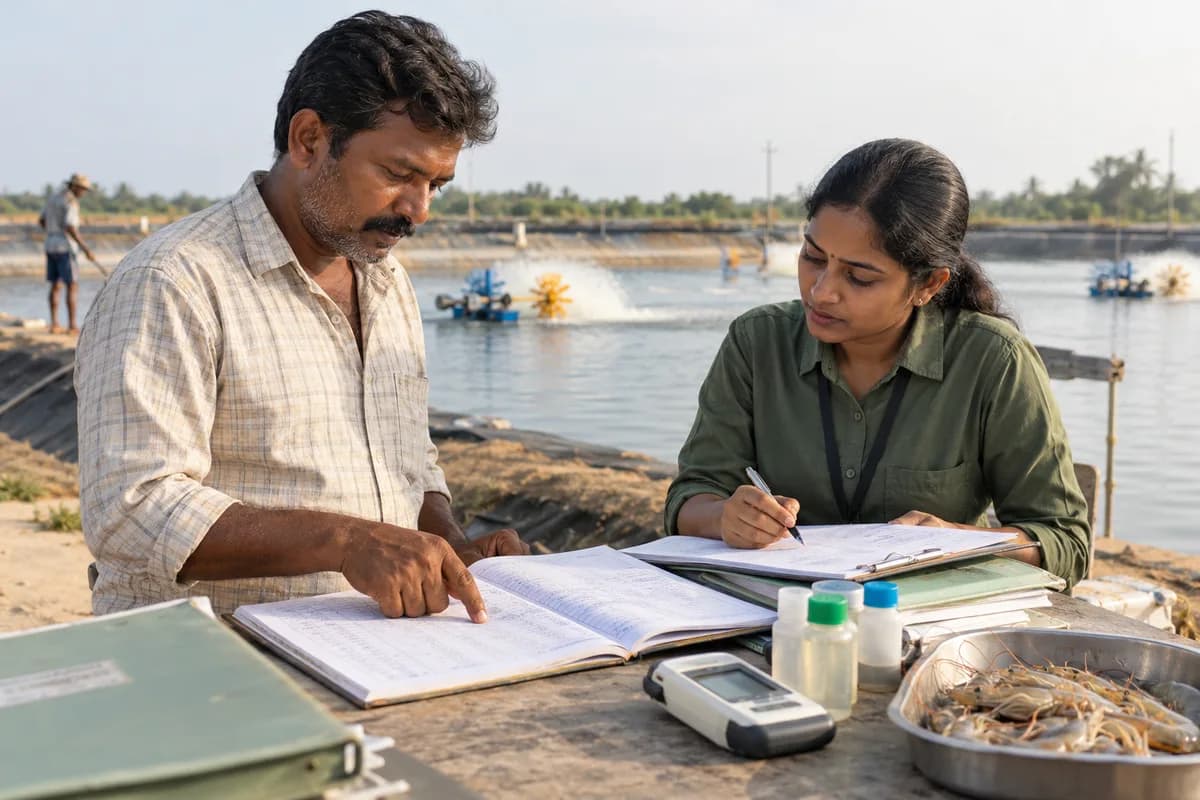
Exporters and plants want one record per pond. It shows where the seed came from, what feed and probiotics went in, the daily water readings, any treatment, and the harvest lot that left. Held together, these answer traceability and aquaculture authority queries fast, without rebuilding the story from memory.
Why the plant asks about your pond at all
A processing plant near Nellore or Bhimavaram does not buy only shrimp. It buys a history. The exporter shipping to a foreign buyer must show where each lot came from, which pond grew it and what went into that pond.
When a buyer finds a problem, the question travels back down the chain. Which plant? Which harvest? Which pond? Your records are the last link, and if they are missing, the whole lot can be questioned by every party above you.
So the plant asks for a pond-wise file at the time of harvest. A farm that can hand it over in minutes is easier to buy from.
Start the file with seed and stocking
Every pond record begins on the day of stocking. Note the hatchery, the batch number, the quantity of post-larvae and the date they went in. Keep the hatchery’s health test report in the same file.
Add the pond number, its area and the stocking density you planned. If you stock after a dry-out and liming, record that too. Ponds with different histories behave differently, and a plant that audits your file wants to know why.
Never mix batches in one pond without writing it down. A mixed entry is the first thing a traceability query cannot untangle.
- Hatchery name and seed batch number
- Post-larvae count and stocking date
- Hatchery health test report reference
- Pond number, area and preparation notes
Feed, probiotics and treatments, day by day
This is where most farms are thin. Feeding happens twice or more a day, yet the notebook gets filled at the end of the week, if at all. Memory is a poor witness.
A plant wants feed brand, batch and quantity, plus every probiotic, mineral and pond additive with its dose. Any antibiotic or banned substance is a hard stop, so show the product list used and keep the purchase bills.
If a treatment was applied, write the product, the date and the withdrawal period before harvest. Without that, a residue query has no answer, and the plant may hold the whole consignment while it waits.
- Feed brand, batch and daily quantity
- Probiotics and additives with dose and date
- Treatment product and withdrawal period
- Purchase bills for every input
Water readings and what they show
Dissolved oxygen, pH, salinity, ammonia and temperature tell the story of a crop, and readings taken at dawn and dusk matter most. Take them with the same meter and the same routine each day.
Record the value, the time and who took it. A gap on the sheet is better than an invented figure. Plants and auditors notice figures that look too tidy.
When a disease outbreak hits, the readings help explain it. They also show you were watching the pond before the trouble began, which counts with a buyer deciding whether to trust you next season.
Harvest lots and the registration file
At harvest, give each lot an identifier that ties back to the pond and the stocking date. Record the harvest date, the count per kilo, the total weight, the ice used and the vehicle that carried it to the plant.
Keep the aquaculture authority registration for the farm in the same folder as the pond files. Renewal dates, the farm layout and the list of ponds registered should match what you actually stock.
Start this week. Pick one pond, build its file from stocking day, and hand it to your buyer’s field officer for comment.
Pond record starter sheet
A one-page pond log. The top block holds pond number, area, hatchery, seed batch and stocking date. The middle grid has one row per day with feed, additives, dawn and dusk water readings and a remarks box. The bottom block records harvest date, count per kilo, weight, lot identifier and vehicle.
Open a blank worksheet to printQuestions owners ask
Do small farms need the same records as large ones?
The plant asks the same questions of every supplier. A small farm can keep a simpler sheet, but seed source, inputs and harvest lot must still be there.
How long should pond records be kept?
Ask your processor and the aquaculture authority for their requirement. Keeping files for several crops is common, and storing them digitally makes this easy.
Can records be kept in a notebook?
They can, but notebooks get lost, wet and rewritten. A phone entry with a date stamp is easier to trust, and software can sort entries by pond.
What if a buyer asks about a past crop?
Search by the lot identifier, open the pond file and read out seed, inputs and harvest details. That is the reason to keep the identifier on every document.