In this guide 6 sections
Lighting returns are mostly fit problems, not faults. The common causes are a bulb base the socket cannot take, a plug or voltage built for another country and a colour of light that looks wrong. Dimmer clashes and a low outdoor IP rating catch the rest.
Sort last quarter’s returns by cause before changing anything
Export every lighting return from the last quarter with its reason code, free-text note, product, destination country and photos, one row per order line. Reasons such as does not fit or not as described hide the real cause, so read the notes and photos for a sample of each product type.
Count the tags by product and by country. Clusters point at a missing field.
Replace the vague reason list too. Offer choices such as bulb will not go in, plug does not fit the socket, light too cold, flickers on dimmer and fitting too small for the ceiling.
- Fit: base, plug, size or ceiling does not match
- Light quality: colour, brightness or beam is not what was expected
- Dimmer: flicker, buzz or no dimming
- Damage: broken glass, bent arm or loose cable in transit
- Change of mind: no fault and no mismatch
Bulb base, voltage and plug decide whether it fits at all
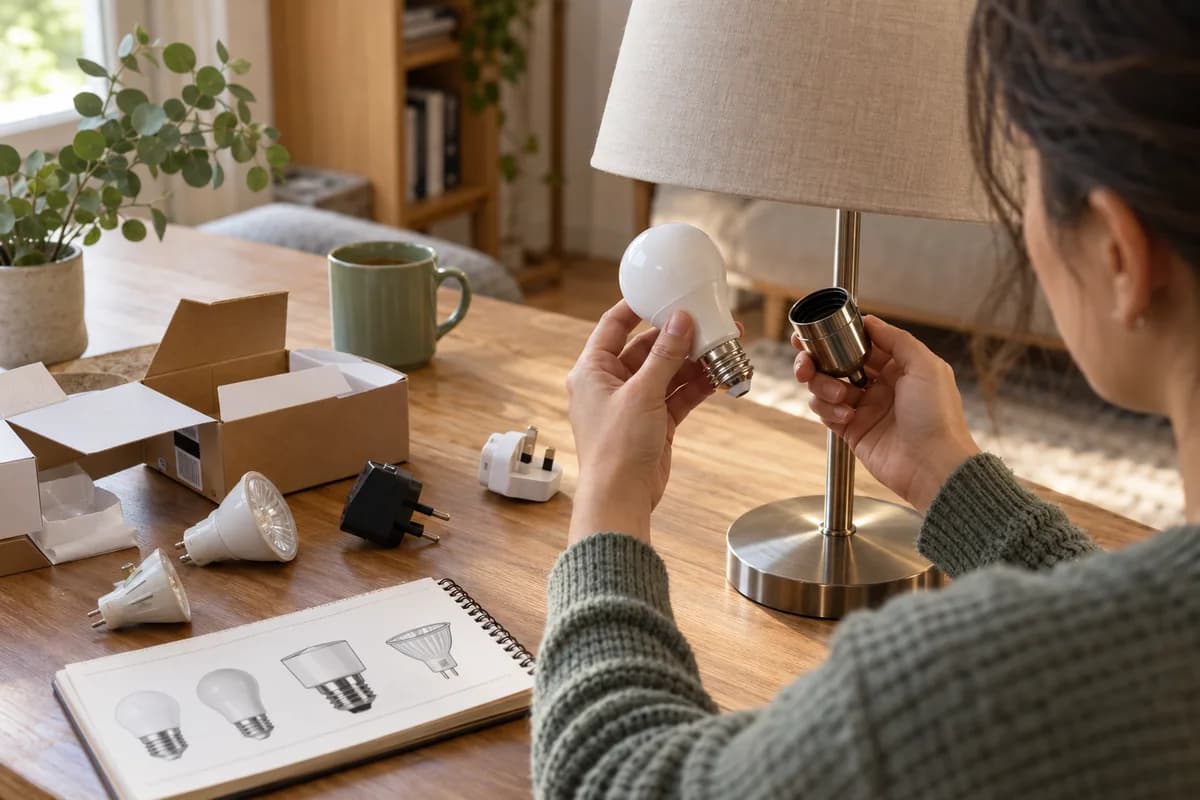
The cap must match the socket. E27 is the large screw cap common in Europe, E26 is its American cousin, and E14 is the small screw cap of candle bulbs.
GU10 spots twist into the fitting and run on mains voltage, while the pin-based MR16 type usually needs a transformer to step it down. B22 is the British bayonet cap. Shoppers buy by looks, not by cap.
Plug and voltage come next. A table lamp bound for another country needs the plug type and mains rating of that country, whether American, Continental, British or Australian. Hardwired fittings raise a separate question about who installs them, so say plainly that a ceiling light or a driver needs a qualified electrician where local rules require one.
- Cap type: E27, E26, E14, GU10, B22 or a pin base
- Bulb included or sold separately, and the highest wattage the fitting takes
- Mains voltage and frequency on the rating plate
- Plug type for each destination country, or hardwired
- Installation: plug-in, hardwired or needs a driver
Colour and brightness are judged by eye, so describe them
Colour temperature is measured in kelvin. Low numbers read as warm yellow and high numbers as cold blue-white, so print the kelvin value beside a plain word such as warm white, neutral white or daylight. Name the room each tone suits, such as warm white for bedrooms and daylight for a garage workbench, because shoppers choose by room, not by kelvin.
Brightness is the next trap. Shoppers raised on filament bulbs still read watts as a measure of light, yet an LED rated in watts gives the same light for far less power. Lead with lumens, keep watts for power.
Mixed colours in one room look wrong, so sell matching bulbs as a set and show the same room at warm and cool settings. Spots need a beam angle. Kitchens and dressing tables need the colour rendering index, which tells shoppers how true skin and food will look.
Dimmers and outdoor use have their own traps
LEDs flicker, buzz or cut out on dimmers. Mark each bulb as dimmable or not, state the dimmer type it suits, whether leading edge or trailing edge, and publish a list of dimmers you have tested.
The IP rating covers dust and water. Its first digit is for solids and its second for water, and a bathroom or garden light needs a higher second digit than a living room lamp.
Spell the rating out in words. Wet rooms and open gardens are different jobs.
- Dimmable: yes or no, plus the dimmer types tested
- Minimum load of the dimmer, where it matters
- IP rating with a use written beside it, such as wet room or open garden
- Wire or chain length and ceiling canopy width for pendants
Turn the causes into fields, filters and one check before payment
Start with the five products that return most. Add the missing fields from the sheet below, and turn cap type, colour temperature, lumens and plug type into filters on the category page.
Before payment, show one line that repeats the cap, plug and colour of light, and ask the shopper to confirm that it matches the room. The line costs nothing. It catches the order that would return.
Watch the fit tag for a month. Where it still clusters on one product, add a photo of the fitting beside a coin, a ruler or a hand so scale is obvious.
Lighting listing field sheet
One page, a row per lighting product. Columns hold cap type, bulb included, highest wattage, mains voltage and plug type by destination, then hardwired or plug-in, plus colour temperature in kelvin and in words. The remaining columns cover lumens, dimmable status with the dimmers tested, beam angle, IP rating written in words and the drop of a pendant. Empty cells show where a return is waiting.
Open a blank worksheet to printQuestions owners ask
Why do lighting orders come back when the product works?
Because it works in the supplier’s test and not in the shopper’s house, where the cap, plug, colour of light or dimmer does not match. Check the return notes for those words first.
Do plug-in lamps need a separate listing for each country?
Usually a separate variant, yes. The plug and mains rating differ between regions, so each destination needs the version that carries its own plug and rating plate.
Should brightness be shown in lumens or watts?
Lumens first, because they measure light. Show watts as the power draw. If shoppers still think in filament bulbs, add a line that compares the new light with an older bulb type and its wattage.
How do I reduce dimmer complaints?
Mark bulbs as dimmable or not, state the dimmer types tested and publish a short list of dimmer models that worked. Warn on the page, not after the return.