In this guide 6 sections
Curtain orders get remade when a measurement, a fabric lot or a heading style changes hands without a record. Write each window’s width and drop on one sheet, allocate the roll before cutting, check the cut against the sheet, and confirm the fitting the same way.
The remake starts at the window
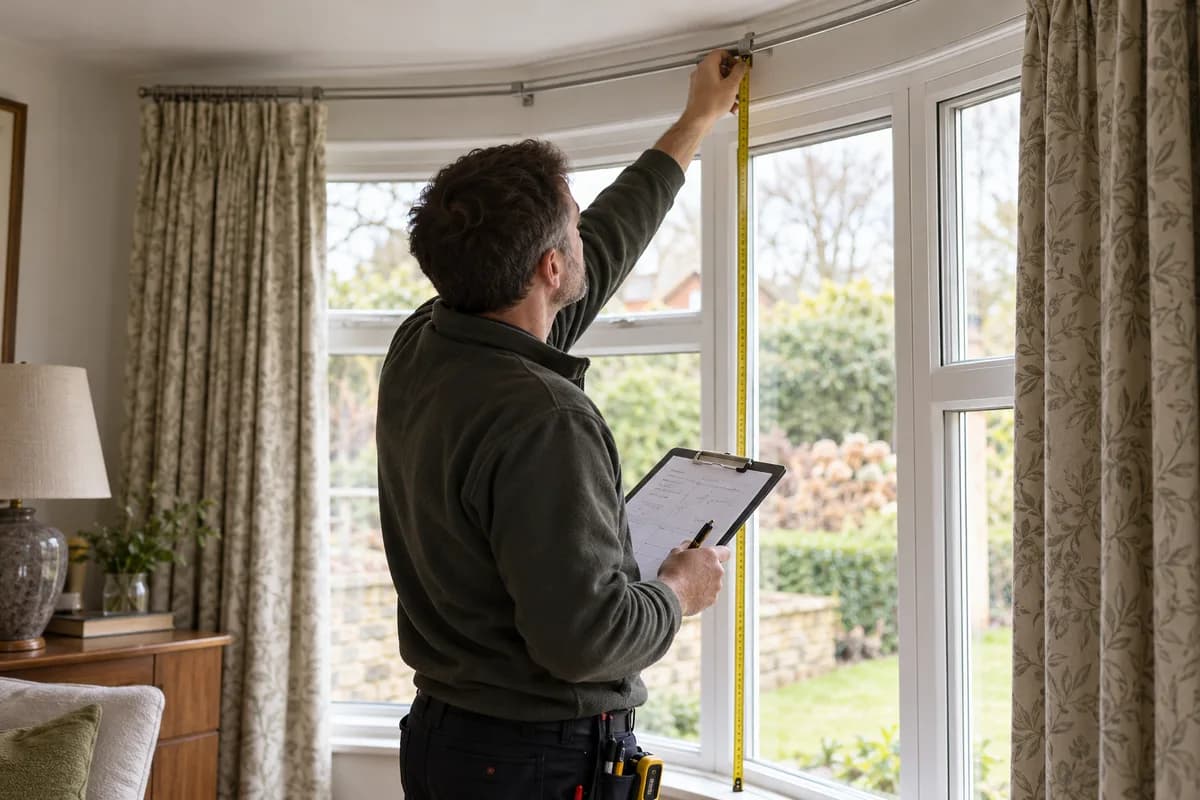
A fitter measures a bay window on site, jots numbers on the back of a quotation and drives back. Is the drop taken to the floor, to the sill or to the track? The note does not say.
By the time the order reaches the stitching table, the fitter’s memory is the only source of that answer. Small gaps become large ones after the fabric is cut. Cut cloth cannot be put back on the roll.
Measure per window, never per room. Each window gets its own line with a name, a width, a drop, a track or rod position and a fixing type.
- Width taken at track length, not window glass
- Drop measured to floor, sill or apron, written out
- Wall and ceiling fixing noted before the fitter leaves
- Stack-back space for heavy curtains
- Photo of each window with a tape visible
Fullness, hems and pattern repeat change the cut
The finished width is not the cut width. Fullness for pleats, side hems, heading tape and turn-ups all add cloth. A wave heading needs a different multiplier from a pencil pleat.
Patterned fabric adds the pattern repeat. Each drop must start at the same point in the motif, so cut lengths round up to a whole repeat. Forget it and the stripes will not meet across two panels.
Write the formula on the order, not just the result. The person at the cutting table can then check the number rather than trust it.
Fabric rolls and lots decide the colour
Two rolls of the same design can differ in shade because they came from different dye lots. A pair of curtains cut from two lots look faintly mismatched in daylight. The customer sees it before you do.
Allocate the roll to the order before cutting. Note the roll number and lot on the order sheet, and cut all panels for one room from the same roll. If one roll is short, say so at the order stage.
Offcuts matter too. A remnant tagged with its lot can fix a small repair later without a new roll.
- Roll number and dye lot on the order sheet
- All panels for one room from one lot
- Shortfall flagged before cutting begins
- Remnants labelled with lot and length
Stitching and fitting catch what the sheet missed
Before stitching, the supervisor checks the cut panels against the order sheet. It takes two minutes. It catches a panel cut to the wrong drop while it can still be re-hemmed.
At fitting, the installer hangs the curtain and reads the drop against the sheet. A curtain that pools on the floor or stops short should go back with a note stating by how much. Vague feedback gives the workshop nothing to correct.
Get a signature or a message of acceptance from the customer on the day. It settles whether a later complaint is a remake or a change of mind.
Count remakes by cause for one month
Keep a log of every remake for a month. Tag each one: measurement, formula, lot, stitching or fitting. Patterns appear quickly, and most shops find one cause dominates.
Fix that one step first, then recheck the log. A single measurement sheet used by fitter, cutter and installer is usually the best opening change.
Window by window order sheet
Single page, a line for each window. Columns: room, window, width, drop, drop reference, fixing type, heading style, fullness multiplier, pattern repeat, roll number, dye lot, cut length, stitched check, fitted check and customer sign-off. A remake log below has columns for cause, panel, cost and the step to change.
Open a blank worksheet to printQuestions owners ask
Who should take the final measurement?
The person who will fit the curtain, where possible. Fitters know how the track sits and how the fabric hangs. If a salesperson measures, the fitter should confirm on a quick visit.
How do I handle a customer who changes the fabric?
Treat it as a new order line. Cancel the old roll allocation, re-run the cut formula for the new cloth and record the change date on the sheet.
Should linings be on the same sheet?
Yes. Lining width, hem and attachment method affect the cut and the drop. Keep them as separate columns on the same window row.
Is paper enough for this?
Paper works for a small shop. It struggles when roll stock, lots and several fitters are involved, since lookups across orders become slow.