In this guide 6 sections
Returns lose their lot link because the person sending them back rarely has the lot number, which sat on a sterile pouch or carton that was thrown away. You rebuild the link at receiving by logging the item, reading any remaining marks, matching them to dispatch records and quarantining the rest.
Why the lot number is gone by the time it comes back
A nurse opens a syringe pack or a catheter kit, uses it, and drops the outer carton in the bin with the lot number printed on it. Gone.
A store keeper or purchase officer raises the return request without holding the product, so the form carries an item name and a complaint but no lot number. Sutures, drapes and dressings behave the same way.
The box at your dock says only that some units are wrong, and the packing slip inside names a product code but never a lot.
What receiving has to capture on day one
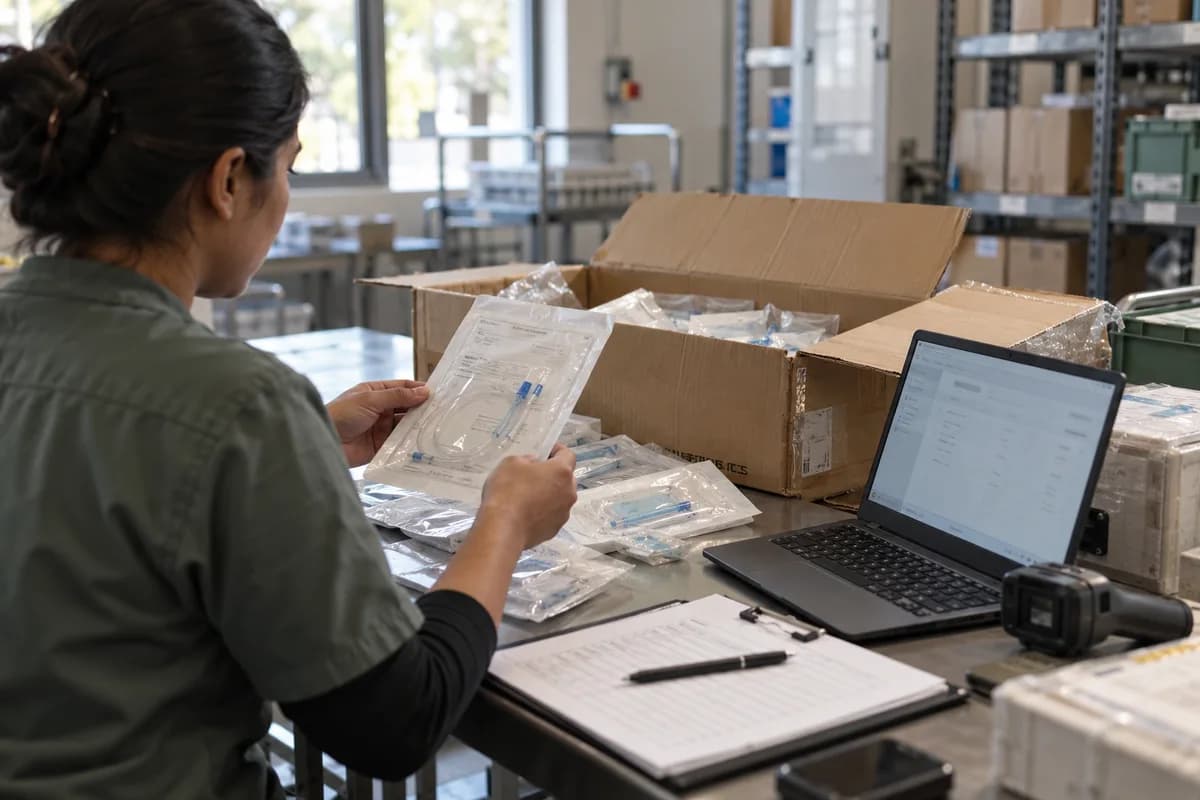
Treat the returns dock as a quality gate. Open each parcel in a marked area away from finished stock, photograph the contents before touching them, and tape the return number to the box.
Record the sender, date, reason, quantity and every readable mark, since blister foil, pouch seals and unit labels often carry a partial lot code.
Tag every return and hold it. Nothing returns to stock from here.
- Sender, hospital department and contact
- Return date and the reason in their words
- Photos of outer pack, inner pack and any label
- Partial lot, expiry or manufacture marks
- Quantity received against quantity claimed
Rebuild the link from dispatch records
If the lot is missing, work backwards. Take the hospital, product code and approximate order date, then list every dispatch to that hospital in that window from the dispatch notes and invoice lines. These documents carry the lot only if your system recorded it at picking time and not merely at production, which a paper stock register rarely does.
Often only one or two lots shipped there, and the expiry printed on the inner pack usually narrows it to a single lot with fair confidence. That is usually enough.
Mark the result as confirmed, probable or unknown, because honest labels matter more than a tidy guess and a wrong lot can trigger the wrong investigation.
Sort the returns before you count them
Not every return is a defect. Some are wrong-size orders, near-expiry stock or transit damage, so sort them into three piles of complaint, commercial return and transit damage before anyone counts anything.
Only complaint returns go to the quality team, who check retained samples of the matching lot and the batch record, while commercial returns follow the credit note process.
Counting by lot across the piles shows patterns. Three complaints on one lot is a signal, whereas three complaints on three different lots usually point to something other than manufacturing, such as storage. Chart the weekly count of complaint returns by lot and by hospital, and review it with the quality head every Monday, not once the quarterly figures arrive.
Close the loop with the customer
Tell the customer’s store keeper to retain the carton or write the lot on the return form, and add a reminder line to the delivery note.
Add a lot field to your return request form and make it optional but prompted, so the share of returns carrying a lot rises over a few months. If your sales team visits the hospital anyway, a ten-minute talk with the stores supervisor about keeping cartons will do better than a reminder email.
This week, take your ten latest returns and mark each as confirmed, probable or unknown, and treat that count as your baseline.
Returns receiving log
This log gives every returned parcel a separate line, and the columns hold return number, hospital, department, date received, product code and quantity claimed against quantity received. Further columns hold marks read from the pack, the photo reference, lot status, return type and hold location, while the last lines list the matched dispatch notes.
Open a blank worksheet to printQuestions owners ask
Should unlabeled returns be rejected?
No. Log them, quarantine them and investigate, because rejecting an unlabeled return can hide a real problem and the customer may stop reporting issues.
Can returned stock be resold?
For sterile disposables, normally not. Your quality procedure decides disposition, and opened or unverifiable product is usually scrapped or kept back as evidence until the complaint file is closed.
How do we get hospitals to send lot numbers?
Ask on the return form, remind them on the delivery note, and train the field sales team to ask for the lot at the time of every visit.
What does software add?
It links each return to the dispatch records, flags repeat lots and keeps photos with the return, so a search that took hours takes a minute.