In this guide 6 sections
Reported scrap looks low because much of the loss never reaches the reject bin. Regrind is reused, purge is weighed as nothing, start up shots are binned unrecorded and shift sheets are typed hours later. Capture reject weight and reason at the press, as it happens.
The reject bin is only part of the loss
Operators count what lands in the red bin. Plenty of material never gets there. Runners and sprues on cold runner moulds are ground up. Purged melt from a colour change goes into a drum. Start up shots after a mould change are dropped on the floor.
Each of these is resin you paid for that did not become a sold part. None of it shows in a count of rejected pieces.
So the scrap number on the monthly report is a floor, not a measure.
- Runners and sprues from cold runner moulds
- Purge from material and colour changes
- Start up and stabilisation shots
- Short shots and flash caught at the press
- Parts sorted out later at final inspection
Regrind turns waste into a reused cost
Once a runner goes through the granulator and back into the hopper, it stops being scrap on paper. The next job consumes it at a blend ratio nobody wrote down. If the grade is glass filled or flame retardant, repeated grinding also shifts properties, and the reject rate on later jobs drifts up.
Track regrind as an inventory item. Record kilograms ground, kilograms reused and the percentage allowed by the customer’s specification, if there is one. The gap between ground and reused is stock that is piling up in a corner.
A full bin behind the granulator is a number too.
Purging and start up shots are real consumption
A press that changes from black ABS to natural polypropylene can burn through a whole drum of purging compound and several kilograms of resin before parts run clean. Nobody enters this as a reject. It is booked as normal running time.
Start up has the same problem. After a mould change, the first dozen shots may be short or discoloured. Setters throw them away because it takes less time than writing them down.
Give setters a quick way to log it. A single field for purge kilograms and another for start up shots per changeover is enough.
Late typed shift sheets blur the truth
Handwritten shift sheets are collected when the shift closes and typed into a spreadsheet the next morning, sometimes the next week. By then the operator cannot recall why forty shots were rejected. The reason becomes “various”.
Rounding makes it worse. A press that ran three jobs gets one line. Counts are copied from the previous shift to fill gaps.
Reason codes entered at the press, with a time stamp, fix most of this. Four or five codes are plenty: short shot, flash, black specks, sink marks, other.
- Reject count and weight, per job
- Reason code picked from a short list
- Time of entry, not time of typing
- Purge and start up weight per changeover
- Regrind ground and reused
Capture at the press and compare against resin issued
The strongest check is a mass balance. Resin issued to the job, minus good parts shipped, minus regrind returned, should leave a small remainder. If it leaves a large one, material is going somewhere unrecorded.
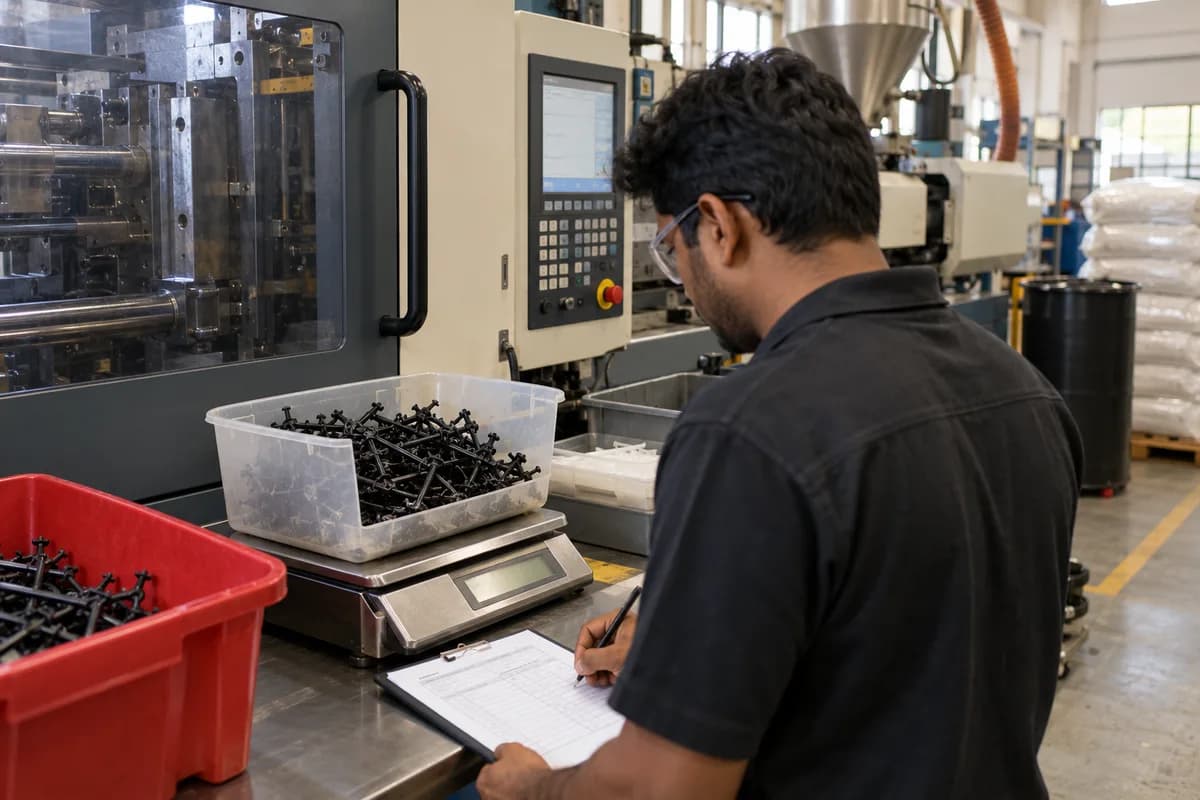
Run this for one high volume job first. Weigh the issued bags, count the good parts, weigh the runners and rejects. Compare with what the shift sheet claims.
The first gap you find tells you which of the losses above to track next. Start with that one.
Press side loss log
A one-page sheet kept at the press, one row per event. Columns are time, job number, event type (reject, purge, start up shot, regrind), weight in kilograms, count, reason code and operator initials. A footer block holds the end of job mass balance: resin issued, good parts weight, regrind returned and unexplained remainder.
Open a blank worksheet to printQuestions owners ask
Is regrind counted as scrap?
Practices differ. Treat it as a separate stream and track it, because reuse hides the original loss and can affect part quality on later jobs.
How do we measure purge without slowing setters down?
Put a scale at the press and ask for one weight at the end of a changeover. A single number per changeover is enough to start.
Why not just add scrap allowance to the quote?
An allowance built on a reported rate that hides losses stays too low. Measure the real figure for a few jobs first, then set the allowance.
Can machine data replace manual entry?
Press controllers report shot counts and cycle times. They do not know why a part was rejected, so a reason code still comes from a person.