Field-Sales and Multi-Branch Automation
Field-sales and multi-branch automation captures orders, visits and collections on a phone at the customer site. Every branch reports into one set of item, customer and vendor masters.
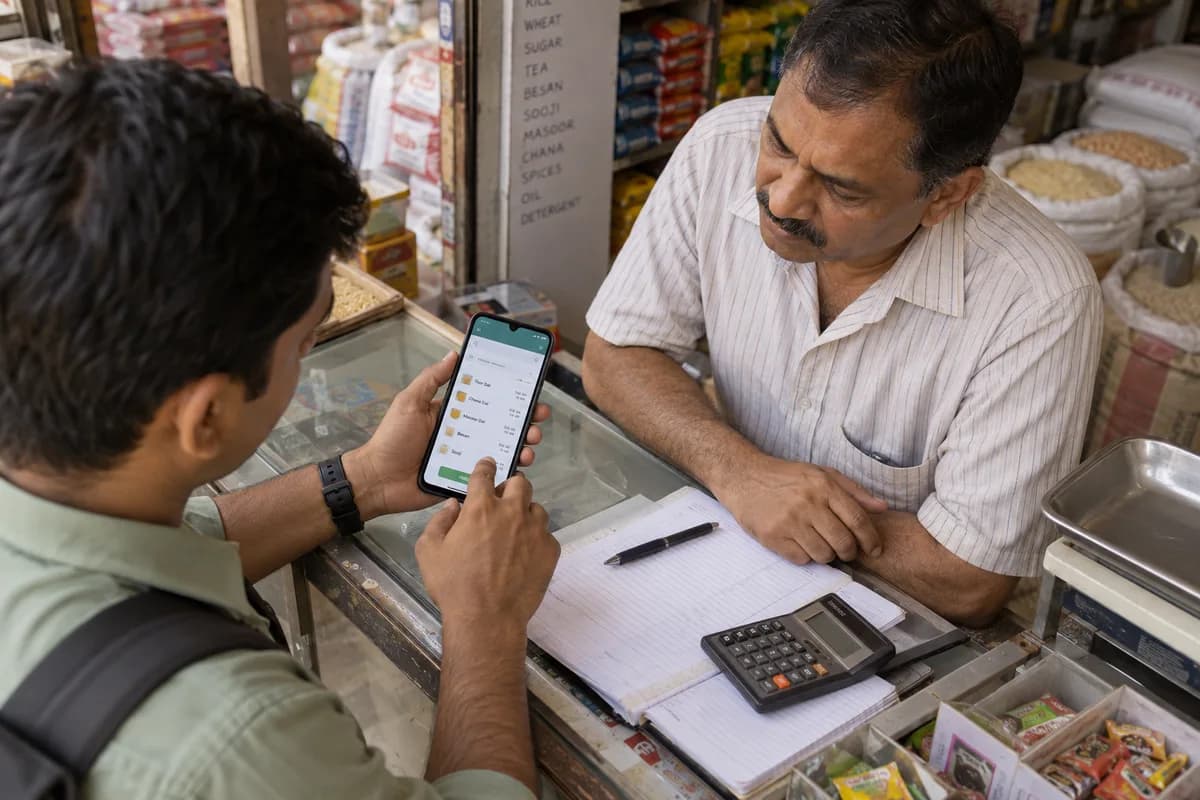
At the Customer’s Counter
Bringing Branches Together
The software part is straightforward. Agreeing item names takes more work, because two branches may call the same item by different names and neither is wrong. That is settled first.
- Shared item, customer and vendor masters, cleaned once and owned by one person
- Branch-level pricing and credit limits where the trade genuinely differs
- Transfers between branches recorded as movements, not as a phone call and a note
- One consolidated view, with each branch still able to see only its own rows
Field Team Adoption
Field teams may resist a phone that tracks their day. Rollouts go better when salespeople receive something first: their own outstanding list, a faster order and a receipt. The route report comes later.
Frequently asked questions
Does field-sales and multi-branch automation need a smartphone for every person?
For order capture, yes, and an entry-level Android handset is enough. Where someone will not carry one, a supervisor can enter on their behalf, though the timing is lost. Branch consolidation itself needs no phones at all, since it works from the masters and the transactions already recorded.
Our branches each run their own pricing. Must that be standardised?
No, not the prices. Branch-wise rates, slabs and credit terms can differ. Item codes cannot, because consolidated numbers need one master list.
Can we see where our field staff were during the day?
Partly. Location can be captured when an order or a visit is recorded. Continuous tracking is technically possible, and whether to use it is your decision, told plainly to the team.
Tell us what you need.
Share your requirements and one of our engineers will come back to you within one business day.
What happens after you share your requirements
- A senior engineer reads your answers. Nobody phones first.
- Within one business day you get a written note: what we understood, what we would start with, and the questions we still have.
- If it fits, a proposal follows with the order of work, what we need from you and what you receive at each step.
- No call is booked and nothing is paid until you have read the note. Your details stay with us.
Start with your requirements
Seven short steps that tell us what you need. A senior engineer reads them before anyone gets in touch.
Share your requirements