Business solutions for Ceramic coating studios
Explore software for work such as “Vehicle surface assessment and preparation-scope records”. Review each business function below, including when it fits and what to check before implementation.
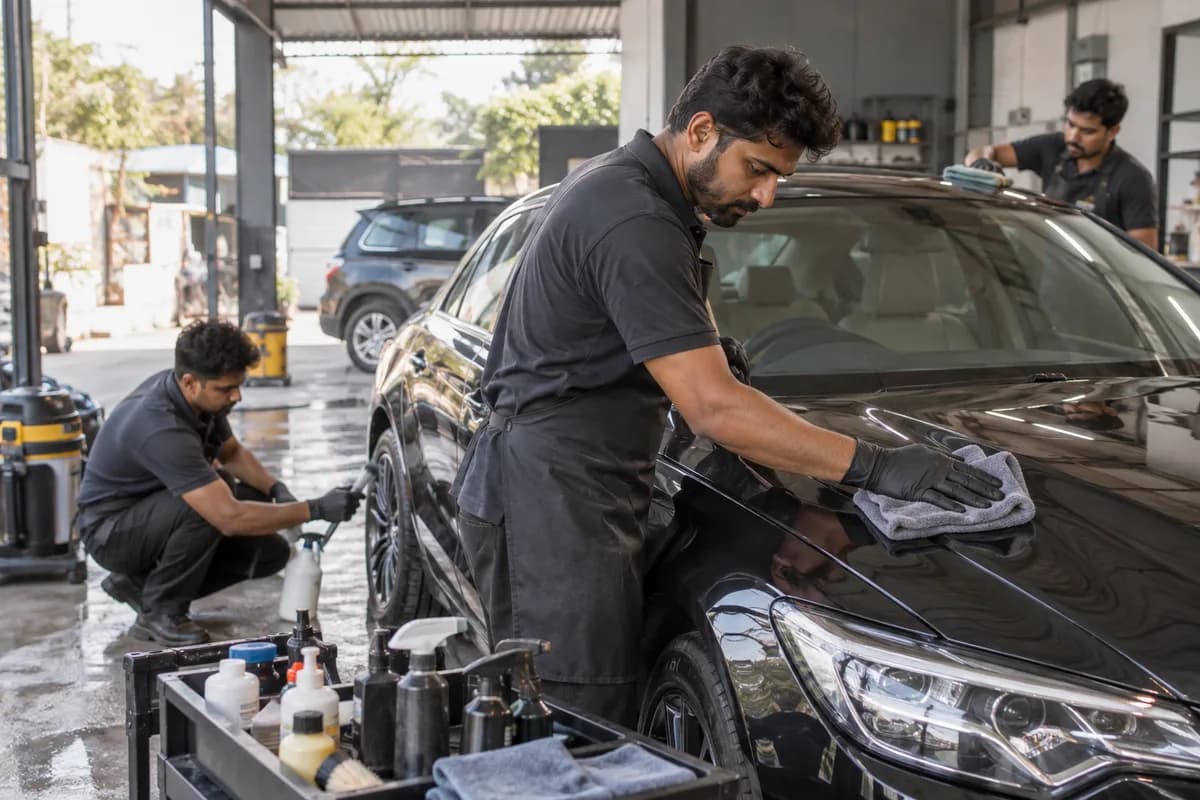
How the business operates.
A coating booking can look simple until the vehicle inspection reveals a repainted panel, an existing surface treatment or preparation beyond the quoted scope. The studio needs a record of the actual surface, accepted preparation, selected coating and responsible applicator. Keep preparation review, application completion and collection readiness as separate decisions. This workflow covers automotive paint coating in a studio. Other surfaces and treatments need their own suitability assessment; the software record does not choose the product or determine how it should be applied.
The records that hold the operation together.
- Vehicle and panel-condition photographs with access controls and separate publicity consent
- Surface and prior-treatment assessment, unresolved questions and accepted preparation
- Quote version, selected coating, covered areas and customer decisions
- Product identity, batch or serial reference where applicable, issue quantity and container status
- Preparation and application stage owners, review findings and bay hold
- Responsible collection decision, supplied care document and customer acknowledgement
- Applicable programme terms, registration response and later inspection or concern history
Operational bottlenecks to check
Preparation exceeds the accepted quote
Identify the affected surface and additional work before revising the price or job instruction. Keep declined work and its technical implication with the responsible reviewer.
The diary releases a bay before the vehicle
Track actual occupancy and the release hold. A revised collection arrangement should update affected bookings without shortening the specialist’s required review.
A product concern arrives without a usable file
Connect the area reported to intake condition, application product and final inspection. Missing registration evidence remains missing until verified; a completed internal job does not recreate an external response.
Follow the work across teams.
This is a planning flow. Confirm the steps, owners and approval rules against your actual operation.
Roles and responsibility boundaries.
Reports your managers need.
- Jobs awaiting surface assessment or a changed-preparation decision
- Vehicles by preparation, application, review and collection-hold status
- Coating-product issues, opened containers and held stock
- Bay conflicts and revised collection arrangements
- Open inspection concerns and external product enquiries by owner
Connections to scope
- Existing customer, photograph and job records need a checked vehicle identifier and controlled access. Permission to hold condition evidence is distinct from permission to publish it.
- Manufacturer product documents or registration portals require actual access and an agreed reference handoff. No authorisation status or automatic registration is implied.
- Stock, booking and accounting connections need stable product and job references. Manual records can be used while a supported connection is assessed.
Confirm data access, record ownership and the exchange method for each connection. Inclusion here does not mean every connection is available in a standard package.
Setup decisions and adoption risks.
Use these requirements to plan phases, data migration and user training. Agree the release sequence after reviewing your current systems.
Limitations to settle before implementation
- Qualified specialists determine surface suitability, preparation methods, product use and release conditions. The software records their decisions.
- Manufacturer programme eligibility, registration acceptance and claim outcomes depend on the actual product and terms. No certification or representation is assumed.
- Paint repair, PPF installation, mobile coating operations and specialist non-paint surfaces require separate confirmed scope.
Modules to consider first.
These functions connect to the operating model above. Confirm each one against the work your business actually runs.
Choose the operation you want to improve.
Use these activities to explain your scope. Your business does not need every function in the directory.
- Vehicle surface assessment and preparation-scope records
- Product-specific coating quotations and customer decisions
- Preparation, application and inspection stage tracking
- Coating-product issues, container status and job references
- Bay occupancy, release decisions and handover documentation
- Post-service concerns and product-document follow-up
Explore the business functions.
Production, stock, fleet and recurring billing functions apply only where your business runs those activities. Read the suitability conditions on each page.
Helpdesk
Finance & Accounting
Field Service
Bookings and Appointments
Inventory Management
Start with the problem your team can describe.
Bring a sample record and show where information is copied, missed or waiting for approval. Scope the first useful change from there.
What happens after you share your requirements
- We review your brief and the systems you already use.
- We clarify the workflow, missing information and the work to consider first.
- The proposed scope sets out the deliverables, responsibilities and dependencies.
- Review the scope and commercial terms before deciding whether to proceed.
Start with your requirements
Describe your current process, the people involved and the change you need. Start with the details you know; we can clarify the rest together.
Share your requirements