Business solutions for Small engine and generator repair shops
Explore software for work such as “Workshop asset intake and separate engine identification”. Review each business function below, including when it fits and what to check before implementation.
How the business operates.
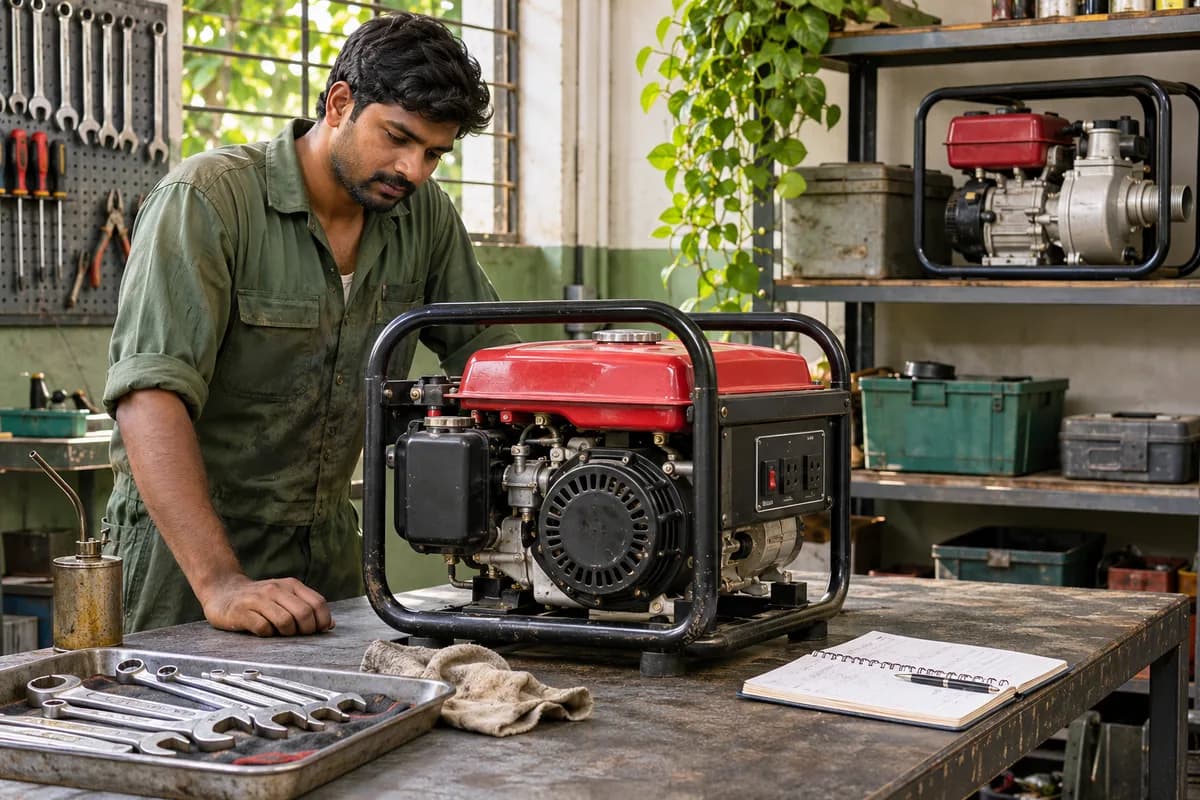
Two similar generators arrive at the counter, but one has a different engine and the other is missing a supplied lead. A workshop needs an identified asset and custody record before ordering parts or promising a repair. This scope covers workshop-received small engines, portable generators and supported engine-powered equipment such as pumps or garden tools. It follows assessment, accepted work, actual parts and recorded tests through collection. Large installed power systems, building connections and on-site work need separately confirmed capability and arrangements. The software records decisions; qualified people determine diagnosis, test methods and technical release.
The records that hold the operation together.
- Workshop asset identifier and customer ownership or custody reference
- Equipment model and serial with separate engine model, type or code where applicable
- Supplied accessories, condition and reported symptom
- Assessment findings and accepted estimate revisions
- Parts specification, supplier receipt, job issue and removed-part disposition
- Work entries, external specialist handoffs and returned components
- Test record with conditions, observations, limitations and reviewer
- Collection recipient, actual items returned, invoice and receipts
Operational bottlenecks to check
A part fits the description but not the variant
Equipment and engine references can point to different parts lists. A supplier description or similar-looking component needs qualified fitment review before it becomes an accepted substitution.
The repair exceeds the telephone estimate
Preserve the original assessment basis and the later findings. Staff need to see what the customer accepted, declined or has not answered before continuing chargeable work.
A working engine hides an incomplete equipment check
Keep engine work, generator output assessment and the rest of the equipment’s accepted checks distinct. The technical reviewer records the actual test scope rather than treating one observation as whole-system readiness.
Follow the work across teams.
This is a planning flow. Confirm the steps, owners and approval rules against your actual operation.
Roles and responsibility boundaries.
Reports your managers need.
- Assets awaiting identity clarification or customer decisions
- Jobs blocked by specific parts or outside specialist work
- Issued parts without matching use or return records
- Tests outstanding and limited-test outcomes by asset
- Completed work awaiting authorised collection
- Assessment and repair charges with unresolved allocations
Connections to scope
- Manufacturer parts and documentation lookup requires supported access and the actual model references; software matching is not a compatibility decision.
- Supplier and external specialist records need asset and component identifiers with custody acknowledgement.
- Test attachments and accounting records require the same workshop job reference; no automatic diagnostic equipment connection is assumed.
Confirm data access, record ownership and the exchange method for each connection. Inclusion here does not mean every connection is available in a standard package.
Setup decisions and adoption risks.
Use these requirements to plan phases, data migration and user training. Agree the release sequence after reviewing your current systems.
Limitations to settle before implementation
- Diagnosis, mechanical and electrical methods, test conditions and safe release remain with suitably qualified responsible people.
- Workshop records do not certify electrical installation, emissions status, continuous output or readiness for a customer’s site.
- On-site service, annual maintenance contracts, load-bank testing, engine conversion and large standby installations are not included by default.
- Part provenance and warranty correspondence can be recorded without establishing manufacturer authorisation, warranty entitlement or universal compatibility.
Modules to consider first.
These functions connect to the operating model above. Confirm each one against the work your business actually runs.
Choose the operation you want to improve.
Use these activities to explain your scope. Your business does not need every function in the directory.
- Workshop asset intake and separate engine identification
- Assessment findings and accepted repair revisions
- Model-specific parts issues and customer-component custody
- Outside specialist component handoffs
- Recorded tests, limitations and technical review
- Authorised asset collection and actual-work billing
Explore the business functions.
Production, stock, fleet and recurring billing functions apply only where your business runs those activities. Read the suitability conditions on each page.
Finance & Accounting
Field Service
Inventory Management
Start with the problem your team can describe.
Bring a sample record and show where information is copied, missed or waiting for approval. Scope the first useful change from there.
What happens after you share your requirements
- We review your brief and the systems you already use.
- We clarify the workflow, missing information and the work to consider first.
- The proposed scope sets out the deliverables, responsibilities and dependencies.
- Review the scope and commercial terms before deciding whether to proceed.
Start with your requirements
Describe your current process, the people involved and the change you need. Start with the details you know; we can clarify the rest together.
Share your requirements