In this guide 6 sections
Ship part built or boxed bikes for most online orders. The carton is smaller, it costs less to move, and it survives rough handling better than a built bike in a van sized box. Assembled suits local delivery. An e-bike adds battery rules.
What each way actually sends to the buyer
Fully assembled means the bike is built, tuned and checked, then rolled into a van or a large carton. The buyer unpacks it and rides. It suits deliveries in your own van, where the bike never meets a conveyor belt, a sorting hub or a stranger stacking parcels on top of it.
Part built means you build and tune the bike, then take off the front wheel and pedals, drop the saddle and turn the bars. A hex key and a spanner finish the job.
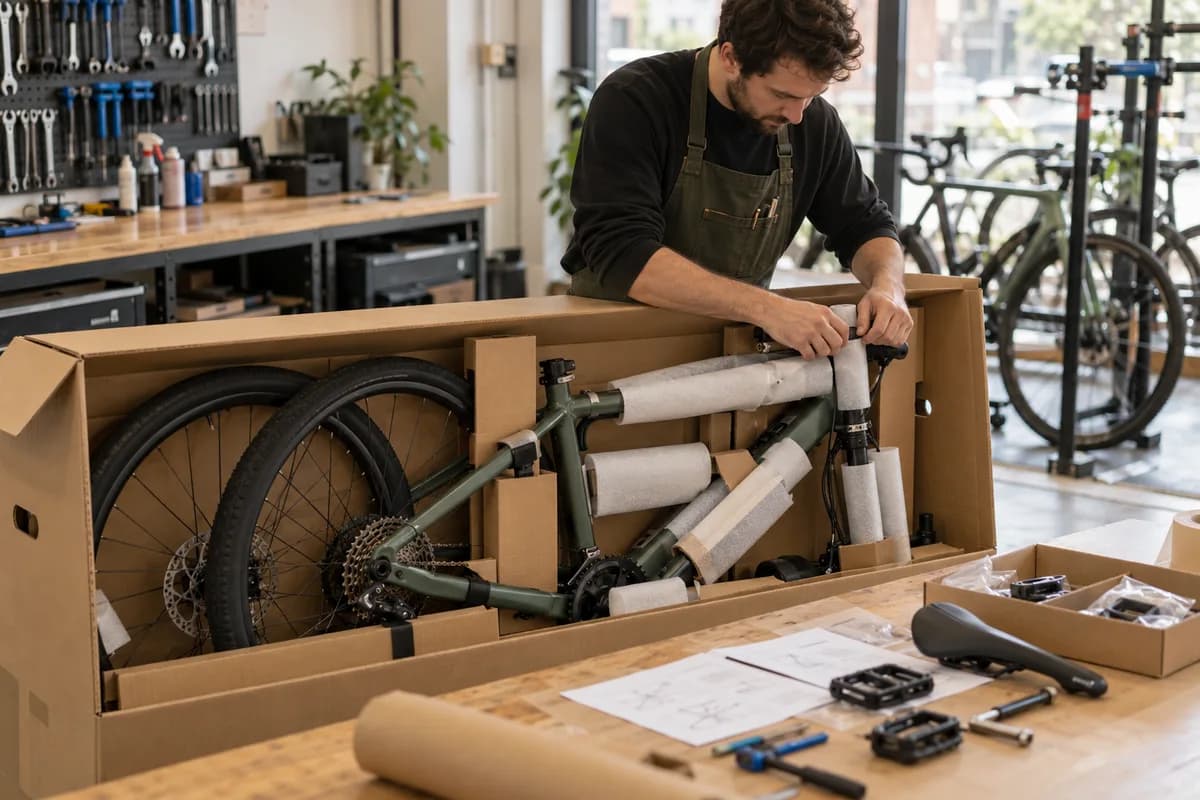
Boxed means the bike travels in the maker’s carton with the wheels off and the loose parts bagged, or in one you pack yourself. The buyer builds it, or hires a shop.
Carton size and freight cost
Carriers bill on box volume as well as weight. That hurts assembled bikes, which need a long, tall, wide carton that is mostly air, and the freight bill follows the air.
A part built or boxed carton is the flattest shape a bike can take, so more fit on a pallet and more carriers will collect from a shop door.
Remote addresses and island deliveries widen the gap. Quote those from the carrier’s own rate table, not from a guess, because a surcharge on a long carton can wipe out the saving.
- Assembled: van or oversize freight, tail lift, appointment delivery
- Part built: standard bike carton, carrier collection
- Boxed: the smallest carton, and it may ride on the maker’s own pallet
Damage risk and workshop labour
Assembled bikes take hits on exposed parts: a bent derailleur hanger, a scuffed top tube, a knocked brake lever. A part built bike tucks those parts away. A maker’s carton adds moulded protectors.
Labour runs the other way. An assembled bike costs a full build, a spoke check, an inspection, a test ride and a wipe down before it goes in the van. Part built costs all of that plus a strip down and a careful pack, so the mechanic handles the bike twice.
Boxed also moves risk to the buyer. A loose wheel nut or an under tightened stem is a safety fault, so send a build guide and a torque list with every carton.
- Assembled: build, tune, inspect, test ride, wrap
- Part built: build, tune, inspect, strip, pack
- Boxed: check parts against the maker’s list, then seal
Wrong fit returns hit each option differently
Wrong frame size sends bikes back. An assembled return arrives rideable, but it needs a fresh inspection, a clean and a check for road marks before it can be resold as open box stock.
A part built return travels well, because the buyer can fold the bike back into the same carton and tape it shut. A boxed return is the hardest. Many buyers cannot fit a built bike back into its box. Loose parts get lost.
State the return rule for each option on the product page in plain words, including who collects the bike and whether a ridden bike still qualifies.
What changes for an e-bike with a battery
A lithium battery counts as dangerous goods in transport. Carriers publish their own rules, and some refuse the battery on certain services or accept it only in approved packaging with the right hazard labels.
Ask each carrier in writing what it accepts: battery fitted, battery packed beside the bike, or battery sent alone, quoting the watt hour rating from the label. File the maker’s test summary beside the reply.
An e-bike is also heavy and awkward to lift. Plan two people at the dock. Before you list one, send the battery details to your carrier and file their written reply with the product record.
Bike shipping comparison sheet
One page, one row for each model. Three columns hold assembled, part built and boxed, and each cell records carton size, freight quote, mechanic minutes, packing materials and damage count. A last row records wrong fit returns. An e-bike block adds the battery label rating, the carrier’s written reply and the date of the check.
Open a blank worksheet to printQuestions owners ask
Which way suits a first online order?
Part built is the usual start. The carton is compact, the bike arrives tuned and the final job takes one short session. Move cheaper models to boxed once your returns settle, and keep assembled for local deliveries and for the models that are hardest to build.
Who builds a boxed bike?
The customer, or a local shop the customer books. Include a build guide, a torque list and the tools needed. Ask for a photo of the finished bike if your warranty depends on a correct build, and say so on the product page before the order is placed.
How do I test which way works for my shop?
Ship one model each of the three ways to a staff address, and log carton size, freight, minutes of labour and any damage on arrival. Your own numbers beat a rule of thumb.
Can an e-bike go part built?
Often yes, but the battery rule decides. Ask the carrier whether the battery may stay fitted, ride in the same box or must travel on its own. Then price each option before you promise a delivery date.