In this guide 6 sections
Sell bicycles online in five steps. Record frame size and rider height, choose the assembly level, write carton and freight rules, inspect each bike before dispatch and book the first service. Each step draws on workshop time. Count mechanic hours before you list a single bike.
Step one: put frame size and rider height on every model
Nobody can sit on a bike through a screen. Your size data has to do the job the shop floor once did, and a wrong frame size means a return. Photograph each bike from the side with a rider standing next to it, so the buyer can judge the frame against a person.
Makers label frames as small, medium and large, or by seat tube length, and the two systems do not line up between brands. Record both for every frame. Add the rider height range the maker advises.
Kids’ bikes go by wheel size and inseam. Say so on the page. This step needs no mechanic, only an afternoon with a tape measure and one bike of each frame size on the shop floor.
- Rider height range and inseam range for each frame size
- Seat tube length beside the maker’s own size label
- Standover height at the top tube
- Reach and stack for road and mountain frames
- Wheel size and tyre width
Step two: decide how much assembly you will offer
Choose the level model by model. A commuter bike with mudguards, a dynamo light and a rear rack is a very different job from a boxed kids’ bike.
The choice sets your workshop load. A fully built bike takes a mechanic from carton to test ride, with gears indexed, brakes bedded in and accessories fitted. A boxed bike needs a check, no more.
Offer the choice at checkout only when the workshop can build both ways inside the week you promise, because buyers will pick assembly and orders will pile up. Then the promised date slips.
Step three: write the carton and freight rules
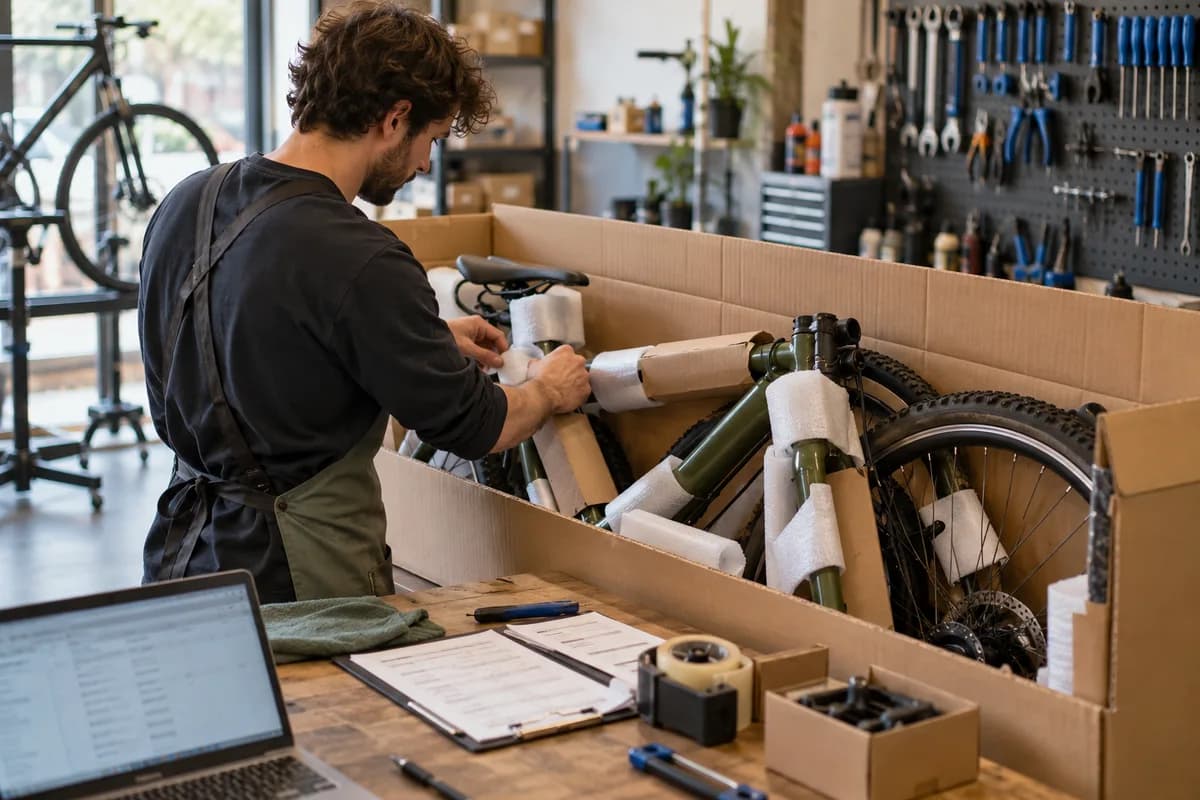
Write a packing rule for each model. Carton length, width and depth change with frame size and wheel size, and carriers bill on the box, not on the bike.
Agree with the carrier what it will accept: longest side, girth, weight, delivery to a house or a depot, and a signature on receipt. Pickup matters too, since some drivers refuse a long carton at a shop with no loading bay.
Pack a sample bike for each model before you take an order, measure the finished carton and weigh it, and write both figures into the model record. Measure, do not guess.
- Pedals off, handlebar turned and bars padded
- Saddle dropped and the seat post wrapped
- Rear derailleur guarded, or the wheel taken out
- Frame tubes sleeved where straps touch them
- A photograph of the packed carton before sealing
Step four: inspect every bike before it leaves
Run a pre delivery inspection on every bike. The list catches what the factory and a hurried build missed, and a mechanic’s signature on it shows each point was actually looked at.
Check brake lever feel and pad alignment, gear indexing across the cassette, wheel trueness, tyre pressure and every bolt against the maker’s torque setting with a torque wrench. Copy the frame number from the bottom bracket onto the order.
Calm checking means fewer bikes a day. Time the whole routine on a busy Saturday, not a quiet Tuesday, and use that figure when you set order limits.
Step five: book the first service when you take the order
Cables stretch and spokes settle during the first weeks of riding, so a first service keeps the bike safe and brings the buyer back through your door. Sell it as part of the bike.
Offer the slot at checkout and tie it to the order and the frame number, so the workshop calendar shows build, inspection and first service as one load.
Work out a daily cap from mechanic hours. Take the hours on the rota, subtract repairs, walk in jobs and the first services already booked, and open online orders only for what remains each day. Switch the model off when it fills.
Online bike launch worksheet
One page, five blocks, one for each step. The size block lists model, frame size, seat tube, rider height range and wheel size. The workshop block lists minutes per build, inspection and first service, and the bikes the workshop can take each day. The packing block lists carton size, weight and carrier for each model. The inspection block holds the signed list.
Open a blank worksheet to printQuestions owners ask
Do I list each frame size as a separate item?
No. List one model with a variant for each frame size, and give each its own stock count, so a sold out medium does not hide the large. Colour works the same way.
How long does one online bike take in the workshop?
Time it yourself. Build, inspect and pack your three most common models with a stopwatch, then plan around the slowest result, not the average. A busy week finds the slow one.
What if the carrier damages a bike in transit?
Photographs taken at packing and again at the door support a claim. Keep both sets with the order. Then ask the carrier how many days you have to report damage, and print that deadline on the workshop checklist.
Can children’s bikes be sold online?
Yes. Choose by wheel size and inseam, not age, and show how to measure at home with a tape measure and a book held against the wall. A parent can then pick the right size without a visit.