In this guide 6 sections
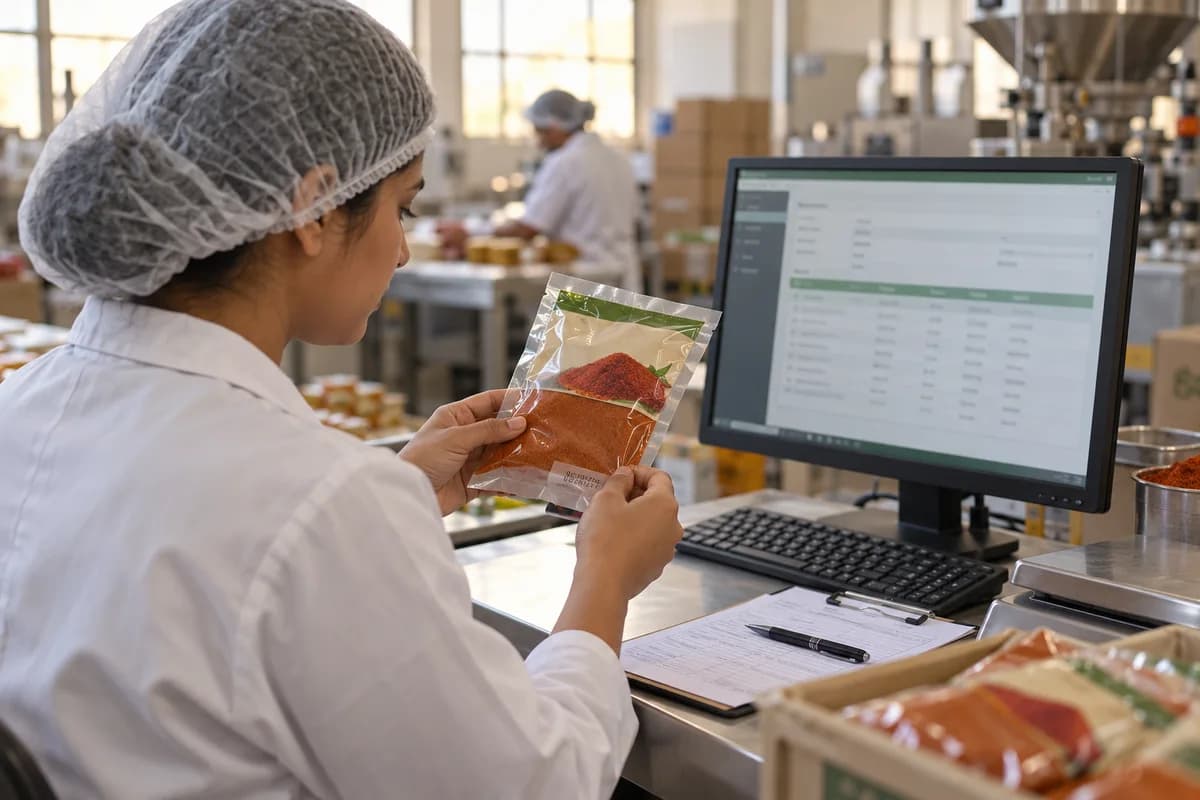
Batch traceability gives every raw material receipt, production batch and dispatch a lot code, and records which lots fed which batch and which batch went to which customer. Read the code off the pack. The screen then lists every ingredient lot, the operator, the shift and each customer who received that batch within a few minutes.
What a lot code has to connect
A lot code must link three records. These are the goods receipt note for each raw material, the batch sheet that consumed it, and the dispatch entry for the finished carton.
Most units already number all three. Those numbers sit in separate registers, so nobody can walk from a bin tag to a batch sheet to an invoice without losing a morning.
Software stores the links as fields. A batch record names the supplier lot of every ingredient it consumed, and a dispatch line names the batch it was packed from, so nobody retypes a number.
- Supplier name, invoice number and supplier lot on each receipt
- Internal lot number given at the store, printed on a bin tag
- Batch number, date, line and shift on the batch sheet
- Packing date and best before date on the finished lot
- Customer, invoice and quantity on each dispatch line
Tracing backwards from a complaint
A customer rings about a stone in a chilli powder pouch, and you ask for the code printed beside the best before date, because that code starts the trace. Write it down first.
The system opens the batch and lists each ingredient lot, the operator, the sieve log and the metal detector log from that day. Was it one supplier lot, or three?
Next, list every other batch that drew on the same supplier lot, a search that takes a whole morning across paper registers and loose batch sheets. If two more batches used it, you know the size of the problem before the customer calls back, and can decide whether to hold stock.
Tracing forwards to find what already shipped
Sometimes the fault starts at the supplier. A spice vendor reports that one lot of turmeric failed a colour test, and now you need every pack that contains it, even the ones already shipped.
Forward tracing starts from the receipt and lists each batch that drew from that lot, then each dispatch of those batches, down to the distributor and invoice. Recall notes reach named customers only.
Check the stores too. Unshipped stock can be put on hold with one status change, so a storekeeper cannot issue it to the line out of habit.
Where traceability breaks in real plants
The chain snaps at workarounds. A half-used sack of cumin moves to the next shift without its tag, and rework gets poured back into a fresh batch with no entry at all.
Mixed pallets break it at dispatch. When a pallet holds two lots and the picker scans only one, the record is wrong, even though the paperwork looks tidy to an auditor.
Fix the habit first. Then fix the screen. Give each partial sack a printed tag showing its lot, and make rework a named transaction that carries its own source lot into the new batch.
- Partial sacks and drums moved without a tag
- Rework added to a new batch with no record
- Mixed lots on one pallet or carton
- Lot codes handwritten and misread
- Returns put back into saleable stock
Test your trace before a complaint does
Run a mock trace every quarter. Pick one finished pack from the warehouse, start a stopwatch, and stop it only when you have listed every ingredient lot and every customer who received that batch.
Note where you got stuck. A missing supplier lot or a smudged print on the carton shows which register needs a new field, so repeat the drill until it takes minutes.
Then run it in reverse. Start from one raw material lot this time, and file both results with your audit papers so the next inspector sees evidence instead of a promise.
Mock trace worksheet
A one-page drill sheet. The top block records the pack code and start time, a first table lists ingredient, supplier lot and receipt date, and a second lists dispatch date, customer and quantity. Finish time and gap owners close the sheet.
Open a blank worksheet to printQuestions owners ask
How long should a trace take?
It should take minutes. Once the links are stored as fields, a trace from the pack code to every ingredient lot and every customer takes minutes, not half a day.
Do small food units need lot codes on every pack?
Yes, in some form. Even a short batch code stamped beside the best before date lets you find the batch sheet, and printing it costs far less than a recall of unknown size.
Can spreadsheets handle traceability?
For a few products, yes. The weak point is keeping three sheets linked by hand, and once you run several lines or shifts the links break and a trace stops being reliable.
What about products made from rework or leftovers?
Give rework its own lot. When it goes into a new batch, the batch record names that lot as an ingredient, so the chain from the old pack to the new one stays unbroken.