In this guide 6 sections
A proof-of-service log records each checkpoint with a time, a place and a photo, then adds supervisor sign-off for the shift. When a client disputes a visit or a patrol, you open the record and show it. Four steps build it.
Decide what you need to prove
Start with the disputes you already get. A janitorial client says the second floor washrooms were not cleaned. A security client says nobody patrolled the loading dock after midnight.
Each dispute names a place, a time window and a task. Your log must answer those same three things, because anything beyond them adds typing and little else.
List your sites. Beside each, write every complaint you have heard in the last six months.
- Site and zone in dispute
- Task: cleaned, checked, patrolled or locked
- Time window the contract promises
- Who must be able to see the proof
Set checkpoints that match the building
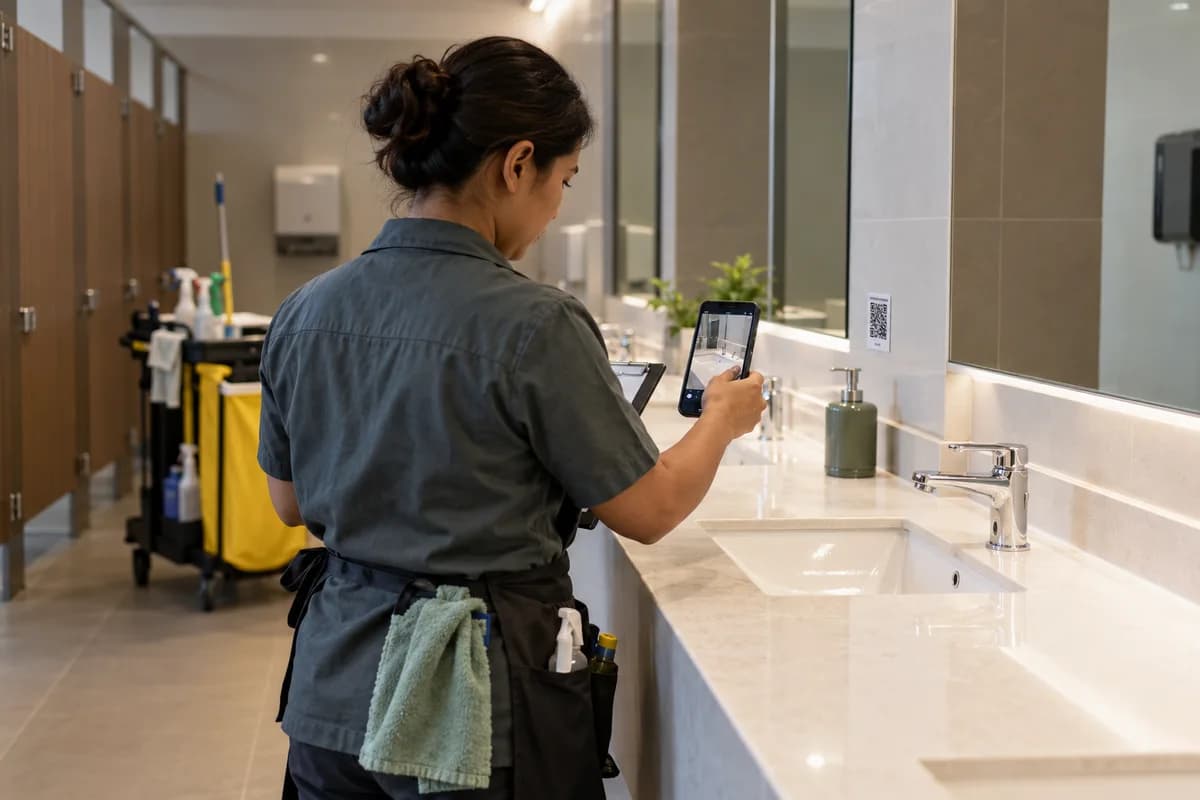
A checkpoint is a fixed spot where the guard or cleaner confirms presence. Use a QR tag, an NFC sticker or a printed code on the wall. Place one at every zone the contract names: lobby, stairwell, pantry, car park and plant room.
For cleaning, tie each checkpoint to a short task list. Washrooms might need restock, mop, bin and mirror. For security, tie it to a patrol order, with a minimum gap between scans so nobody can tap three tags in one minute.
Name each tag the way the client would. Second floor east washroom beats point 14. Guards and cleaners then read the same words the contract uses.
Capture the evidence in the moment
Each scan stores the time, the person and the phone’s location. Add a photo where a dispute is likely, and keep it to the point: a clean basin, a locked gate, a fire door shut.
Add a reason field for skipped checkpoints. Door locked by tenant, area under repair and access refused are honest answers, and they protect you when the client later asks why a zone was left.
Keep the log working without signal. Basements and plant rooms often have none. Scans should save on the phone and sync when the guard walks back into coverage.
- Timestamp and location on every scan
- Photo for high-dispute zones
- Reason for any skipped checkpoint
- Offline save with later sync
Add supervisor sign-off for the shift
When a shift closes, the supervisor opens the shift record and reviews it. Missed checkpoints, late scans and odd photos show first. Then comes a note, then a signature.
Sign-off turns raw scans into a statement you stand behind. It also shows the client that a senior person actually looked.
Rotate site visits too. A supervisor who spot-checks one zone in person and logs the check gives the record real weight when a dispute reaches a contract manager.
- Missed or late scans listed first
- Short supervisor note
- Signature with date and time
- Spot check logged against a zone
Answer a dispute from the record
When a complaint arrives, filter the log by site, zone and date. Export the scans, photos and sign-off as one report, and send it to the client the same day with a short reply. Skip the long email.
If the record shows a gap, say so and name the make-up action. Honest answers hold contracts better than defensive ones.
Pilot this on one difficult site for two weeks, then count how many complaints you settled from the record without a single phone call.
Proof-of-service log template
A template with three blocks. Block one lists zones with checkpoint name, task list and expected time window. Block two is the shift record: scan time, person, photo yes or no, and skip reason. Block three holds the supervisor note, sign-off and a dispute reference number.
Open a blank worksheet to printQuestions owners ask
What is a proof-of-service log?
It is a time-stamped record of work at a site, with checkpoint scans, photos and a supervisor’s sign-off, kept so you can answer a client’s query from evidence.
Do we need QR tags at every room?
No. Tag the zones named in the contract and the places where disputes occur. Too many tags slow the crew and invite shortcuts.
Can a guard fake a scan?
Location stamps, photo proof and a minimum gap between scans make it harder. Spot checks catch the rest.
How long should we keep the records?
Keep them at least through the contract term and any dispute period. Check with your legal adviser for local requirements.