In this guide 6 sections
A central kitchen bakes in volume and ships to outlets, so stock transfers, dispatch timing and freshness records matter most. Outlet baking keeps products warm and cuts transport, but multiplies ingredient stock, equipment and wastage points. Most chains settle on a mix: central dough and cakes, outlet finishing.
Where each model puts the work
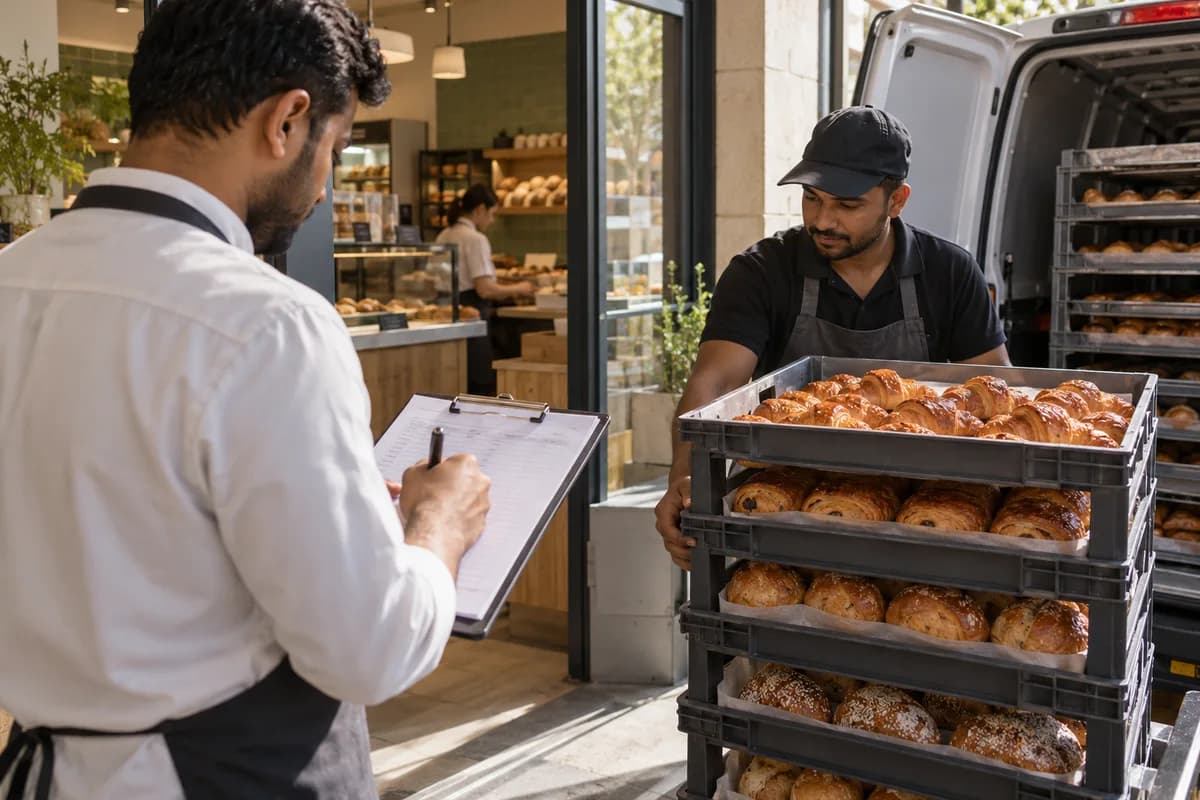
In a central kitchen, one team mixes, proves, bakes and packs. Trays travel by van to outlets before opening. The outlet receives, shelves and sells. Distance matters here, because a van that leaves at four in the morning can still reach a shop across the city before the first customer.
With outlet baking, each shop holds flour, yeast, butter and fillings, and bakes through the day. Staff skills matter more at every site, and so does oven maintenance.
Neither is better in general. Your product range, outlet count and the delivery distance between shops decide the answer, and they can change as you grow.
Stock and transfers behave differently
A central kitchen holds raw materials in one place. Purchasing is simpler, with fewer supplier drops and tighter control of batch codes. Each outlet then holds finished goods only, tracked by transfer note. That also lets you recall a single flour lot if a supplier raises a quality alert.
Outlet baking spreads raw stock across every shop. Each needs its own count, reorder point and expiry check. A shortage of cream cheese at one outlet is invisible from head office.
Transfers are the weak point of the central model. A dispatch note says 40 croissants, the outlet receives 36, and nobody records the gap. Count finished goods at close. The number left on the shelf is the cheapest forecast you will ever get.
- Central: raw stock in one store, finished goods per outlet
- Outlet: raw stock at every site, reorder per site
- Dispatch note against received quantity
- Returns and damaged trays logged on receipt
- Batch code carried from mix to shelf
Wastage lands in different places
Central production wastes at the tail end. Over-forecasting means unsold trays at the outlet by closing time. Without a sell-through figure per outlet, the next morning’s order repeats the mistake. Some chains mark down day-old loaves or send them to a rusk line to recover value.
Outlet baking wastes at the start. Staff bake to a display target, not to demand, and the last tray of sourdough goes in the bin. Raw stock expires quietly in the back store.
Track wastage with reasons either way. Unsold, burnt, dropped, expired and returned each point to a different fix.
Freshness records decide customer trust
Central baking adds hours between oven and counter. You need bake time, pack time, dispatch time and a use-by label on every tray. Food safety inspectors look for exactly this chain.
Baking in the shop wins on aroma and warmth, yet its records are thinner. Oven temperature logs, cleaning sheets and allergen labels often sit on paper at each site.
Whichever you choose, the record must follow the product. A customer allergy complaint needs batch, ingredients and bake date in minutes. Scanning a tray label that shows the batch is faster than flipping through a binder.
- Bake time and batch code
- Allergen declaration per product
- Dispatch time and van temperature where needed
- Use-by date shown on the pack
- Oven and chiller temperature logs
Pick by product, then test with one outlet
Sort your range into three groups. Items that travel well, such as cakes, cookies and bread doughs. Items best baked on site, such as baguettes and puffs. Items finished on site from central bases.
Move one group at a time. Run a four week trial with two outlets and compare sell-through, wastage and complaints. Note the van schedule, the oven count at each outlet and the staff who can bake each product.
Start by counting how many tray types you sell, then mark each one central, outlet or finished on site. A proofing room and a blast chiller are costs you pay once at the centre, not at every outlet.
Central versus outlet baking comparison sheet
A one page worksheet. Every product sits in a row. Columns give shelf life in hours, travel tolerance, current wastage reason, transfer variance, freshness record held and the recommended place: central, outlet or finish on site. A footer totals the products in each group so you can plan the first trial.
Open a blank worksheet to printQuestions owners ask
Is a central kitchen cheaper than baking at each outlet?
It depends on volume, distance and range. Central production saves duplicate equipment and labour but adds vans, packing and transfer handling. Compare both on your own product list. Run the sums per product, not for the whole range.
How do we catch short deliveries from the central kitchen?
Have the outlet confirm received quantity against the dispatch note at the door. Record any difference by product and tray. A system can total variance by outlet and van route.
Which freshness records do inspectors expect?
Local rules vary, so check with your food safety authority. Common items are batch codes, bake and use-by dates, allergen labels and temperature logs for ovens and chillers. Keep the logs for as long as your authority requires.
Can a chain run both models together?
Yes. Many bake dough and cakes centrally and finish bread at the outlet. Your stock system needs to track raw items at the centre and finished goods at each shop.