In this guide 6 sections
Record condition as one grade from a named scale, then keep flaws, source, past owners and certificate details in separate fields. A loose phrase such as near perfect means one thing to the seller and another to the buyer, and that gap is where return disputes begin.
Why near perfect starts an argument
Near perfect has two readings. The seller means no marks at arm’s length. The buyer means nothing visible under a loupe. Then the parcel arrives, the buyer finds a hairline across the coin’s field under a desk lamp, and a refund request follows within the week.
Free text invites the clash. Every dealer carries a private scale in their head, and it drifts a little with every batch of stock that comes through the door. A fixed list stops the drift. Define each grade once, beside example photos.
Categories fail in different ways: edge whitening and centring on trading cards, a hinge remnant on a stamp, a crushed corner on a model kit box. The scale must speak the category’s language.
A grade field that holds one scale
Make grade a drop-down, not a text box. Choose the scale your category already uses: numbers for coins, mint never hinged down to used for stamps, mint to poor for cards, sealed, opened or built for kits.
Store the scale’s name beside the grade. A grade from one scale does not convert to another, and a buyer comparing two dealers needs to know which ruler was used. Add who graded it and on what date, because a piece graded years ago may have aged in its holder.
- Scale name, such as the coin, stamp or card scale you use
- Grade value chosen from a fixed list
- Graded by: you, a third-party service or the previous owner
- Date graded
- A link to the example photos that define the grade
Flaw notes that sit apart from the grade
A grade summarises. A flaw note describes. Keep them in separate fields, and give each flaw its own line recording where it is, what it is and how large, with a photo file attached. Then a high grade cannot hide a mark.
Use a short list of flaw types so notes read the same across items: scratch, crease, toning, foxing, stain, chip, edge wear, repair. Show the flaw lines above the buy button, because a buyer who has read the flaws before paying has accepted them.
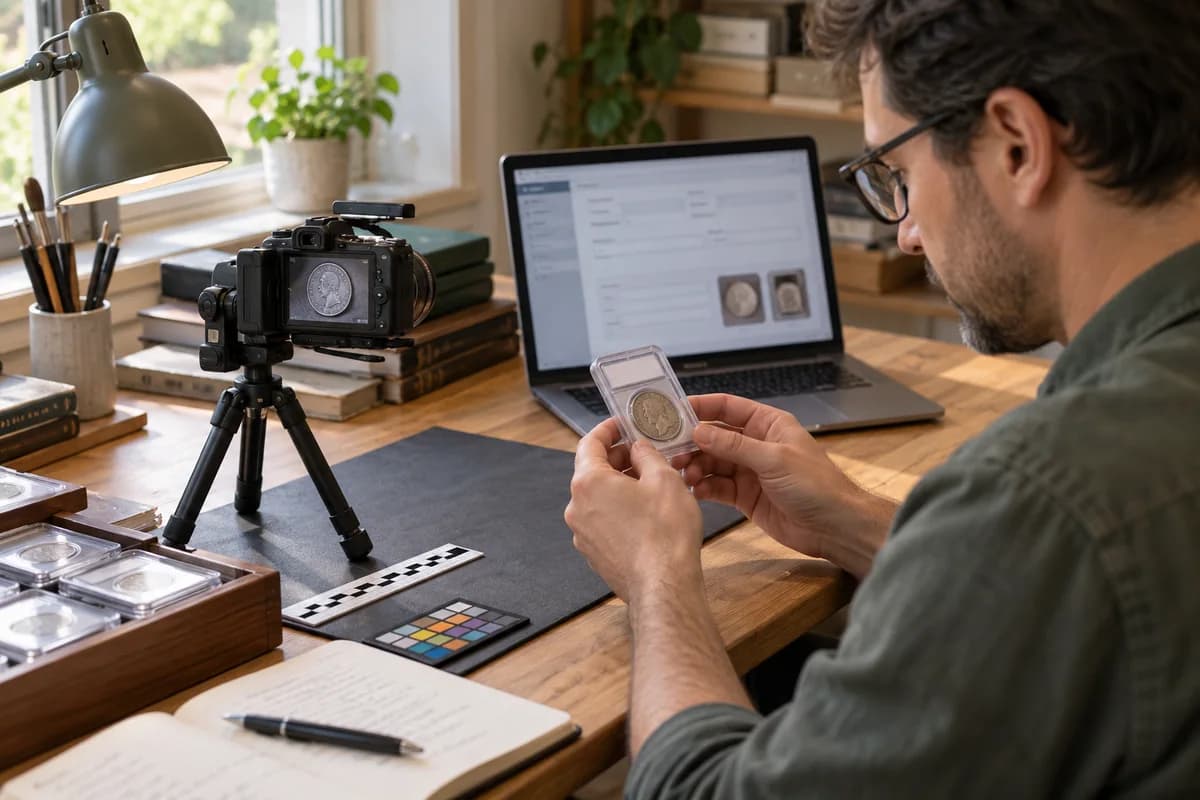
Photograph each face under the same light and at the same angle, with a ruler or colour card in frame. Buyers then judge toning and wear by one standard from listing to listing.
Source, past owners and certificates
Provenance answers where a piece came from. Record the source, such as an estate, an auction lot, a trade swap or a collector’s sale, and the date you acquired it. Add a document reference if there is one. Past owners go in only when you know them and they agreed to be named, since a guessed name is worse than a blank.
An empty field marked unknown is honest. An invented pedigree can cost you the sale, the buyer and the standing you built with every collector they talk to. Keep purchase cost in a private field.
A certificate belongs in its own block: issuer, number, date, a link to the issuer’s verification page and a scan of the document. The number ties the holder to the listing.
- Source type and document reference
- Date acquired
- Past owners and permission to name them
- Certificate issuer and number
- Verification link and scan file
Using the record when a buyer disputes the piece
Save a dated copy of the listing when the sale completes: grade, flaw lines, photos and certificate details exactly as the buyer saw them. A dispute becomes a simple comparison.
Add the dispatch photos to the same record. Damage in transit and a misgraded piece look identical in a complaint email, and only the photographs tell them apart.
Start small. Pick one category, rebuild twenty existing records with these fields and note how many you had to leave as unknown. That count shows where your records were thinnest.
Collectible item record template
Six blocks fit on one sheet. Identity holds item code, category, year and maker. Grade holds scale name, grade, grader and date. Flaws holds a row for location, type, size and photo file. Provenance holds source, date acquired, past owners and permission to name them, while Certificate holds issuer, number, verification link and scan. Sale holds the listing copy saved on the day of sale.
Open a blank worksheet to printQuestions owners ask
Can I still describe condition in my own words?
Yes, in a note beside the grade. The grade and flaw lines carry the claim, so use your own wording for colour and context, and never as the only description of condition.
Should I show where I bought an item?
Show it when the source adds trust, such as a named estate or auction lot, and when you may share it. Your cost stays private.
What if two grading scales disagree about one piece?
Record both grades with their scale names, say which one you sell by, and note the date each was given. Do not average them. A buyer can then compare like with like.
How many photos does each item need?
Take at least one photo of each face, one of every flaw line, one of the holder or box and, where a certificate exists, one of its label.