In this guide 6 sections
Load only the masters and the open balances. A clinic brings patients and its tariff, a garage brings vehicles and parts, and a school brings students and fee heads. Closed bills and old visit notes stay behind in the old register, searchable on request but never imported into the new system.
Clean the masters before you load them
Day one data is a small set. Masters are the lists that everything else points to, such as people, items and rates, and they load first, followed by open bills, and only rarely by history.
Dirty masters spread. A patient entered three times becomes three files, three dues and three reminder messages by the first week, and the duplicates multiply every month after go-live. Sort each list by name and phone number in a spreadsheet, merge the doubles, and give every row a code that never changes and is never reused.
Keep the cleaned file beside the original. When someone asks months later why a record looks different, you can open both files side by side and show what changed, on which date and who approved it. That protects you.
What a clinic brings
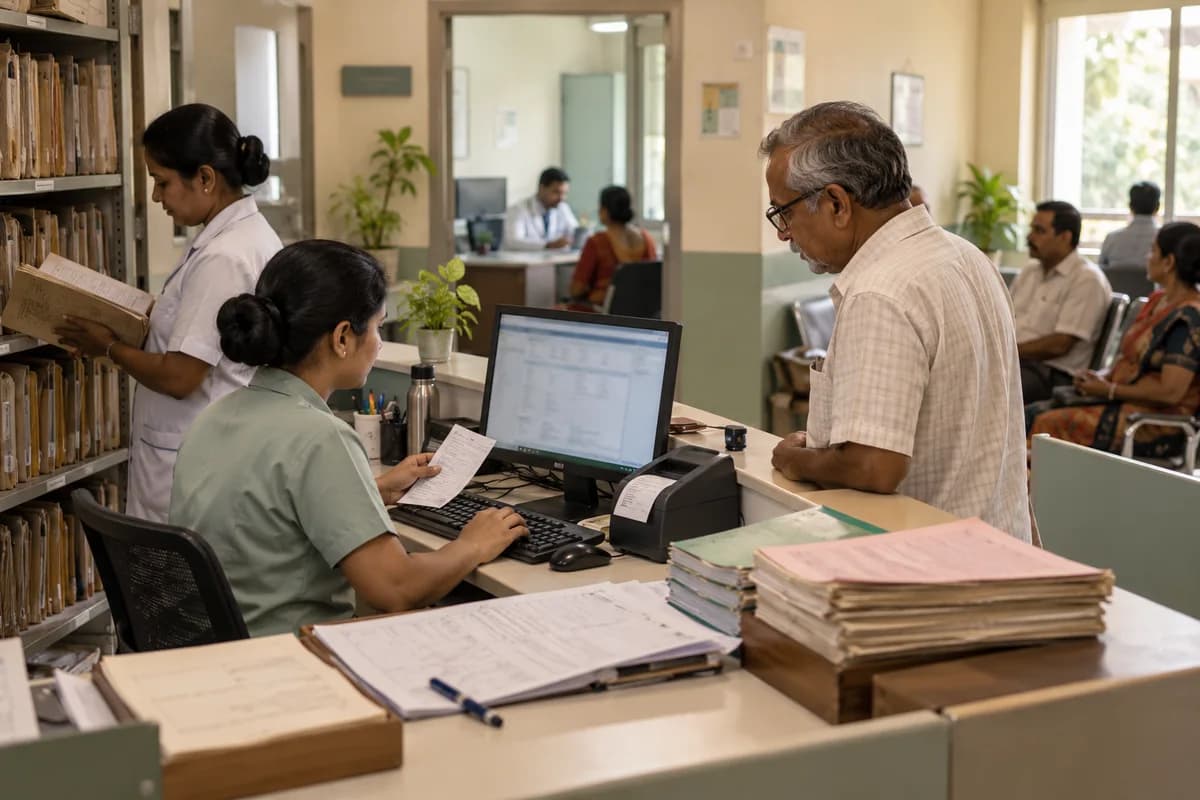
Start with patients. Take name, date of birth, sex, phone number, a guardian name for children and an address good enough for a posted letter, one row per person. Add allergies and long-term conditions only where they sit in one reliable place today, because a guess loaded as a fact is dangerous.
Then the tariff. List consultation types, dressings, ECGs, lab tests and pharmacy items with their current rates and short codes, and check every rate against the printed tariff before loading. Doctors follow, each with a council registration number, a consulting room, the working days and a slot length that matches the real appointment rhythm of the OPD.
Unpaid bills and advance deposits travel across as balances against the patient, each stamped with the cut-off date and the billing counter that raised it. Old consultation notes stay behind. The exception is a handful of patients under active treatment, whose last three visits should be typed in as one summary note so the doctor sees them on screen.
- Patient master with one mobile number each
- Tariff codes for consultations, dressings, ECGs and lab panels
- Doctor list with council registration number and slot length
- Pharmacy strips with batch and expiry for stock on shelf
- Open dues and advance deposits by patient
What a garage brings
Here the vehicle is the master. Take the registration plate, make, model, year, chassis and engine numbers, odometer at last visit and the owner’s contact, remembering that one owner may hold five vehicles. Link them all. Fleets want one statement.
Parts need the most care. Every part wants a part number, description, supplier, bin location, cost, selling rate and reorder level, and you should count the shelf before you load it. A figure copied from last year’s register will be wrong by Monday morning, because stock moved, parts went back to suppliers and someone borrowed a brake pad set. Count the bins, not the register.
Carry over jobs open on the floor with their estimates and the parts already issued against them, so mechanics finish without a second entry. Closed job cards stay in the binder.
- Vehicle master linked to owner
- Parts list with bin location and reorder level
- Supplier list with open payables
- Labour rate codes by job type
- Open job cards with parts already issued
What a school brings
Students come first. Load the admission number, class and section, guardian names, phone numbers and the sibling link, because a missing link means a wrong concession on the first instalment. Fee waivers often hang on siblings.
Then the fee heads. Tuition, transport, lab, exam and activity fees each need instalment dates, the class they apply to and the account head that receives the collection. Bus routes, stops and distance bands come along too, whenever the transport fee depends on how far the stop sits from the school gate.
Carry over each student’s fee due and fee advance as of the cut-off date, along with any cheque still waiting to clear; cheques in the drawer count too. Past report cards stay archived. Load attendance only from go-live, never backwards.
- Student master with admission number and sibling link
- Fee heads and instalment dates by class
- Staff-child and scholarship concession rules, with approver
- Bus routes, stops and distance bands
- Dues, advances and uncleared cheques at the cut-off date
Carry balances over, leave history behind
Choose a cut-off date at a quiet moment, such as the day after a month-end close, and pick the date with your accountant. Freeze the old register on that date. Write the closing balances on one sheet. Two people sign it.
After the load, check ten patients, ten vehicles or ten students by hand against paper, and count the rows in each master against your cleaned file. Fix errors in the cleaned file and reload the whole master, because patching records one by one inside the new system leaves no trail that anyone can check later.
Export the masters and print the open balance list, then file both with the owner; that printout is your proof if anyone disputes a figure in the first month.
Day one data sheet
This checklist runs a row per master, covering patients, tariff, doctors, vehicles, parts, students and fee heads, with columns for the owner, old rows, loaded rows, checker and date. Open balances get their own block further down, and the cut-off date sits above two signature lines at the foot of the page.
Open a blank worksheet to printQuestions owners ask
How far back should we import history?
Usually not at all. Carry the open balances and the masters, keep the old register, and import history only where a rule needs it, such as a warranty or a repeat treatment.
Do we need to clean data before loading it?
Yes. Merge duplicate people and correct phone numbers first; cleaning in a spreadsheet is slower than it looks, so give it a full week before the cut-off date.
Who should check the loaded data?
The daily user should check, not the loader. A receptionist spots a wrong patient in seconds and a storekeeper spots a wrong bin at a glance, while a technician reading a row count will never see them.
Can we load data in stages?
Yes. Masters first, then balances on the cut-off date; staging lets you test the masters in real use before money is attached to them.