In this guide 6 sections
Dry food is the easiest to store and ship, but the sacks are heavy and the fats can turn once a sack is opened. Wet food travels in cases. It keeps. Raw frozen food needs a cold chain, tighter date control and set dispatch days. Run them as three operations.
Dry sacks are heavy, forgiving and slow to spoil
Dry food comes in paper and poly sacks, from a bag you lift with one hand to a large one that takes real effort. Pallets arrive stretch-wrapped and sit well on racking. The date is a best before, printed beside a batch code that links the sack to one production run and one supplier delivery.
Weight is the problem, not spoilage. A large sack costs a great deal to post, so many online pet shops send it by pallet network or courier freight instead of parcel post. Damage means split seams and kibble dust in the carton, and you learn of it only when the customer’s photo arrives.
Rotate by batch code. Sell the oldest date first. An open sack starts to age. A buyer who wants three sacks for a season may be better served by a monthly delivery than by one heavy drop.
- Best before date and batch code on each sack
- Weight band for carrier pricing
- Split-seam and dust check at goods in
- Pallet quantity and rack position
Wet food travels as cases of cans, trays and pouches
Wet food comes in shrink-wrapped cases of cans, foil trays or pouches. The dates are long. Storage is simple. Keep it cool, dry and off the floor. Dents are the main loss. A can with a crushed seam should be pulled at goods in, before it reaches a pick face and a customer’s doorstep.
Selling is about case size. Customers buy one tin to try a flavour, then order twelve of the same, and your listing has to cope with both purchases. Your listing needs a single, a multipack and a case as three variants drawing on one stock pool, each with its own barcode. Mixed cases are the trap: they break date control unless the pick records the batch of every tin that goes into the box.
Raw frozen food needs a cold chain, not just a cold box
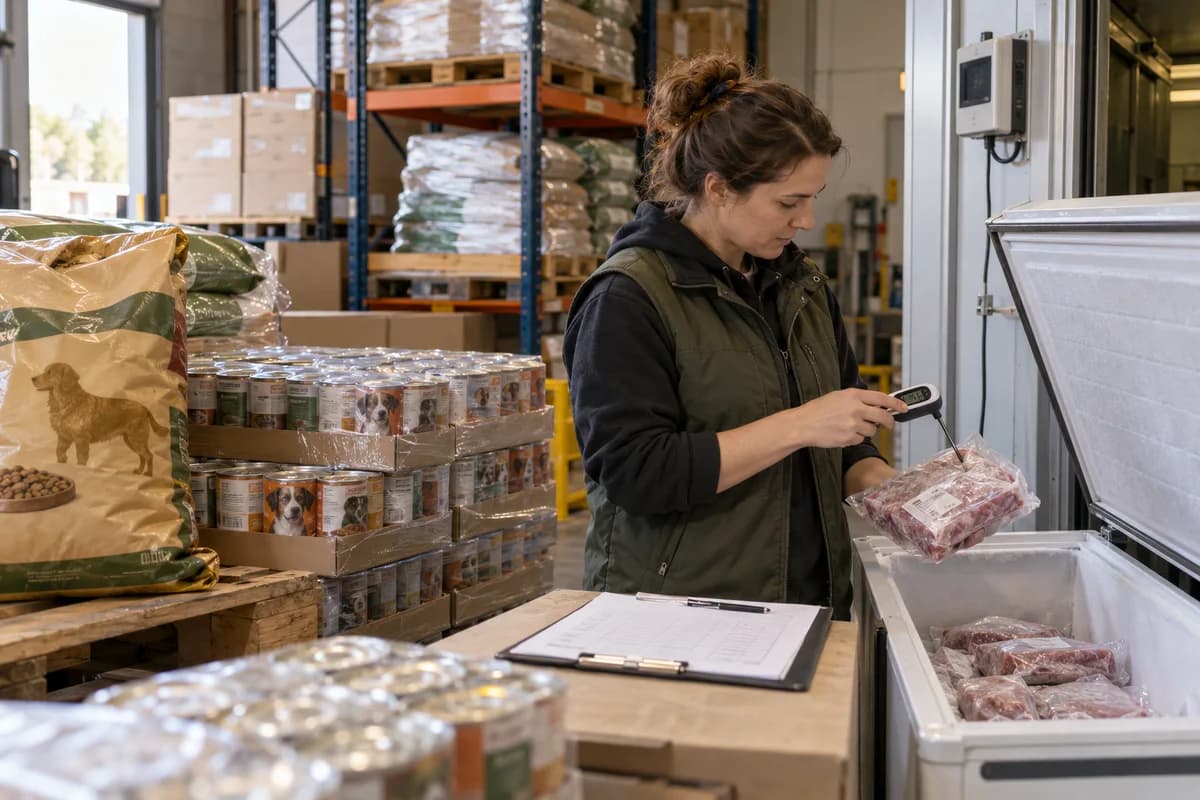
Raw food arrives from a freezer vehicle and goes straight into a chest or walk-in freezer, with no wait on the dock or in the yard. It leaves in an insulated carton with gel packs or dry ice, where the carrier allows it, and the temperature reading taken at goods in stays on the record. A warm delivery is refused. The supplier hears about it that day.
Dates are tighter, so the dispatch day matters. Ship raw orders early in the week, so that no parcel waits in a depot over a weekend. Block postcodes outside the carrier’s overnight area at checkout, because a refund after a thawed delivery is a worse outcome than a lost sale.
Copy the maker’s handling text word for word. Do not rewrite it.
- Temperature reading and time at goods in
- Freezer location by batch and date
- Insulation, coolant and carton size per order
- Dispatch days and carrier cut-off times
- Postcode check for transit time
Each type asks something different of the goods-in desk
Check the paperwork first. Dry and wet food need the delivery note, batch code and date on every case, matched to the purchase order and counted against the pallet label. Raw food needs all of that plus a probe reading from the product and a note on the state of the vehicle.
Receive each batch as its own stock line. If two batches share a location, the pick list needs a first-expired-first-out rule that sends the earlier date out first, whoever is picking and however busy the day. A rule beats a note on the shelf.
Recall readiness matters most with raw food. A flagged batch should produce a list of every customer who received it by the same afternoon. Put a phone number beside each name.
A sensible order for building the range
Start with dry food if you have a dry store, racking and a pallet carrier that collects from your door. Add wet food next. It brings multipack variants and little else. Take on raw frozen only when you have freezer space, a plan for power cuts and a carrier that delivers on your dispatch days.
One page should never cover all three. Separate pages stop the wrong shipping rule from applying, and a raw order caught in a dry-food rule is a cold-chain failure waiting to happen.
Write one dispatch rule per type on a single sheet: the days, the carton, the carrier and the date check at goods in.
Pet food handling comparison sheet
One page, three columns: dry, wet and raw frozen. Rows run down the side for date type, storage place, goods-in checks, parcel weight band, packaging, dispatch days and what to do with a damaged or warm delivery. Fill each cell from your own suppliers’ paperwork.
Open a blank worksheet to printQuestions owners ask
Can I sell all three types on one listing?
Keep them apart. Each type has its own dispatch rule, carton and date check, and one page with three variants invites the wrong carrier service on a frozen order.
How should I show dates on the product page?
Show the date type the pack prints, either best before or use by, and state the minimum remaining life you promise at dispatch. Do not invent your own.
Do I need my own freezer for raw food?
Yes, unless the supplier ships straight to the customer. Your freezer then needs a temperature log, a plan for power cuts, an alarm that reaches a phone and a layout that suits picking by batch.
Do subscriptions suit dry sacks?
They work well. A repeat order every few weeks suits a big sack and stops buyers holding a half-used bag for months. Let customers skip a delivery online.