In this guide 6 sections
Ask each vendor to load your own catalogue. Food needs expiry by batch, pricing by picked weight, substitution rules, slot limits, allergen fields, cold chain flags and price list import, and each must work on screen. A demo shop proves nothing about your range.
Expiry has to live at batch level
Shop software counts stock per product. Food needs a count per batch, because two deliveries of the same oat milk or kefir carry different dates and sell on different timelines. Ask to see one product holding three batches.
Next, find out who chooses the batch. Pickers who choose by eye leave old stock at the back of the chiller, so the pick list should follow first-expired-first-out, usually shortened to FEFO.
Recalls test the design hardest. When a supplier flags one lot, you must block it, list every order that received it and contact those buyers, all within minutes rather than days.
- Stock held per batch, each with its own expiry mark and date
- Pick list that shows the oldest valid lot first
- A block on one batch that leaves the others on sale
- A minimum-life rule that hides short dated stock
- A recall report listing every order and buyer for a lot code
Weights, substitutions and slots at pick time
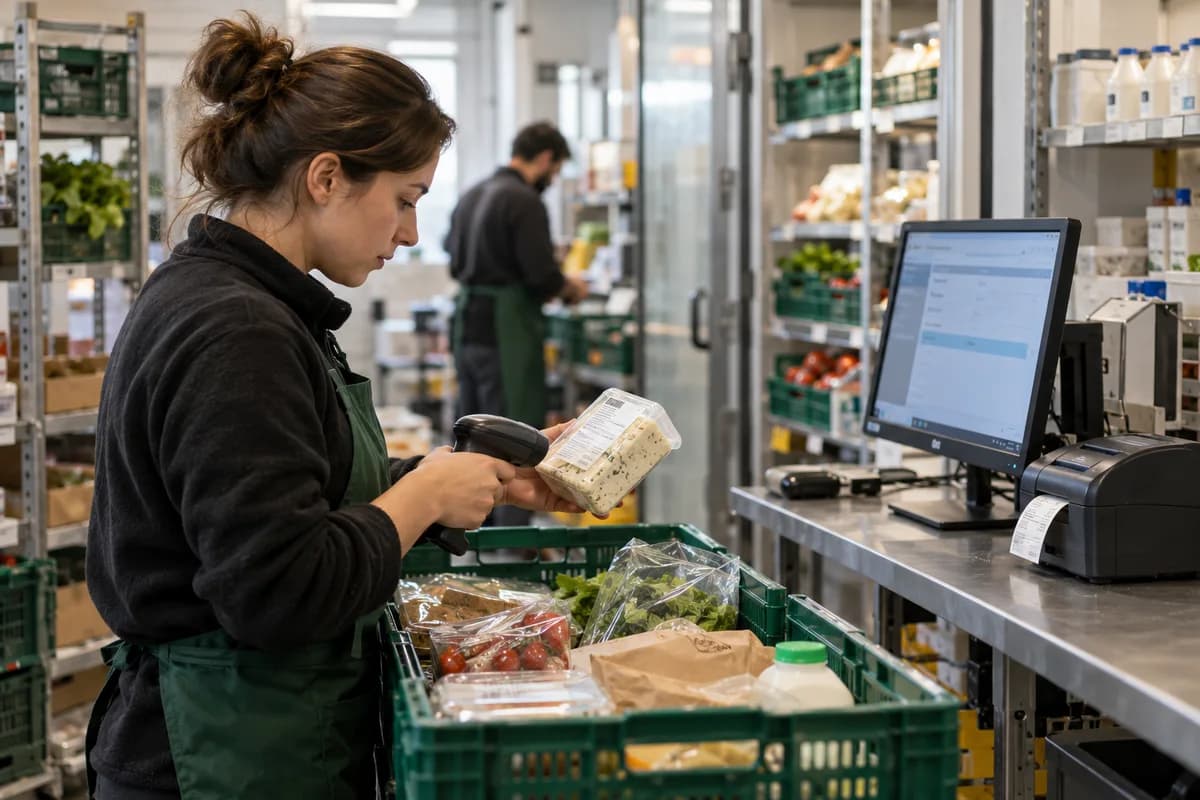
Items sold by weight are priced twice, first as an estimate at checkout and then as the real figure at the scale. What does the picker type in? Does the final charge match the scale?
Ask what caps the weight. A tolerance band per product is the usual answer, plus a ceiling on the total the buyer accepted at checkout, both shown on the scale screen.
Substitutions need a choice on every line. Allow, ask first or refuse. Slots need a ceiling per window, counted in orders and in chilled crates, and they should close on their own the moment the cutoff passes.
Allergen, nutrition and cold chain fields
Open a product record in the demo. Read its fields aloud. You want ingredients in order, an allergen declaration with separate contains and may contain states, nutrition facts, net weight, storage advice and origin.
Cold chain needs a flag, not a note. A chilled item should force an insulated packing step and refuse an ambient-only courier, while allergens should print on the packing slip and filter in the shop.
A recipe change needs a plan as well. The old declaration must stay on file, dated. Then a complaint arriving six months later can be traced to the exact version the buyer saw on the page, instead of being argued from memory.
- Ingredient list stored as ordered text
- One state per allergen, not a free text box
- Nutrition facts for the pack and for one portion
- Storage class that drives the packing step
- Version history on every declaration
Make them import your own price list
Bring a real supplier price list as a spreadsheet or CSV file, and ask the vendor to import it live in front of you. Watch closely. Generic importers fail on pack sizes, barcode or GTIN columns and the case-to-single conversion, and a silent failure there means wrong stock counts for months.
Change three prices and import again. The system should show a before and after list of every changed price and wait for your approval before anything reaches the shop. A weak one overwrites live prices in silence.
Last, test the exit. Ask for a full export of products, batches and past orders in CSV, because leaving a platform should never mean retyping a catalogue by hand.
- Columns mapped by you and saved for next week
- Pack size and case conversions read correctly
- Price changes shown before going live
- Rejected rows listed with a reason, never skipped silently
- A full CSV export whenever you want it
Score the replies side by side
Send the same list to every vendor on the same day, asking for written answers and a screen recording of the three hardest items. Vague replies tell you plenty. Silence tells you more.
Mark each question as shown, promised or missing. A promise for later counts for little. Give the batch and picked-weight questions the most weight, since those are the first to break in a live food store.
Finish by phoning two food sellers the vendor already serves and asking what they had to work around in their first month. Their answers are worth more than any slide. Choose on that evidence. Then write every gap into the contract as a dated deliverable, with a named owner at the vendor and a date to show it working.
Vendor question scorecard
Seven rows, one for each topic: batch expiry, weight at pick, substitutions, slot capacity, allergen fields, cold chain flags and price list import. Three vendor columns hold shown, promised or missing. The last column holds notes.
Open a blank worksheet to printQuestions owners ask
Do we need food-specific software, or will a general platform do?
It can, if batches, weights and allergen states live in apps or custom fields you have tested against your own range, not the vendor’s sample data. A tidy demo catalogue hides every difficulty.
What should we bring to a vendor demo?
Bring a current supplier price list. Add ten real products, including a loose-weight item and a chilled one, plus your delivery zones, your cutoffs and a list of what your pickers get wrong today.
Who should sit in on the demo?
Your picking supervisor, whoever answers customer complaints and whoever maintains the product records, because they spot gaps that an owner watching the screen would miss. Owners rarely see the gaps.
Is a free trial enough to decide?
Rarely. Trials mostly show checkout and a tidy storefront. Ask instead for a sandbox where you can import your catalogue and run test picks with a typed weight or a scale reading. A trial that cannot import is a brochure.