In this guide 6 sections
Capture six things at the weighing point: the farmer, the lot, gross and net weight, the quality grade with its deductions, any advance adjusted, and the payout. Tie each entry to a buyer lot number. Then farmer accounts and buyer dispatches reconcile without a season-end hunt through registers.
Start at the weighbridge, not at the office
Every dispute at season end began at the scale. A farmer says the load was heavier. The buyer says the moisture was higher. The register says neither. Without a signed slip, the argument is settled by whoever shouts loudest.
So design the weighing slip first. It carries the farmer code, vehicle number, crop, variety, gross weight, tare, net weight and a lot number. Print it in duplicate, or send it by message to the farmer’s phone.
A slip that cannot be edited after printing is worth more than any report built later.
- Farmer code and village or collection centre
- Vehicle number and driver
- Crop, variety and bag count
- Gross, tare and net weight
- Lot number and time stamp
Grade and deductions need fixed rules
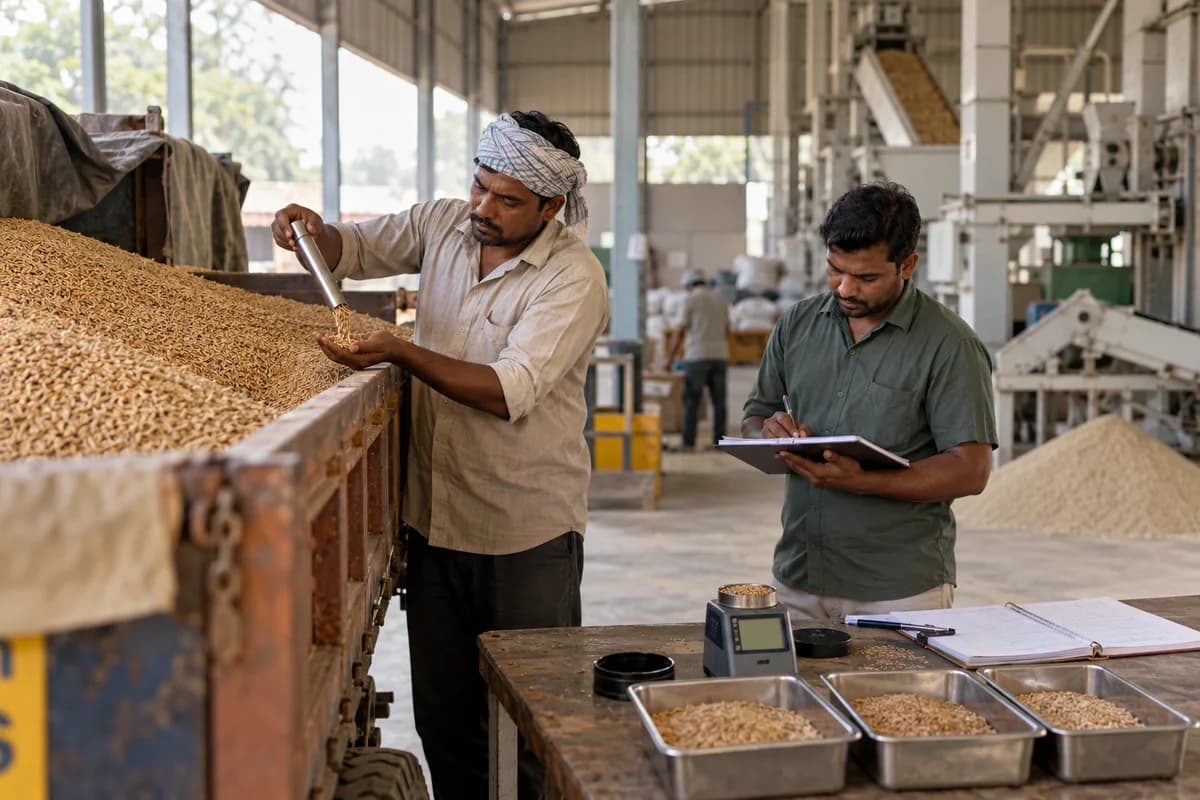
Moisture, foreign matter, broken grain, damaged pods or ripeness decide the rate, so agree the sampling method and the grading table before the season opens. Write each deduction as a rule. An example is a rate cut per unit of moisture above a set limit.
Record the reading, the rule applied and the person who took the sample. A grader who types only the final grade leaves nothing to check. Keep the raw reading.
Keep rejected loads on the system too. Record the reason: wet stock, mixed variety, weevil damage or stones in the sack. A rejection with a reason is often the first sign that a field or a variety has a problem.
- Instrument reading for moisture
- Sample bag number and grader name
- Deduction line with the rule applied
- Rate card version and effective date
Advances, recoveries and the farmer ledger
Contract farming and aggregation both lean on advances. Seed, fertiliser and cash are given before harvest and recovered from deliveries, so a recovery kept in a separate notebook makes the payout on the slip wrong.
Give each farmer one ledger with advances on one side and deliveries on the other. Each delivery shows gross value, deductions, advance recovered and net payable. A farmer should read it in two minutes. No more.
Add a carry-forward rule for balances left at season end. Decide whether an unrecovered seed advance rolls into next season or is written off by an approver.
- Advance type, date and amount given
- Recovery against each delivery
- Interest or carrying terms, if any
- Carry-forward balance by season
Payment and the buyer lot reconcile together
Payment is not one step. It has stages. Approvals, bank file, mobile transfer and cash each leave a different trail. Record the mode, the date and the reference against each payout, and flag failed transfers the same day.
On the other side, group delivered weighing slips into buyer lots. The dispatched quantity, the shrinkage in transit and the buyer’s accepted weight should reconcile to the farmer payouts behind that lot. A gap between them is a loss you can now locate. Check the weighbridge at the destination against the slip, truck by truck.
Run this check weekly during the season. Never wait for the close.
Test the build with last season’s slips
Take fifty real slips from last season and key them into the draft screens. Note every field the grader or clerk wanted and could not find. Note every field nobody used. Delete those.
Then ask one farmer to read a statement and one accountant to reconcile a buyer lot. Their questions become your final change list. Finish it before the first truck arrives.
Weighing point capture checklist
A one-page checklist in three blocks. The slip block lists farmer, vehicle, crop, weights and lot number. The grading block lists readings, sample bag, rule and deduction. The payout block lists advance recovered, net payable, mode and reference, with a tick column for the buyer lot.
Open a blank worksheet to printQuestions owners ask
Should farmers see their own records?
Yes. A printed statement or a message with weight, grade, deduction and payout settles most questions at the gate and builds trust before the next season.
How do we handle weighing when the network is down?
Keep a numbered paper slip book as a fallback and key the slips in the same day. The slip number then guards against missing or duplicate entries.
Can grading be changed after payment?
Only through a recorded adjustment with a reason and an approver. Never overwrite the original entry, or the farmer ledger and buyer lot will drift apart.