In this guide 6 sections
A food processing plant needs software that follows material from the weighbridge to the dispatch gate. It must hold supplier lots, intake grades, batch records, yield by stage, packing lots, expiry dates and dispatch by lot. Plants differ most in the middle of the chain, so test that part first.
The outer chain is shared, the middle is not
Every plant runs the same outer chain. Raw material arrives, gets weighed, is graded, is processed, packed, stored and sent out. The ends look alike across the trade. A plant that packs pouches for a retail chain and a plant that sells loose sacks to traders therefore need very different depth in the last two steps.
The middle changes completely. A rice mill dehusks, whitens and grades. A flour mill tempers wheat and splits it into streams. A spice plant cleans, grinds and sterilises with steam. A snack line fries or bakes, seasons the product and fills pouches on a form-fill-seal machine.
So the fields at the heart of the system must follow your product. Draw your own chain on one sheet and mark every spot where someone writes a number today.
Intake: where every later record begins
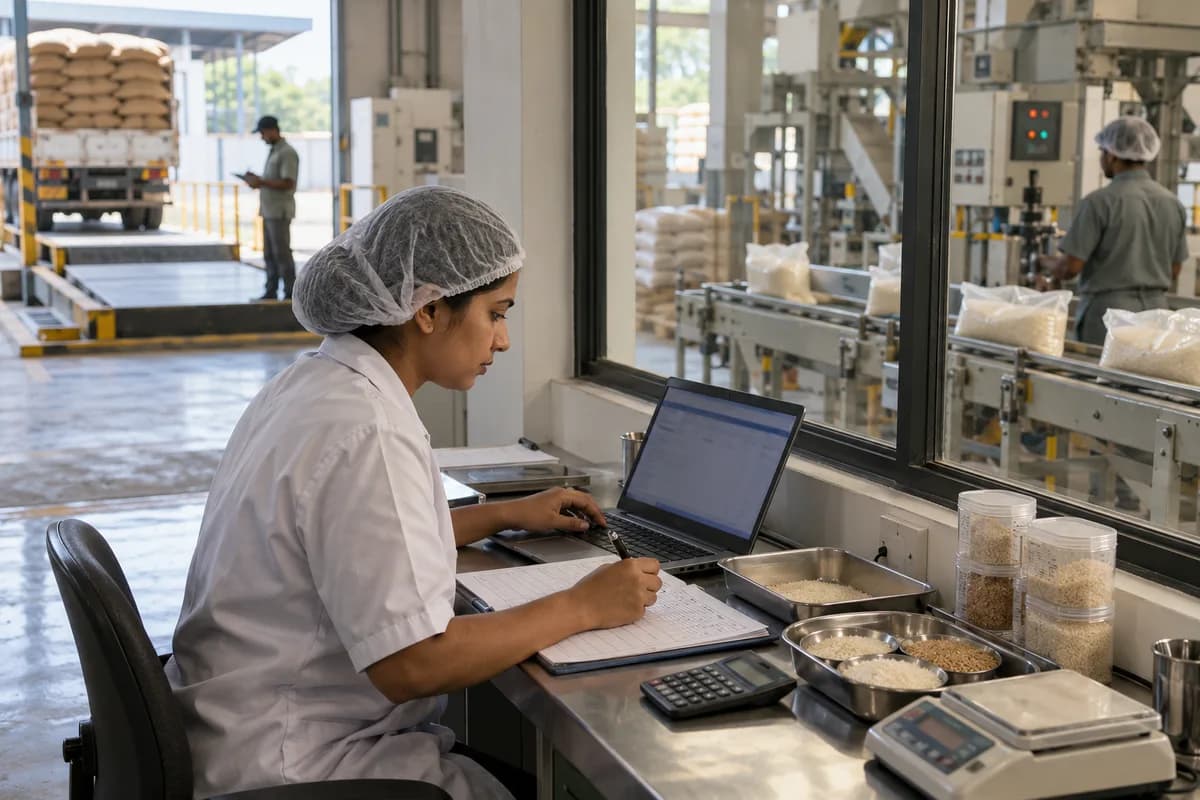
Intake sets the quality of every record that follows. A truck reaches the weighbridge, and the gross and tare weights decide what you pay the supplier. A sample then goes to the lab bench.
Moisture, foreign matter, damaged grain and infestation all affect price and yield. Those readings must sit against the supplier lot, not on a loose slip. Otherwise nobody can say later which supplier caused a poor batch. A truck of damp groundnuts, or wheat with live insects, can spoil a whole silo. That happens when the sample result never reaches the person choosing the bay.
Rejected loads need a record too. A refused truck, logged with reason and photo, settles many arguments. Keep both.
- Supplier, vehicle number and weighbridge slip
- Gross, tare and net weight
- Moisture, foreign matter and sample result
- Accepted, rejected or price-adjusted decision
- Internal lot number printed for the storage bay
Processing: batches, yield and by-products
A batch record ties input lots to output lots. It shows what went in, what came out, what was lost and which line did the work. Without it, yield is a guess. Operators often note batch weights on a whiteboard. It is wiped at shift change, and the owner is left with a monthly total that explains nothing.
By-products matter in most food plants. Bran, husk, broken grain, trim, rework and peel all carry value or cost. Each needs its own stock line and its own sale or disposal entry.
Rework needs care. Product that returns to an earlier step carries its original lot with it, so a later recall still finds the source.
- Input lots drawn into each batch
- Output weight by grade and by-product
- Line, shift and operator
- Process readings such as temperature, time and moisture
- Rework added back and its source lot
Packing, storage and dispatch by lot
Packing turns bulk into sellable units. The system should print the batch code, pack date and best-before date on the label, then record how many cartons each pallet holds. Add the metal detector log and the check-weigher rejects, because a buyer’s quality team will ask for both after a complaint.
Frozen and chilled plants add temperature. A cold room log with readings by hour proves that product stayed within range. Dry plants add stack age, since older lots should leave first.
Dispatch closes the chain. Each invoice line should point to the lot that left. A buyer who reports a problem can then be answered in minutes.
- Label data: batch code, pack date, best-before date
- Pallet and carton counts
- Cold room or warehouse location
- First-expiry-first-out picking list
- Dispatch by lot with vehicle and driver
How to judge a system against your plant
Take one recent day and replay it. Enter a real truck, a real batch and a real dispatch. Watch whether the system asks for the fields your supervisors actually use. Ask each shortlisted vendor to enter that day in front of you, and keep the weighbridge slips, the batch sheets and the dispatch copies on the table.
Then run the awkward cases. Try a split lot, a returned pallet and a reprocessed batch. Weak systems fail on these. Demos show only clean flows.
Finish by asking for the lot trace of one finished carton, back to the supplier truck. Note the minutes it needs.
Plant chain record map
Use this single-page grid of seven rows: intake, lab, storage, processing, packing, cold or dry store and dispatch. Four columns sit beside each row: what is recorded today, who writes it, where it is kept and what the software must hold. Fill it in with your supervisors before any vendor demo.
Open a blank worksheet to printQuestions owners ask
Is food processing software the same as general ERP?
Not quite. A general ERP handles stock, sales and accounts well. A food plant also needs lot tracking, grade capture, yield by batch, by-product stock and expiry control.
Which plants benefit most from lot tracking?
Any plant that sells under its own brand or supplies large buyers. Packaged, frozen and bakery lines feel it first. Bulk grain traders gain from it as well.
Do small plants need all of this?
Not on day one. Begin with intake, batches and dispatch by lot. Add cold room logs, label printing and quality checks as the team gets comfortable.
Can the lab and weighbridge feed the system directly?
Often yes. Many weighbridge indicators send a reading by serial or network link. Lab results are usually keyed in at the bench on a tablet or a counter PC.