In this guide 6 sections
Pressure die casting needs records of shot parameters, die temperature and die life in shots, because cycles are fast and defects hide in the settings. Gravity die casting needs pour temperature, coating, cycle by hand and die handling records. Both share heat, lot and reject traceability.
What each route does differently on the floor
In pressure die casting, a machine injects molten alloy into a steel die at high speed. The cycle runs in seconds. A cold chamber or hot chamber machine does the work, and the operator mostly watches.
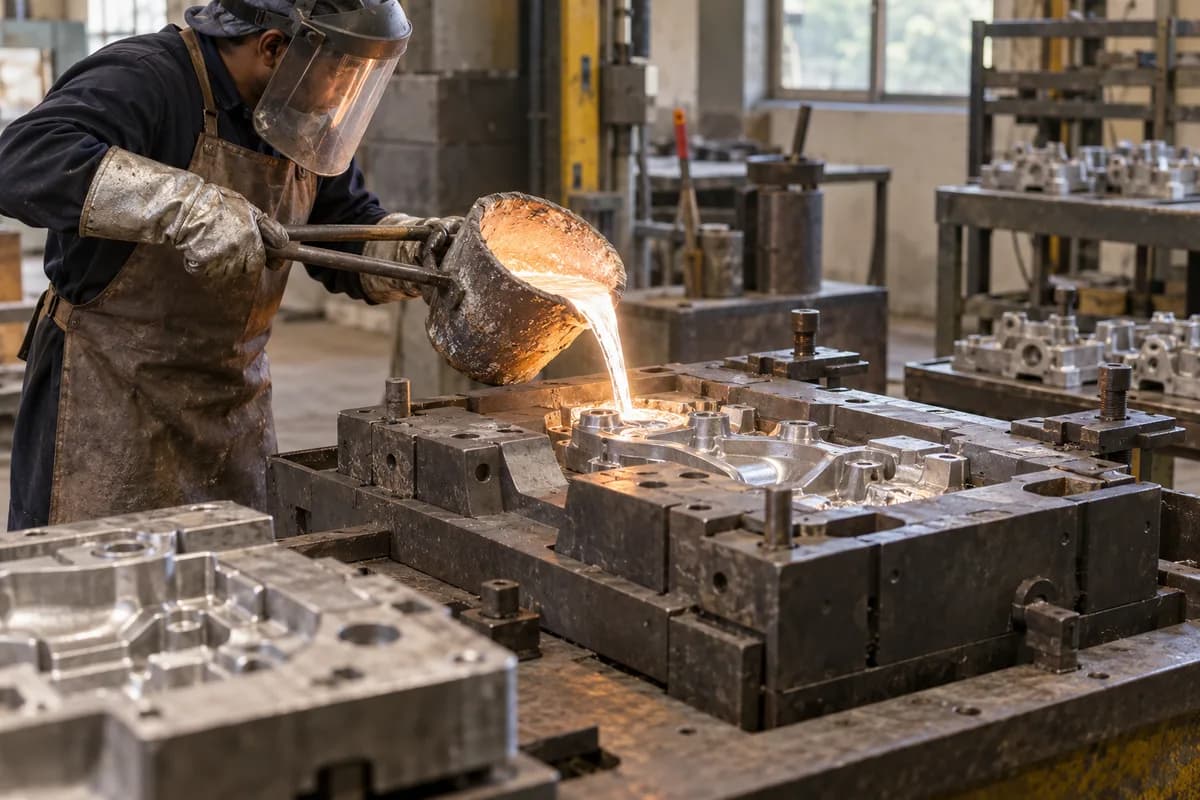
In gravity die casting, a ladle pours metal into a permanent mould and gravity fills it. The pour is manual or semi-automatic. Cycles are slower, and skill at the pouring station matters a lot.
These differences decide what goes wrong, so they decide what you must write down.
Process records for pressure die casting
The machine holds the settings that make a good casting. Plunger speed in the slow and fast stages, intensification pressure, die temperature and spray cycle all shape the result.
Capture these as a parameter set tied to a part and die. When porosity rises, you compare today’s set against the last good lot. Without that, people argue from memory.
Shot counts matter more here. A die builds up wear with every shot, and heat checks appear on the surface.
- Machine tonnage, shot sleeve and plunger settings per part
- Die temperature at start and after a stoppage
- Spray and lubricant cycle used on each shift
- Shot counter reading at die change and at maintenance
Process records for gravity die casting
Here the pour is the variable. Record the metal temperature at the ladle, the time from degassing to pour and the mould preheat. A cold mould gives misruns. A hot one gives shrinkage.
Coating on the mould also deserves a line. Dies are brushed or sprayed, and the layer wears off between pours. Note when it was last renewed.
Hand cycles vary between pourers, so name the person at each station. That is for coaching, not blame.
- Pour temperature and degassing time per melt
- Mould preheat and coating renewal time
- Core type and core setting for each cycle
- Pourer name and station on each shift
Tooling records are not the same either
A pressure die is costly, complex and wears in shots. Keep a history card with shots since polish, repairs, welding, nitriding and any cooling line leaks.
A gravity mould lasts through many pours but suffers cracks at corners and vents that clog. Record cleaning, venting and recoating dates, along with the count of castings poured.
Both need a location field. Knowing a die is at the toolroom, on the machine or in storage prevents a lost day looking for it.
Share one backbone, then split the process fields
Heat number, alloy certificate, lot, inspection result and reject cause are common to both routes. Build those once. Customer complaints trace back through the same chain.
Process fields should differ by route. A form for pressure shots has no use for a pour temperature, and the reverse is also true. Forcing one form on both makes operators skip fields.
If your plant runs both routes, list the fields each shop needs and ask your software team to show two screens on one lot record.
Gravity and pressure die casting records sheet
A one-page comparison with two columns, one for each route. Blocks cover process data, tooling history, lot identity and rejects. Each row shows a field name, who records it, how often and the document it lands on, so a planner can tick what the system already holds.
Open a blank worksheet to printQuestions owners ask
Can one lot record cover both routes?
Yes, for identity fields like heat, alloy and part number. Process fields should sit in a section that changes with the route chosen on the work order.
Which route needs die life tracking more?
Pressure die casting, because wear builds with every shot and failure is costly. Gravity moulds still need cleaning and recoat dates, but the count is less critical.
Do both need X-ray or leak test records?
It depends on the customer. Where a drawing calls for them, store the result against the lot and the die cavity so a failure points to the cause.
How do we start if we only have paper?
Pick one machine and one gravity station. Add the shot sheet and the pour log into a simple screen, run it for a month and see which fields people truly fill.