In this guide 6 sections
Keep one record per machine. It is keyed by serial number and holds the model, delivery date, installer and a separate warranty line for the frame, motor and console. When a claim comes in, you check one entry instead of searching invoices, emails and the manufacturer’s portal for a stray serial number.
Key every record on the serial number
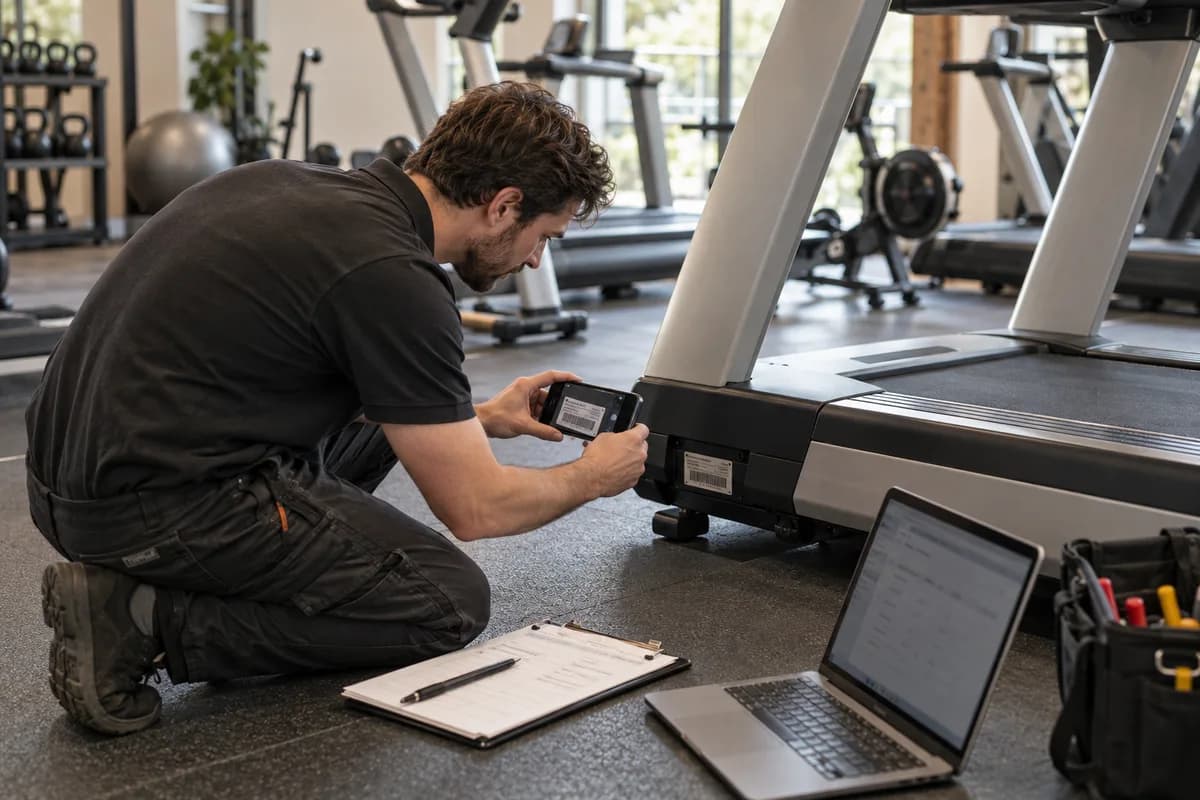
Every machine carries a rating plate. Photograph the plate at the door, before the machine is carried in and the delivery crew has left, because plates end up behind covers and against walls. Its serial is the key. Everything else hangs from it.
Machines hold more than one serial. A treadmill has a frame serial, and its motor and console board carry numbers of their own that rarely match the frame. Rowers split rail from monitor. Record every one, because a replacement part arrives with a new number and a claim next year may name only that number.
Link the invoice number and the customer to the record, so a claim that starts with a phone call or a surname lands on the right machine. Add the delivery note too.
Record the dates that start each warranty clock
Manufacturers rarely agree on when warranty starts. Some count from the invoice date, some from the day of delivery, and some from the day the installer signs the commissioning form. Write the basis beside the date. Without it the record settles nothing.
Periods differ by component. Frames usually carry the longest cover, motors a shorter one, and consoles, belts and labour shorter still, though each brand sets its own pattern. Home use and commercial use are often covered differently, so a gym with a treadmill in daily service needs the use class on the record.
Note whether the machine was registered with the manufacturer, on what date, under which reference, and by whom, because some brands ask for proof of that before they pay. A missed registration can sink a valid claim.
What the record layout holds
The layout has six blocks. Keep them on one screen or one printed page. Identity comes first, then the sale, the installation, the warranty lines, the use class and the service history, in that fixed order every time.
Keep the fields short and fixed. Free text invites a different spelling of the same component each time, and a search on motor then misses half your history.
- Identity: model, frame serial, motor serial, console serial, photo of the rating plate
- Sale: invoice number, customer, delivery address and delivery date
- Installation: installer, date, levelling check and a test run signed by the customer
- Warranty: one line each for frame, motor, console and labour, with start date, end date and basis
- Use class: home or commercial, and the manufacturer’s registration reference
- Service history: date, fault code, part replaced, new serial and who attended
Checking a claim against one entry
A customer rings to say the treadmill belt slips whenever the incline rises and the console shows an error that clears on restart. Search by serial or by name. The entry shows the motor line, the console line, the use class and every earlier visit, all on one screen, before you pick up a pen.
Fault patterns repeat by machine. Treadmills bring belt slip and motor controller errors, rowers bring chain or strap wear and damper faults, and reformers bring worn springs, frayed ropes and noisy carriage wheels. Code each fault from a short list. Counting them later shows which model fails first.
Decide the claim from the entry. Is the component inside its period? Is the use class right? Was the machine installed by an approved installer? Attach photos of the plate, the fault and the console screen, then send the claim to the manufacturer with the serial in the subject line.
Keep the register true after the sale
A register decays without updates. After each service call, the engineer records the part replaced, the new serial, the fault code and the date, before leaving the customer’s door. A swapped motor may carry a fresh warranty of its own, running from the swap date and separate from the cover on the original machine.
Set a reminder before each warranty line ends. That call is a natural moment to offer an extended service plan or a belt and lubricant visit, and it catches machines that have been moved or resold.
Once a month, pull five machines at random. Compare the plate photo with the serial on the record, then compare the record with the invoice, and write down the cause of any difference. Begin with your next ten deliveries. Photograph each plate at the door. Fill its row before the van leaves.
Machine warranty register
Each machine gets one wide row. Columns run from model and frame serial to motor serial, console serial, invoice number, delivery date, installer and use class. Four more columns hold the frame, motor, console and labour warranty, each with a start date, end date and basis, so a claim is checked by reading across. A claims block underneath logs the date, fault code, part replaced and new serial for every visit, so the history of one machine reads in one place.
Open a blank worksheet to printQuestions owners ask
Where do I find the serial number on a treadmill?
Usually on a rating plate near the power inlet or on the frame at the base, though the manual shows the exact place for each model. Photograph it at delivery. Plates fade and hide behind covers.
Does warranty start at purchase or at delivery?
It depends on the manufacturer. Read the terms for each brand, record which date applies, and store that basis in the same row as the start date so nobody has to guess.
What happens to the warranty when a motor is replaced?
The replacement part may carry its own period from the swap date, while the machine’s original lines keep running to their first end dates. Record the new serial and both dates. Then a later claim can be checked.
How long should we keep these records?
Keep each record until the longest warranty or service plan on the machine has ended, and for longer if the customer may resell it. Rules differ by region, so check yours.