In this guide 6 sections
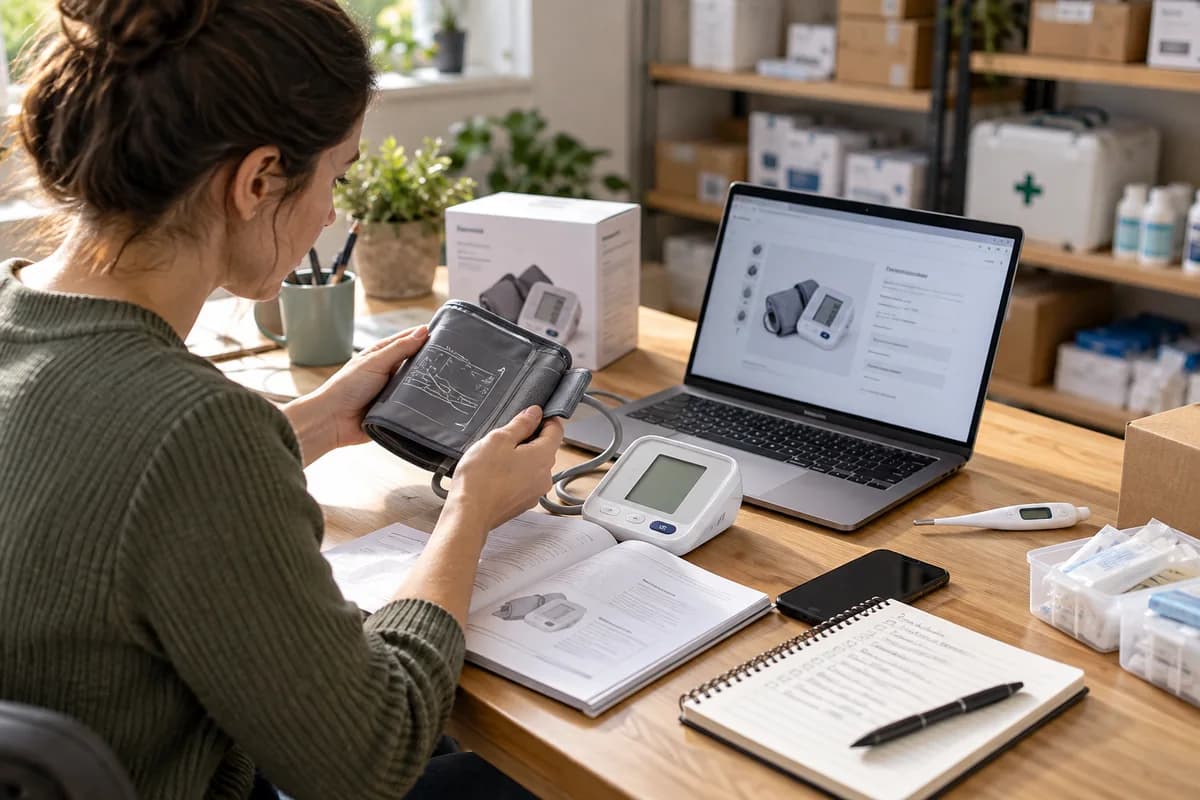
A health device page must carry the fields buyers use to choose the right unit, because a wrong size or probe type becomes a return. Monitors need cuff range, thermometers need probe type and first aid kits need expiry dates. State accuracy as the manual states it. Leave out claims about treating, preventing or diagnosing any condition.
Fields that change from one device to the next
Three devices, one category, almost no shared fields. A template built for clothing misses nearly everything that a buyer of a blood pressure monitor, a thermometer or a walking frame needs to know. Each device type has its own list.
Monitors need an upper arm or wrist style, a cuff circumference range, memory slots and a note on whether the cuff is included. Thermometers need probe type, measuring site and reading time. Mobility aids need load rating and height range.
- Monitors: cuff range, arm or wrist style, memory, power source
- Thermometers: probe type, measuring site, response time, probe covers
- Pulse oximeters: finger size range and battery type
- Mobility aids: load rating, height range, folded size, own weight
- First aid kits: contents list with quantities and expiry dates
Accuracy statements without rounding up
Quote accuracy exactly as the manual or test report gives it, and attach the test conditions, because a reading range printed alone invites a complaint.
Attach the manual as a PDF. Add the test report if you hold one. Avoid the phrase medical grade unless a regulator or standard defines it for that product, because buyers read it as a promise. Thermometers often list one accuracy for body readings and another for surface or room readings, so quote the one that matches the use you describe.
No written statement, no accuracy line. Leave accuracy off the page until the supplier sends the figure in writing, together with the conditions it was measured under and the date of the test.
Sizing: help the buyer pick before paying
Wrong sizes come back. Cuffs, braces, compression stockings and walking aids all fail when the size is wrong, so put a size selector beside the buy button.
For a cuff, ask for arm circumference. For crutches or a walking frame, ask for the user’s height and show the adjustable range, so the buyer sees at once whether the frame will fit. For compression stockings, ask for calf and ankle measurements. For a shower chair, show seat width and load rating beside the user’s weight.
Record a reason on every return. Those reasons show which size notes to rewrite, and which products need a fit finder before the buy button.
- Arm or calf circumference range in a table
- User height range for crutches and frames
- Seat width and load rating for shower chairs
- A fit finder that asks one question at a time
- Return reasons: too small, too large, wrong type
Expiring contents in first aid kits and refills
A first aid kit is a bundle. Sterile dressings, eyewash, antiseptic wipes and burn gel age at different speeds, so the kit’s life is that of its earliest item.
List every item and quantity on the page, then record the shortest expiry date in the kit at dispatch so no buyer opens a lapsed kit. Pick the oldest lot first.
Sell refills as separate products. A workplace can then top up a cabinet without buying a whole new box, and a reminder before the next expiry date brings the order back.
- Item list with quantity per kit
- Earliest expiry date by lot at dispatch
- Refill packs for dressings, wipes and gloves
- Rotation rule: first expiry, first out
- Reminder date for workplace buyers
Claims to leave out
Leave out any line saying a device treats, cures, prevents or diagnoses a condition, or lowers a reading such as blood pressure. Regulators in many markets class a device by what it is claimed to do, so a single sentence can change the rules that apply.
Also drop clinically proven when you cannot send the study, doctor recommended when no doctor is named, and buyer reviews that describe cures. Moderating reviews is your job. A star rating is fine, but a headline pulled from a review that says it lowered a reading is not.
Ask a regulatory adviser first, since the answer depends on the market and the device. Then print your best-selling device’s page, circle every verb and find the matching line in the manual for each. A verb without a match comes off.
Device listing field sheet
The sheet fits one page, with a block for each device type: monitors, thermometers, mobility aids and first aid kits. Every field names its source document. Each field has a tick box. The last block lists claims to leave out, with replacement wording that comes straight from the manual and test report.
Open a blank worksheet to printQuestions owners ask
Can I quote the accuracy printed on the box?
Yes, when the manual or test report says the same. Give the test conditions beside the figure. Never round the figure in your favour, because a buyer, a reviewer or a regulator can compare the page with the document.
How should expiry dates appear for first aid kits?
Show the earliest expiry date among the contents at dispatch, and list each dated item by name so the buyer knows what will lapse first. Record it by lot. Then a recall can find every buyer.
Can I use customer reviews that mention results?
Not without care. A review that says a device cured something is a claim on your page, so hold it for moderation. Publish the ones about fit, comfort and delivery.
Is a thermometer treated as a medical device?
In many markets a body thermometer is regulated as a medical device, so ask your adviser how yours is classed and write the page to match.