In this guide 6 sections
Dispatch visibility improves when every order is tracked through allocation, loading, dispatch, delivery and exceptions as one connected status trail that the dispatch desk can read at any hour. GPS alone cannot do this. Most gaps come from missing status updates and unrecorded exceptions, which drivers report by phone hours later, not from a shortage of vehicle location data.
The full path from allocation to delivery
A regional trucking and last-mile company running thirty vehicles a day usually coordinates by phone between the dispatch desk and drivers, with loading confirmed verbally. Drivers confirm delivery only by calling back. Sometimes that call comes hours late.
Map the whole path first. An order is allocated to a vehicle, goods are loaded, the vehicle leaves, a delivery is attempted and any exception is handled, and each hand-off can lose information. The worst gap is the delay between an event, such as a refused delivery, and the moment anyone at the dispatch desk can see it.
Standard status updates with a named owner for each
Every stage needs one named owner. Someone confirms loading, someone confirms delivery and someone records a failed attempt, and without those names the updates lag because “someone should update this” rarely means anyone does.
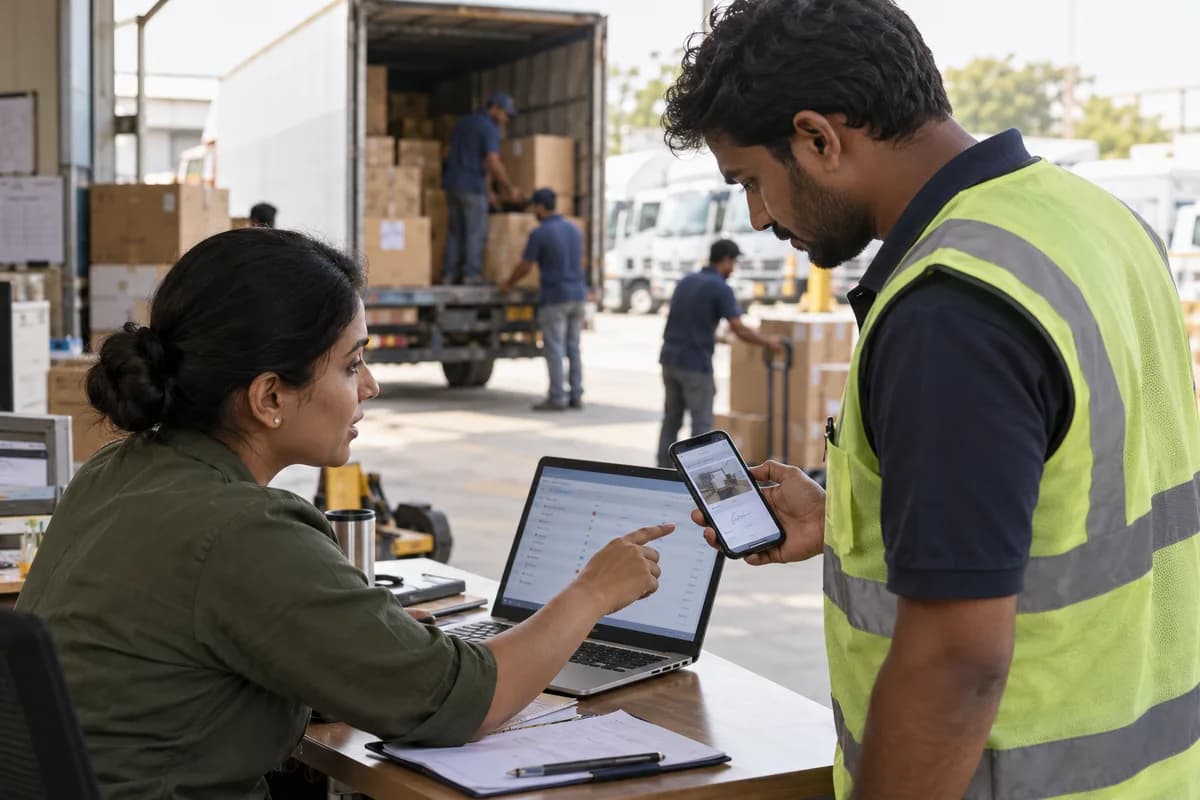
Proof of delivery deserves special care. A signature, a photo or a one-time code captured at the doorstep turns a driver’s spoken “delivered” into evidence the company can show a customer who disputes the drop.
Tracking as one input, not the whole answer
GPS answers one question well. It shows where a vehicle is right now, but it cannot show whether the delivery finished, whether the right cartons were loaded or why a customer refused the parcel. Calling GPS the answer is costly.
Combine location with status updates. Where it helps, add customer messages by SMS or WhatsApp when a parcel is out for delivery and when it is done, using the tools you already have. Integrate before you replace.
A workflow for delay, damage and failed delivery
Exceptions are where visibility collapses. Nobody designs for a late truck, a crushed carton or a customer who is not home, so each one gets handled by whoever picks up the phone.
Give each exception a workflow. The workflow names who is told, what is recorded and what happens next, whether that is redelivery, a return to the depot or a credit note for the customer. Logged inconsistently, exceptions vanish from later reports, and a company that cannot see its failed-delivery rate has no basis for lowering it.
Measuring the visibility gap, not just on-time rates
On-time delivery is a useful headline. It does not measure visibility, which is the average time between an event such as a delivery or failure and the dispatch desk knowing about it. Track that lag separately.
Shorter lag changes what dispatchers can do. A failed delivery can be caught the same afternoon instead of the next morning, and a delayed truck’s remaining stops can be reassigned before the whole route falls behind.
Dispatch exception timeline
A timeline plots each stage against expected and actual timestamps, with a lane for delay, damage and failed attempts showing who was told and what followed. Populate it from one week’s dispatches.
Open a blank worksheet to printQuestions owners ask
Is GPS alone enough for dispatch visibility?
GPS is not enough. It shows position, not whether a delivery was completed, what was loaded or why an attempt failed, so pair it with disciplined status updates and proof of delivery.
How should failed deliveries be recorded?
Pick a reason from a list. Customer unavailable, wrong address and refused delivery each lead to a different next step, which a generic “not delivered” status hides completely.
What should a small fleet record first?
Start with proof of delivery. A signature, photo or code at the doorstep gives the dispatch desk its first reliable event, and the rest of the status trail can be added stage by stage.