In this guide 6 sections
Handle a device complaint in a fixed order. Log it the day it arrives, identify the device and lot, judge whether it must be reported, investigate, decide corrective action and close with evidence. Software should stamp each step with the user and the time, so the file stands on its own.
Log it the day it arrives
A complaint can come as a call, an email, a distributor’s note or a returned unit. Each gets the same entry. Record who complained, when you learned of it, the device name, the serial or lot number and what happened.
Do not wait to confirm the fault. Log it anyway. The log date starts the clock for any reporting duty you hold, so check your own regulator’s rules and keep that date firm.
- Complaint number and date received
- Reporter name, role and contact
- Device, model, serial or lot number
- Description in the reporter’s own words
- Injury or harm reported, yes or no
Look up the device and its lot
The next step is a lookup. From the serial number, pull the device history record, the material lots, the inspection readings and any earlier service visits. Software turns this into one screen instead of a hunt through three cabinets.
Check who else holds units from the same lot. Software lists the distributors and hospitals in one query. If the fault might be systemic, you need that list early. Pull it before the investigation starts.
Decide whether it is reportable
Someone qualified must judge whether the event meets your regulator’s threshold for a report. Record the decision, the reasoning and the person who made it. A decision of no report still needs a written reason.
Revisit the call when new facts arrive. A complaint that looked minor can change once the returned device is opened and examined on the bench.
Investigate and record the cause
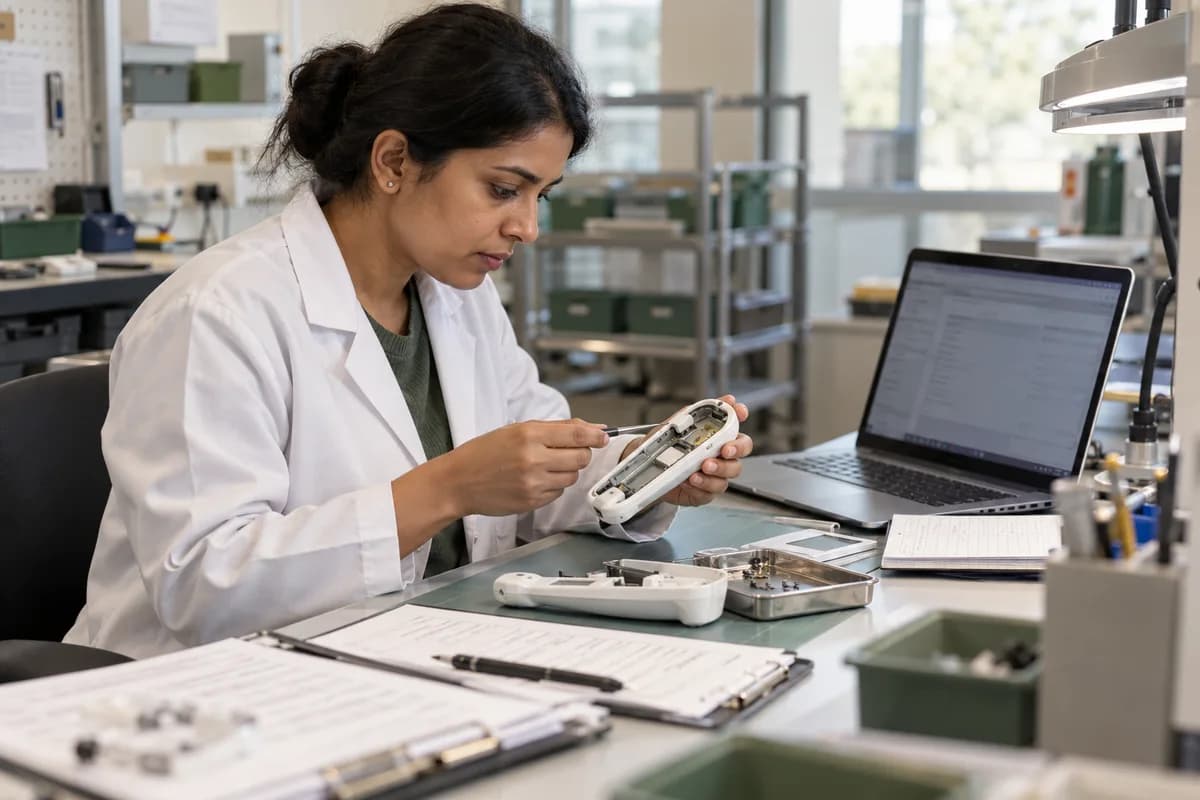
Examine the returned unit if you have it. Compare it against the drawing revision it was built to. Check the lot, the operator, the machine and the inspection readings, and put photographs and measurements into the file.
Name a root cause or state plainly that none could be found. Both are acceptable. A blank is not acceptable. If the cause points at a process, open a corrective action linked to the complaint number.
Reviewers later look for the thread from symptom to cause to fix. Keep it intact. A file that jumps from a reported crack to a closed status, with no measurement in between, invites questions that nobody present can answer.
- Returned unit received and condition noted
- Measurements against the drawing revision
- Lot and inspection records reviewed
- Root cause, or the reason none was found
- Corrective action number, if raised
Close with proof and watch for repeats
Close the complaint only when the reply to the customer is sent, the corrective action is verified and the file holds the evidence. Record the closing person and the date.
Then look across complaints. Trends hide in single files. Zoom out. The monthly sweep is where a quiet pattern, such as repeated ratchet slippage on one model, finally reaches someone with authority to act. Group them by device, lot and failure type every month. Three similar entries in a quarter make a trend, and a trend deserves its own review meeting with quality, production and service in the room.
Complaint file checklist
This checklist has five stages: intake, lookup, reportability, investigation and closure. Each stage has tick boxes, a name field and a date field. The intake block lists the device and lot fields. The closure block holds customer reply sent, action verified and trend review noted.
Open a blank worksheet to printQuestions owners ask
Do we need to log a complaint that seems trivial?
Yes. Log everything. Triviality is a conclusion reached after review, and it should be written down with a name beside it.
What if the device is never returned?
Investigate from records: history, lot, inspection data and similar complaints. Note in the file that no unit was available.
Can service visits count as complaints?
Only when they report a fault or a performance issue. Routine maintenance is not a complaint, though its notes feed the trend review.