In this guide 6 sections
Settle four things before the trial goes live. They are the minimum keep period, who pays for pickup, whether a used mattress is donated and when the refund is released. Release the refund only after the pickup scan or the donation proof, so repeat trial returns show up in your records and not in your losses.
Set the minimum keep period and the trial length
A new mattress feels different at first. Foam softens and the sleeper adjusts, so a trial that allows a return on day two rewards the shopper who simply dislikes change. Set a minimum keep period first.
Then set the longest the trial can run. The clock should start at the carrier’s delivery scan, not the order date, because a mattress can sit in a depot for days.
Allow one trial per household. Define what counts as a household. Statutory rights for distance sales may apply alongside your trial in some countries, so ask a local adviser to confirm the wording before you publish.
- Minimum keep period before a return request is accepted
- Longest trial length, counted from the delivery scan
- One trial per household, matched by delivery address and phone
- Products outside the trial, such as clearance models
Decide who pays for pickup and what condition you accept
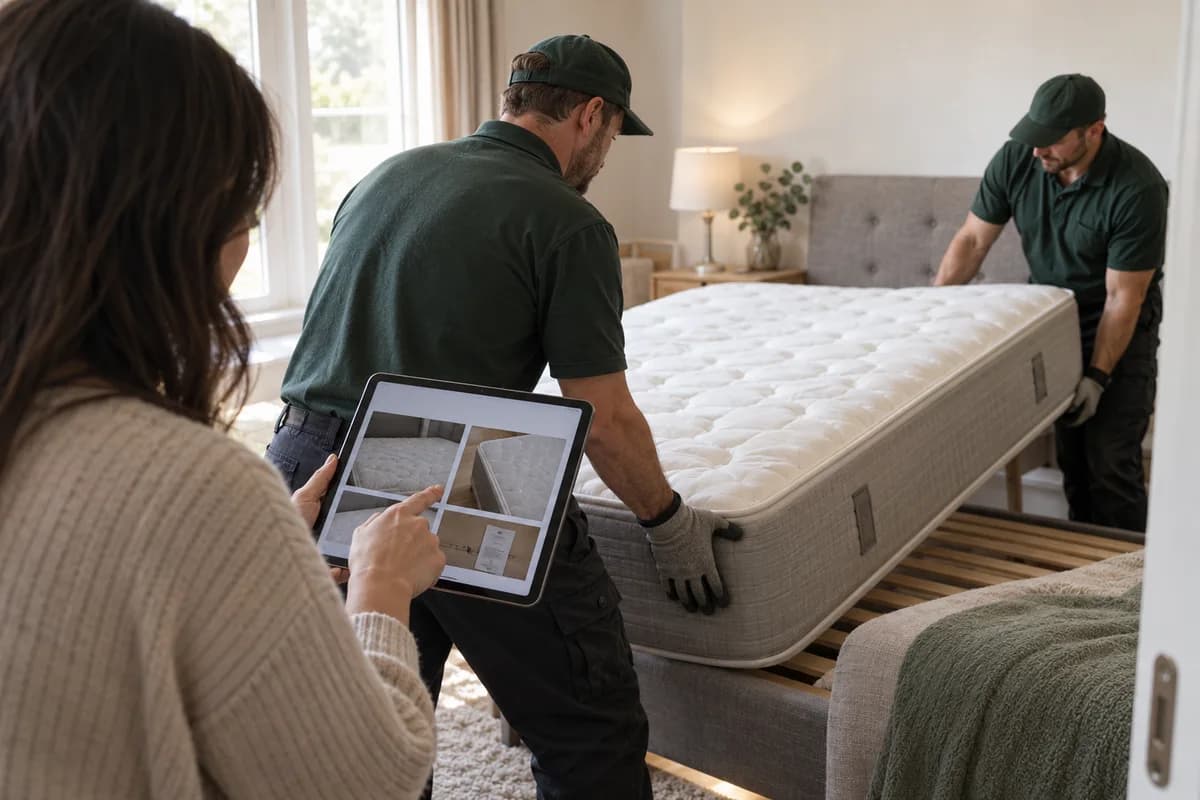
Returns of a bulky mattress need a booked pickup, often with two people at the door and a van that can park outside. Decide who pays and say so before checkout. A bed-in-a-box mattress will not fit back into its box, so the pickup crew takes it flat and the van needs room.
Write the condition rules in plain words. A protector may be required, and stains, burns, pet damage and strong smells can end the trial, so ask for photos of the whole bed and the care label.
Offer an exchange first. One swap to a firmer or softer model settles many complaints without a refund, and the sale stays on your books.
Donate used mattresses instead of collecting them
A used mattress is hard to resell. Collecting it adds freight and then a disposal cost, whereas a charity or bed bank that accepts used mattresses can spare you both. Not every charity accepts mattresses.
For a donation, ask for proof such as a receipt, a collection note or a photo from the charity, and hold the refund until the proof arrives. File the proof with the order.
Where no charity covers the area, book a disposal collection instead, and keep both routes in the policy so that staff never improvise on the phone.
Hold the refund until the mattress is collected or donated
Give every return a one-way status. A refund button that works from any status is how a customer gets paid and keeps the mattress, so lock the order of the steps. Staff should see the same five statuses in the order screen, the carrier booking and the customer email, so nobody quotes a different stage on the phone.
Trigger the refund from a carrier scan or the donation proof, never from a staff member’s say-so. Failed pickups change nothing. If a pickup fails twice because nobody is home, the status stays put and the customer is told why and offered a new slot.
Deductions belong here too. Keep a field for a missing cover or a damaged base, with a photo attached to the line and the amount held back.
- Requested: reason code, photos and protector answer received
- Approved: inside the trial and past the minimum keep period
- Pickup booked: carrier reference and date
- Collected or donated: scan, receipt or charity photo attached
- Refunded: amount, deductions and who released it
Make trial abuse visible in a weekly record
Abuse is rarely one big event. It is the same address, phone number or card appearing on a second and third trial, or a run of returns on the last day of the window. Read the sheet weekly.
Add reason codes such as too firm, too soft, too hot, sagging, smell and partner disagreement, then compare them by model. Blame the page before the buyer. A customer with three trials in a year is not always a cheat, so read the reason codes before you decide anything.
Write the four decisions on one page this week, then ask your carrier for a quote on bulky-item pickup. Publish only when both are done.
- Order, delivery scan date and return request date
- Reason code and product model
- Address, phone and card match to earlier trials
- Pickup or donation status and refund status
Sleep trial policy worksheet
One page, four blocks. Block one fixes the minimum keep period, the trial length and the clock start, and block two records pickup cost, condition rules and the exchange offer. Block three names the donation partner, the proof needed and the fallback route, while block four lists refund statuses, who may release a refund and the weekly record.
Open a blank worksheet to printQuestions owners ask
How long should a mattress sleep trial last?
Long enough for a sleeper to adjust. Weigh your margin and your carrier cost against the return reasons you see, and move the length up or down as the data comes in.
Should I charge for return pickup?
That is a business choice. Free pickup draws more trial sales and a fee draws fewer returns, so a shared cost is one middle course, stated on the product page before checkout.
Can I resell a returned mattress?
Often not. Rules on used bedding differ between countries and states, and hygiene matters, so check the local rules before you put a returned mattress back on sale. Many sellers donate instead.
How do I spot people abusing the trial?
Match each request to earlier ones by address, phone, email and card, then look for repeat trials, last-day returns and one complaint across many models.