In this guide 6 sections
Create one record per physical machine, keyed on the serial number. Store hours, purchase source, reconditioning work and cost, attachments, photos and asking price on it. When a buyer asks about a unit, the answer sits in one place and the price is built from facts.
Make the serial number the spine
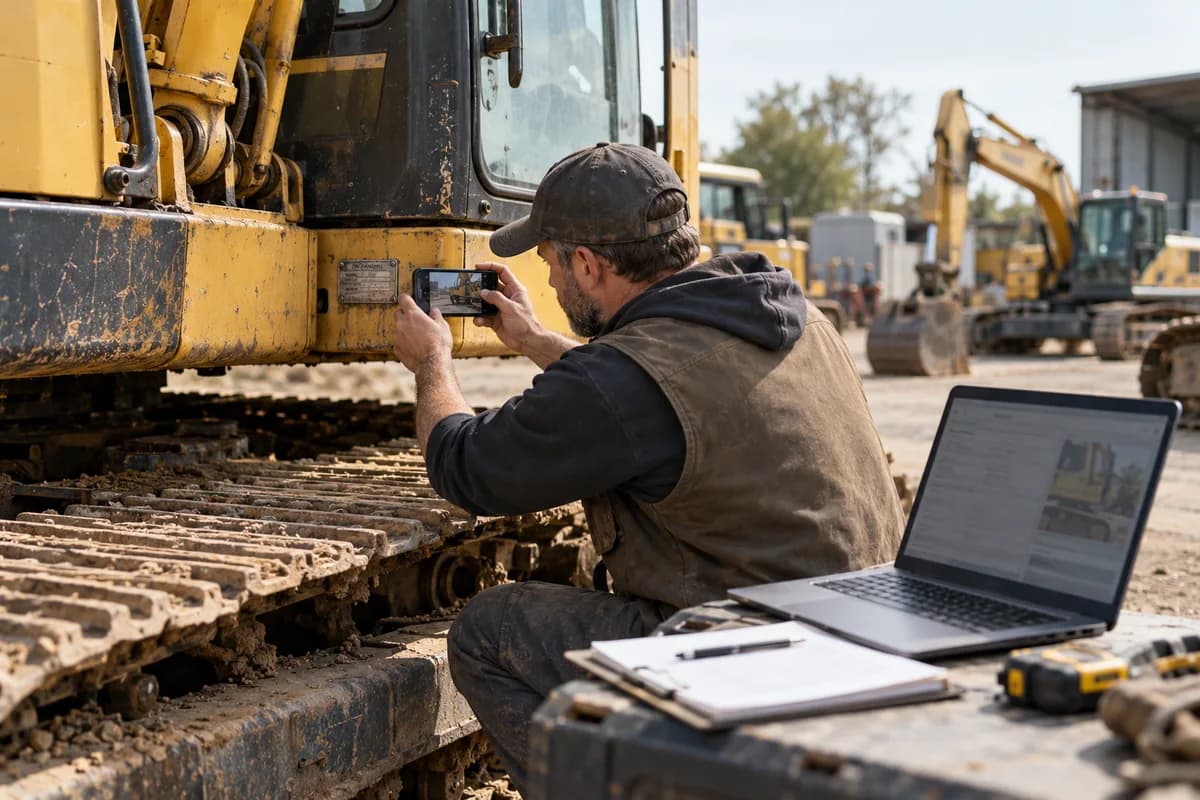
One machine, one record. The plate serial is its key. Beside it go the internal stock number, make, model, year and the place on that model where the plate is welded or riveted. Trade-ins often arrive with painted over or worn plates, so photograph the plate the day the unit lands in the yard.
Capture where the machine came from: trade-in, auction, outright purchase or consignment. Record the previous owner and the arrival date. If the unit is on consignment, note the owner’s minimum price and the commission terms agreed before anyone quotes a buyer.
Duplicates are the first enemy. Search by serial first. Check the stock list before creating anything new, so a machine that returns after a failed sale reopens its old history. It should never start again with a flattering blank page.
- Serial, stock number, make, model, year
- Source, previous owner, arrival date
- Consignment terms if not owned
- Location in yard or branch
- Status: incoming, in workshop, ready, reserved, sold
Record hours and condition as measured, not described
Write the hour meter reading with its date, and mark whether the meter was replaced or the dial is faulty. Buyers ask this first. A vague answer costs a sale. Be precise. Then add a condition grade per component: undercarriage or tyres, engine, hydraulics, cab, boom or mast, and attachments, each graded and initialled by the inspector who looked at it.
Use measured values where you can. Track link wear, bucket tooth condition, tyre tread, pin and bush play, and any oil leaks seen on the walkaround. A grade backed by a measurement holds up when the buyer brings their own mechanic. A glance does not.
Log every job done to the unit
Reconditioning is where the margin moves. Link each workshop job card to the unit, covering parts fitted, labour hours and outside work such as repainting or hydraulic hose replacement, with the cost of each line. The record then shows total money in against the asking price at any moment.
Include the service history that came with the machine. Scan old invoices and the last inspection report. A buyer who can read ten years of oil changes and filter swaps will usually pay more than one who is handed a verbal promise and a handshake.
- Parts and labour per job card
- Outside repairs with supplier invoices
- Previous owner’s service records scanned
- Inspection report and date
- Freight or transport cost to the yard
Attach attachments, photos and documents
Buckets, forks, hammers, couplers and counterweights are separate items that travel with the unit. List each one on the record with its own serial number when it has one. That stops a spare bucket being sold off the lot by mistake.
Take a standard photo set covering front, rear, both sides, cab interior, engine bay, undercarriage, hour meter and plate. Keep the same order every time, so listing pages look consistent from one unit to the next. Store the bill of sale, import or registration papers and warranty terms in the same record.
Price from the record and publish fast
Set a floor price from cost in, reconditioning spend and the margin you need. Compare it against recent sales of the same model at similar hours. Then set an asking price above the floor, leaving room for a buyer to feel they won something.
Generate the sales sheet straight from the record: photos, hours, attachments, key specifications and service history. Send it by email or message the same day the unit is ready.
Start with the ten units that have sat longest. Fill in their records this week. See which ones were hiding in plain sight.
Used unit record sheet
Five blocks fill one printed unit record. Identity covers serial, stock number, make, model, year, source and location. Condition covers hours and a graded component list. Work done lists job cards with parts and labour cost. Attachments lists items with serials. Pricing shows cost in, floor price, asking price and sales status with a photo checklist alongside.
Open a blank worksheet to printQuestions owners ask
What if the serial plate is missing or unreadable?
Check the frame stamping or engine block for a secondary number, photograph it and note the source on the record. Do not list the unit until you can tie it to a verifiable identity.
Should consigned machines be in the same inventory?
Yes, with a clear flag showing they are not owned. The record carries the owner’s floor price and your commission, so you do not price the unit below what the owner will accept.
How do we handle a unit that comes back after a sale?
Reopen the same record rather than creating a new one. Add the return reason, the new condition check and any work done. The history then explains why the machine came back.
How much reconditioning detail is enough?
Enough to explain the price to a buyer. Parts, labour hours and outside work per job card is usually plenty, as long as each item is tied to the serial.