In this guide 6 sections
Track outside processing by treating each trip as its own record: the lot, quantity sent, vendor, process, outward note number and promised return date. When parts come back, count them against the note, log rejects, and close the trip. An open trip past its date becomes your chase list.
Why parts go missing between the shop and the plater
A job card shows the part on the floor until the moment it leaves. Then it goes quiet. The driver takes a bin of bearing races to the heat treater, the planner moves on, and nobody owns the lot until someone asks where it is.
Short returns follow. The vendor ships back fewer pieces than you sent, and the difference is blamed on scrap, a miscount or a mix-up with another customer’s bin. Without a number on the outward note, you cannot argue.
The fix is not a new habit of calling vendors. It is a record that exists from the moment the gate pass is written.
What to record when the lot leaves
Write one line per trip. The parent work order, part number, operation being done, quantity, weight, vendor, outward note number, vehicle and promised return date. Weight matters because it gives you a second count when pieces are small.
Specify the process in words the vendor cannot misread. Case depth, hardness range, plating thickness and finish, baking after plating for hydrogen relief and any masking of threads belong on the note or on an attached drawing.
Keep the trip separate from the job. A job can make three trips, say for carburising, grinding and phosphating. Each trip needs its own record so a delay at one vendor is visible by itself.
- Work order, part number and operation
- Quantity and weight sent
- Vendor, process and specification
- Outward note number and vehicle
- Promised return date
Receiving the lot back
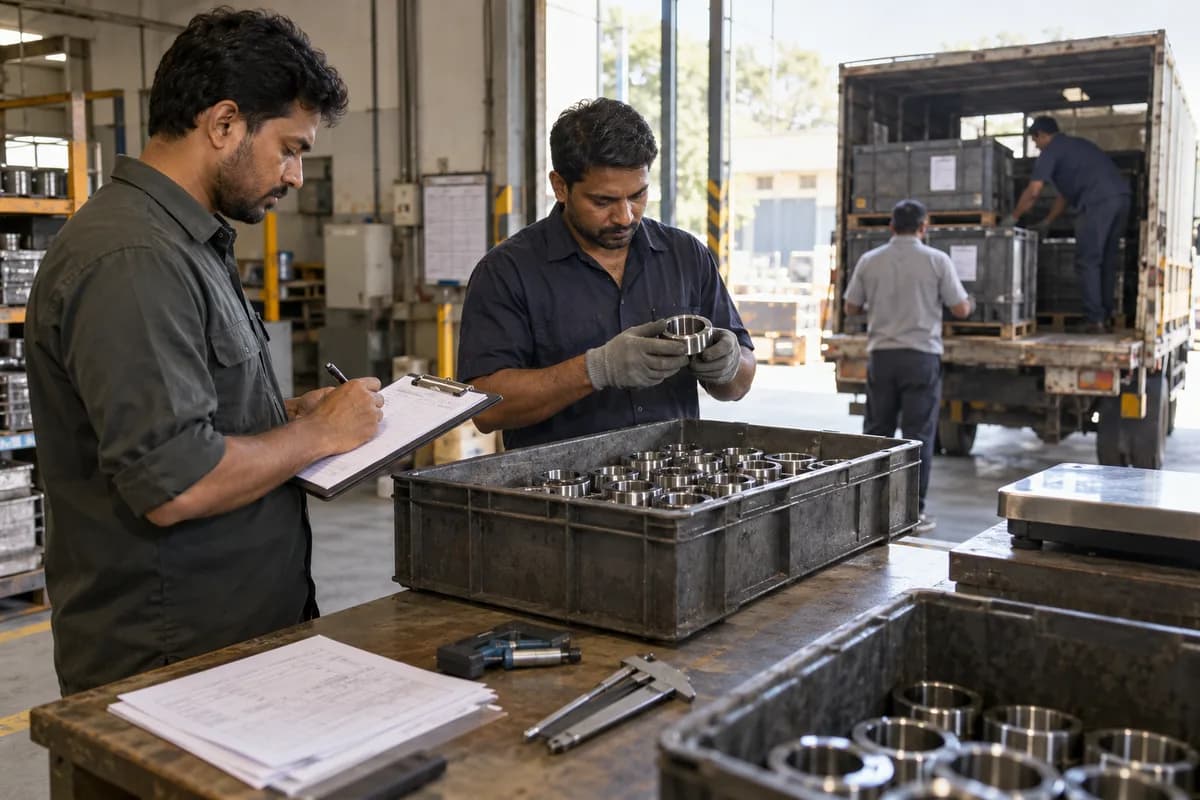
Count on arrival, before the driver leaves. Match the quantity to the outward note and weigh the bin. If the count is short, write the shortfall on the vendor’s delivery slip and ask for a signature.
Check the work, not just the number. Take hardness readings on a sample. Measure coating thickness with a gauge, test thread fit with a go and no-go gauge and look for warping on long shafts. These catch problems while the vendor can still rework them.
Log rejects with a reason. Cracked after quenching, patchy plating and bent shafts are different problems, and the vendor scorecard improves when the reason is not just rejected.
Chasing late lots before the customer does
List every open trip sorted by promised date. Anything past its date goes to the top. A planner who reads that list each morning will phone the plater on day one of delay, not on the day the delivery is due.
Add the downstream date. If grinding is booked for Thursday and the heat-treated lot has not returned, move the grinding slot now. An idle machine costs more than a phone call.
Look at patterns monthly. A vendor who always returns on day six against a promise of day four is really a six-day vendor. Plan with the real number.
- Open trips past the promised date
- Trips due within two days
- Lots waiting on rework
- Vendors with repeated short returns
Moving from a notebook to a system
A gate register works while there are a handful of trips. At dozens of open lots, the planner needs a screen that shows what is out, where, since when and what it blocks.
Look for software that raises the outward note from the work order, receives against that note, flags the shortfall and adds the outside charge to the job cost. If it cannot do all four, the notebook is still carrying part of the load.
Try a one-week test. Every lot that leaves the gate gets a numbered note and a line in a sheet. Count how many are late on Friday.
Outside processing trip log
Single-page log, one row per trip. Columns hold work order, part number, operation, quantity sent, weight sent, vendor, outward note number, date out, promised date, date back, quantity received, rejects with reason and charge. A header strip lists the vendor’s phone number and the specification attached to the trip.
Open a blank worksheet to printQuestions owners ask
Who should own the outside processing record?
The planner owns the open trips and the chase. Stores or the gate owns the count at dispatch and receipt. Splitting it this way avoids one person checking their own work.
How do we handle partial returns?
Receive what arrives against the same note and leave the trip open for the balance. Record the quantity still outstanding and the new promised date from the vendor.
What should a vendor scorecard include?
Lateness in days, short returns, reject reasons and rework count. Review it each month with the vendor, using the logged trips rather than memory.
Can the outside charge go onto the job cost?
Yes, and it should. Link the vendor’s invoice to the trip so the process cost lands on the lot that incurred it, including any rework trip.