In this guide 6 sections
Manual counts win on long runs. Sensors win when stoppages are short, frequent and unwritten, or when shifts run without a supervisor on the floor to notice them. Many small plants start manual and add sensors to the two or three bottleneck machines, leaving every other machine on a tablet form until the comparison is done.
What each method actually records
A sensor on a press or CNC controller records running, idle, alarm and off states, and counts cycles from a limit switch or spindle load signal. It cannot say why the machine stopped.
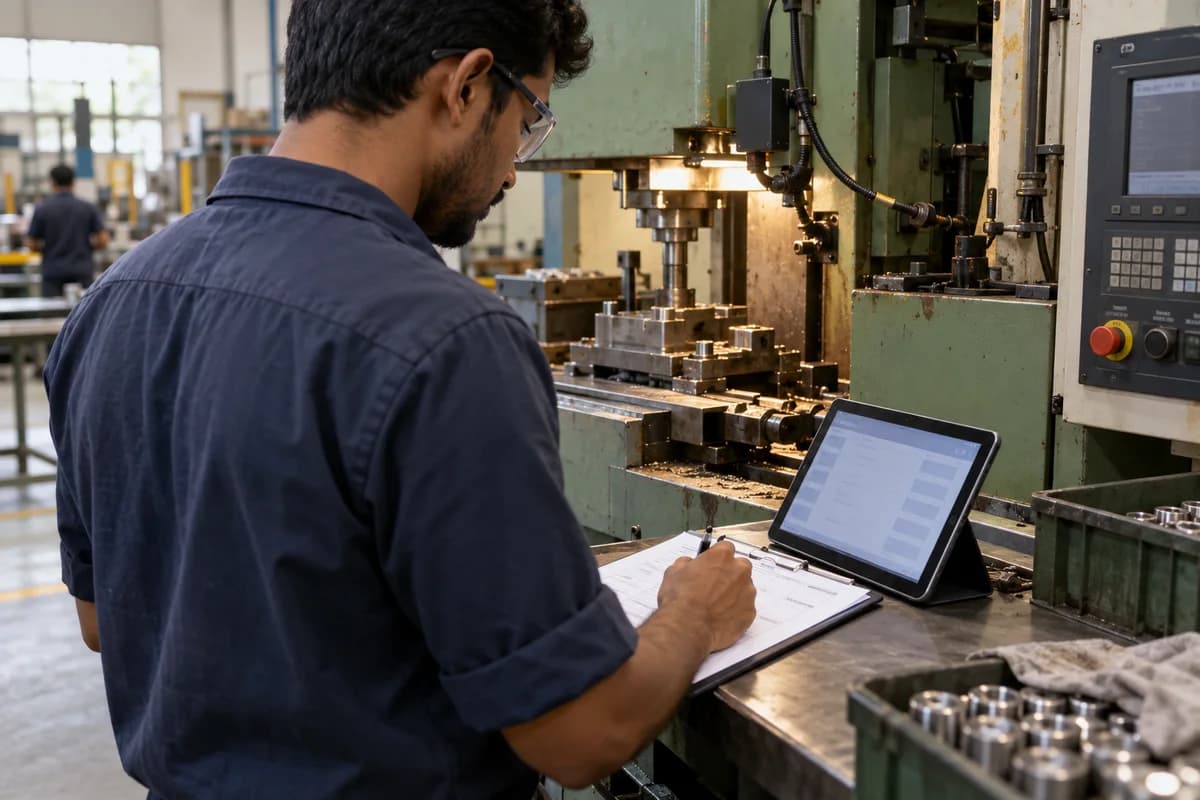
An operator entry records good pieces, rejects and a reason, either written on a shift sheet or picked from a list on a tablet beside the machine. It captures judgement, such as a burr on the edge, but it depends on memory and on how busy the shift was.
Neither is complete alone. One shows what the machine did. The other shows what the person saw.
Where manual counts hold up well
A plant with eight machines, long batches and a supervisor on the floor often needs only a shift sheet or tablet form. Check the count against material issued.
Manual entry also works where the product is counted by hand anyway, such as bagged goods, cut lengths or packed cartons waiting at the weighing scale. Sensors there still need a person.
Cost matters. Gateways, cabling, a monitoring screen and a mounting bracket for every machine turn a small idea into a project with its own timeline and its own supplier. A phone form takes an afternoon.
- Long runs with few changeovers
- A supervisor present on every shift
- Counts that already reconcile with material issued
- Older machines with no signal to read
Where sensors earn their place
Short stoppages are the usual case. A die jam of four minutes, repeated twenty times a shift, never gets written down, yet an installed sensor logs every one without anyone remembering.
Night and second shifts are another. Entries made at shift end tend to look like round numbers, tidy tens and hundreds, while machine hours from a sensor do not round themselves to please anyone.
Owners who are away benefit too. A live view of which spindles are cutting and which sit idle settles capacity arguments between planning and the shop floor before anyone orders a new machine.
- Frequent micro stoppages
- Unsupervised or night shifts
- Capacity decisions about a bottleneck machine
- Maintenance triggered by running hours, not the calendar
The middle path for a small plant
Fit sensors on the bottleneck machine only and keep manual entries on the rest, with one shared list of reject reasons on both so data matches later. After a month, compare the sensor’s cycle count against the operator’s count for that machine, shift by shift, and mark every gap larger than a few pieces.
Agreement means manual counts will do. A large gap means you have found where time or stock is leaking, whether in unrecorded stoppages, rejects thrown in the bin or pieces counted twice.
Stoppage reasons can be one tap on a tablet beside the machine, and five choices are plenty: tool change, material wait, die jam, breakdown and break.
How to decide this quarter
Rank machines by bottleneck frequency. For the top machine, ask whether it has a signal to read, whether stoppages go unrecorded today and whether better numbers would change a decision within six months.
Two yes answers justify a trial. Run the trial on that one machine for a full month, and buy nothing for any other machine until the two counts have been compared.
Write the date on the whiteboard. Put one name beside it.
Sensor or manual decision grid
Machines run down the edge of the grid, with four columns across: signal available, stoppages recorded today, supervised on all shifts and the decision the numbers would change. Last column: manual, sensor trial or wait.
Open a blank worksheet to printQuestions owners ask
Can old machines be monitored without replacing them?
Often yes. A current clamp on the motor, a proximity switch or a signal tower tap can show running and idle states without touching the controller. Older presses and lathes often give good running hours this way, though cycle counts may need a separate limit switch on the ram or the chuck guard.
Will operators resist sensors?
Yes, if used to blame. Tell them first what is measured and why, and show them the stoppage list so they can add reasons and fix the real causes. Fit the first sensor with the operators watching, and let the most sceptical one choose the five stoppage reason labels that will appear on the tablet.
Do we need internet at the plant for sensors?
Not always. A local gateway can store readings during an outage and send them later, so the plant keeps its running hours even when the broadband line is down. A screen on a local network beside the supervisor’s desk can show the same running states without any cloud service.
What should we do with sensor data once we have it?
Start with stoppage reasons per machine and running hours against planned hours, because those two views change what the supervisor does at seven in the morning. Leave advanced analysis for later. Review both views with the operators each Friday for a month and drop any report nobody opens, since unused charts teach people to ignore the screen.