In this guide 6 sections
Sell kits for the common garden layouts and loose parts for repairs and extensions. Kits are sized by garden area and mains pressure, so the buyer needs no thread or pipe checks, while loose parts bring wrong fitting returns. Both depend on accurate component stock.
What a kit promises and what a loose part asks
A kit is a bill of materials with a promise on the box: this covers a bed or lawn of a stated area at normal mains pressure. The buyer picks a size. Tees and clips are the seller’s problem.
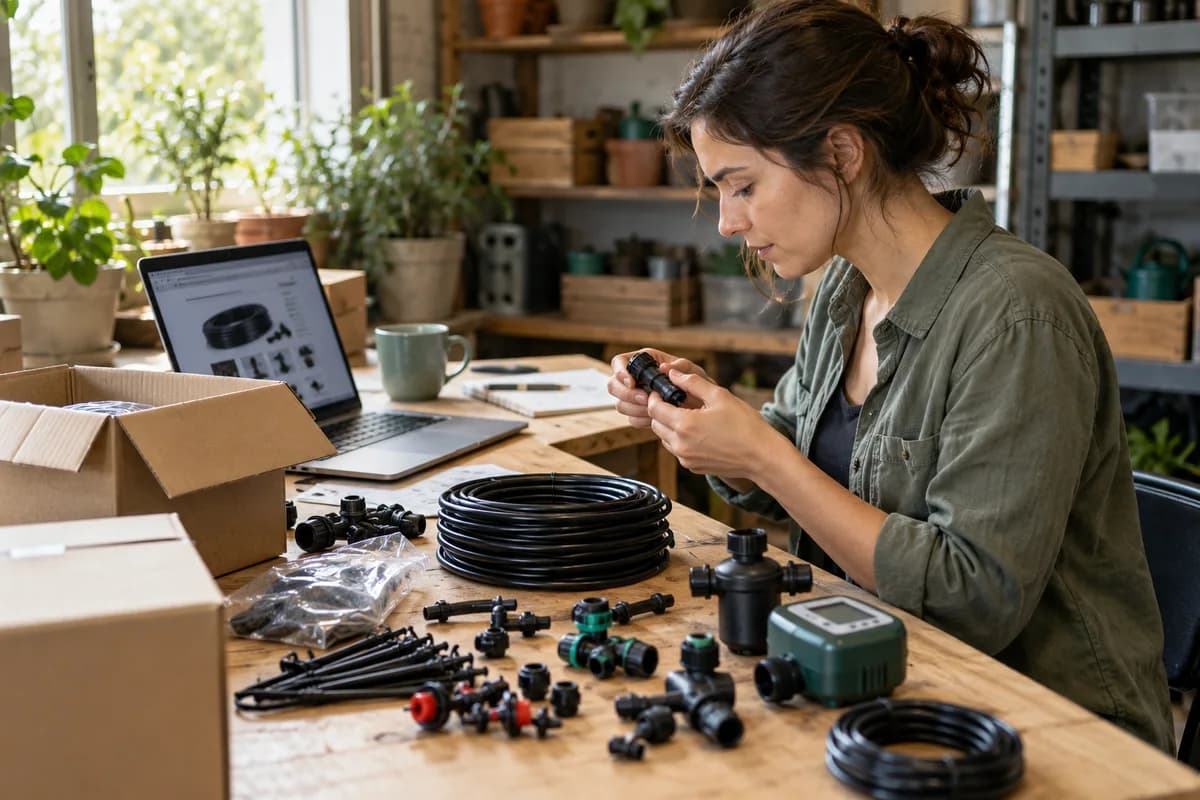
A loose part asks questions that a buyer standing in a garden with a dripping tap may not be able to answer. Is the thread male or female, and which standard? Is the pipe 13 mm or 16 mm across? Is the connector push-fit, barbed or compression? A wrong guess arrives as a return.
Kits suit the buyer who wants one answer
Most online buyers are watering a raised bed, a row of pots, a greenhouse bench or one corner of a lawn, and they want it done by Sunday. The kit turns an exam into a choice. Diagram and parts list do the rest.
Support questions fall because the timer, filter and pressure regulator were chosen to work together, and the pairing can be tested once on a bench. The catch is pressure. A drip kit built for a gentle supply blows its micro tubing off the barbs on a strong one unless it carries a regulator.
- Garden area the kit covers
- Water pressure range it is designed for
- Number of emitters or sprinklers and their flow rate
- Tap or hose connector included
- Timer or controller included, or not
- Spare fittings added for a typical layout
Loose parts win on repairs and unusual layouts
Repairs and extensions need single pieces. A buyer replacing a cracked elbow does not want a kit, and a gardener adding two emitters to a line does not either. Keen buyers like to cut exact lengths of pipe, run a spur to the greenhouse and add a second zone next spring, which a fixed kit rarely allows.
Freedom costs checks at the point of sale. Make the product page ask for the existing pipe diameter and thread before it lists compatible parts, and show a photo of each fitting beside a coin. Filters on both answers cut wrong fitting returns.
A kit is only as available as its scarcest part
A kit has no shelf of its own. It is a recipe. The number of kits you can sell equals the stock of the scarcest component divided by the quantity each kit uses. When the tee connectors run out, every kit that uses them goes dark, even with a warehouse full of pipe and timers.
Store the recipe as component codes and quantities. The shop can then work out how many kits the parts on the shelf will build, and hide the kit before it oversells.
Substitutes need a rule. A different make of emitter with the same flow rate may pass. A different thread never does. Note any swap on the packing slip so the customer and the returns desk know what was in the box.
Pick by the buyer, then sell both
Most sellers do best with a short run of kits for the common layouts and a full range of loose parts for repairs and expansions. Link the two. Each kit page lists its parts as loose products, and each part page shows which kits it appears in, so a kit buyer can add spares.
Track returns by reason for a quarter. Count wrong thread, wrong diameter, missing part and pressure fault as separate reasons, because each points at a different page or warehouse habit. Missing part means fix the kit recipe. Wrong thread means fix the fitting finder.
Your first step is simple. List the five most returned fittings and add a thread and diameter question to each product page.
Kit versus loose parts decision sheet
Single page, two columns: kit and loose parts. Rows cover garden area, water pressure, pipe diameter, thread type, listed components, scarcest component, substitute rule, return reason and repeat use. The last line names the decision for each product line and its owner.
Open a blank worksheet to printQuestions owners ask
Should an irrigation kit be one product or a bundle of parts?
Sell it as one product. Behind the page, record it as a list of component codes and quantities, so the shop can calculate how many kits the parts on hand will build.
How do I stop wrong fitting returns?
Ask for the pipe diameter and thread before showing parts, add a measured photo of each fitting and list compatible parts on the page. Review returns by reason each quarter. The pattern shows which products still confuse buyers.
What water pressure details should a kit page show?
State the pressure range the kit is designed for and say whether a regulator and filter come in the box. Buyers on a gravity-fed tank or a very strong mains supply need their own line, with a suggested fix such as a booster pump or a regulator.
Can a kit use a substitute part when one runs out?
Yes, with a rule set first. Same thread, same diameter, same flow rate. Record the swap on the packing slip and on the order, so support and the returns desk see exactly what shipped.