In this guide 6 sections
A heat is one numbered melt. The mill certificate records that heat’s chemistry and mechanical test results, and together the two tie raw plate to cut parts and welded assemblies on the job record. Keep both on file. Customers will ask for them.
What a heat number is
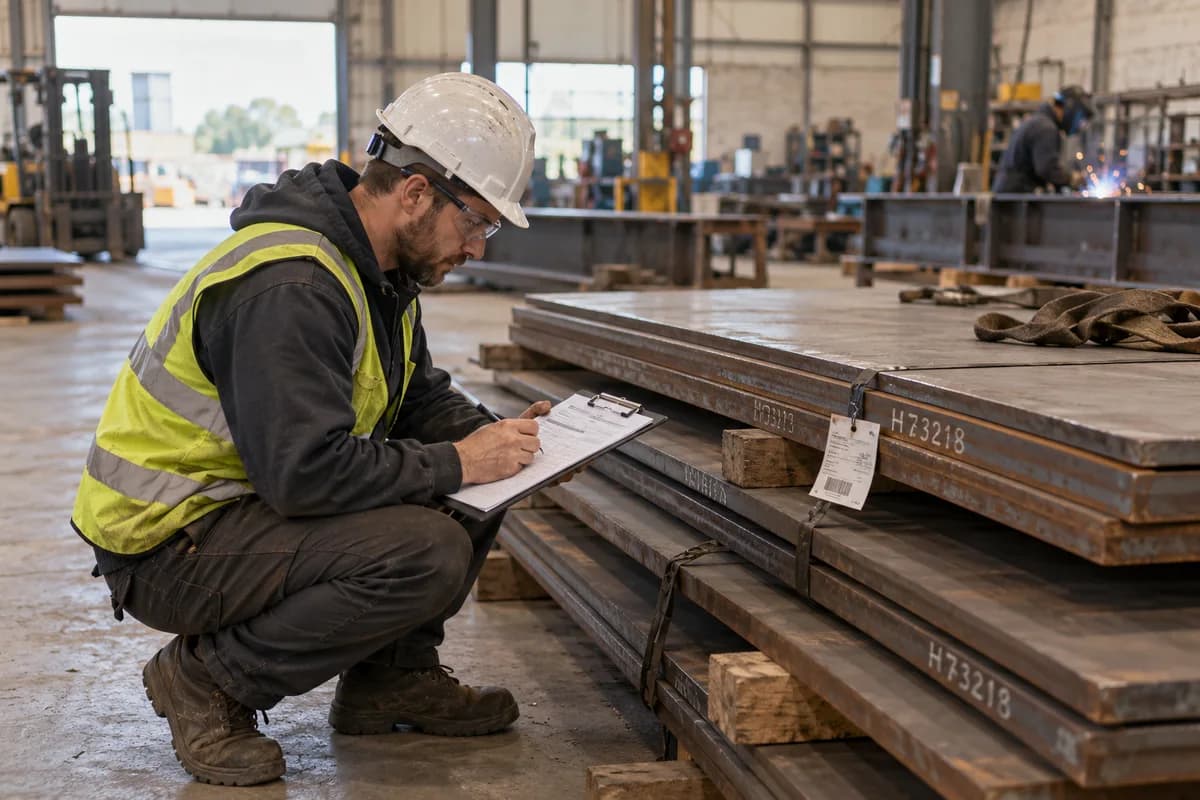
A mill melts steel in batches. Each batch is a heat, and every plate, bar, tube or coil rolled from it carries the number, stamped or painted on the material or printed on its tag.
Treat it as a birth record. All the pieces from one heat share a chemistry and a rolling history, while a different heat can differ slightly, even within the same grade. Check each piece. One delivery can hold several heats, which is why the number is read from each piece and never copied from the delivery note.
That is why the number matters. It is the only link between a finished part and the material it came from, and once the stamp is cut away the link is gone for good.
What a mill certificate shows
Some call it a mill test report. The certificate is the mill’s statement about one heat, listing the grade, chemistry such as carbon, manganese and chromium, and mechanical results such as yield and tensile strength.
Most certificates also name the standard the steel was made to, the product size and the mill, and some add heat treatment and impact test data. A certificate to EN 10204 type 3.1 is validated by a representative the mill authorises, which is why many structural and pressure buyers ask for that type.
Read it on receipt. Check that the grade and size match your purchase order, and that the heat number printed on the certificate is the one stamped on the plate.
- Heat number and grade
- Chemical composition
- Yield, tensile and elongation
- Standard and product size
- Mill name and certificate date
How the heat number follows the steel through the shop
Receiving comes first. Log the heat number from the material, match it to its certificate, give the lot a stores location, and if the number is missing ask the supplier before cutting. Store each heat in its own rack position, since mixing two heats on one shelf invites the wrong certificate being filed against the plate a fitter pulls next week.
Cutting is where traceability usually breaks. When a sheet becomes forty parts the stamp is cut away, so mark or tag each part with its heat, or record it against the nest and travel card.
Assembly closes the chain. Record which heat went into which welded unit, with the weld map number, so the final drawing and every certificate can be matched years later during an audit.
- Receipt log with heat and location
- Heat carried onto each nest
- Part marking or tag on cut pieces
- Heat list per finished assembly
What customers ask for in a documentation pack
Some customers want a dossier. Structural, pressure and food-equipment buyers often ask for the material certificates, welder qualifications, weld maps, inspection reports and the drawing revision, all bound to one job number.
Loose paper makes a pack take days. When the job record already links each heat number to its certificate and its welded assembly, the same pack is printed in minutes, with no search through drawers.
A missing certificate is the usual snag. A customer may refuse a whole lot that cannot show where its steel came from, even when the steel itself is perfectly sound.
What to keep on the job record
Store the certificate as a scanned file attached to the heat number, and link the heat to every job that consumed it. Note the quantity drawn by each job, because one heat of plate often feeds several jobs and the remainder must stay traceable in stores.
Retention periods vary. Keep the records for as long as your customer contracts and any applicable standards require, and read your own contracts rather than guessing from what another shop does.
Start with one live job. Trace a finished part back through the nest and the receipt log to its certificate, and write down every step where the heat number could not be read.
Heat number trace sheet
Use one sheet per job. The columns are material description, grade, heat number, certificate reference, quantity received, quantity used, nest number, part marking method and assembly number. A footer block lists each documentation item the customer requires, from welder qualifications to weld maps, and a tick box shows when it has been filed.
Open a blank worksheet to printQuestions owners ask
Is a heat number the same as a batch number?
Not the same. A heat number comes from the mill’s melt, while a batch or lot number may be a supplier’s own grouping that can include several heats.
What if the heat number is missing from the steel?
Ask the supplier to confirm it. Their delivery records and the original bundle tag should settle the number before cutting starts, because without it you cannot link the steel to a certificate.
Do I need a certificate for every job?
Not always. Many general jobs do not need one, but structural, pressure, food and defence work often does, so check the customer’s order terms at the quoting stage.
How do I keep the heat number after cutting?
Pick one method. Stamp or paint-pen the heat onto each part, attach a tag, or record the parts against the nest cut from that heat, then write the method into the procedure.