In this guide 7 sections
A service report should record the site, date and technician, the pests found and where, and the treatment given. Add chemicals with quantities, photos, advice, the next visit date and the customer’s sign-off. Keep it short enough to finish on site.
Why the report matters
The report is proof that a visit happened and what it did. Hotels, hospitals and food businesses ask for it during their own audits. For the owner, it links each visit to a contract, a technician and stock use.
A good report is short. If it takes ten minutes to fill, technicians will skip fields.
The header: who, where, when
Put the job number, customer, site address, date and time in and out, and technician name at the top. Add the contract number if the visit is part of an AMC, with the visit count such as four of twelve.
These fields let the office match the report to the invoice and the schedule without a phone call.
- Job and contract number
- Customer, site and contact person
- Date, arrival and departure time
- Technician and supervisor
- Visit type: routine, complaint or follow-up
Findings and treatment
Record what the technician found: pest type, locations, level of activity. Use plain terms and areas, such as kitchen drain, store corner or false ceiling.
Then record the treatment: method, areas treated, product name and quantity used. Quantity matters for stock control and for questions later. Follow the rules your state sets for recording chemical use and check them with the relevant department.
Photos, advice and next visit
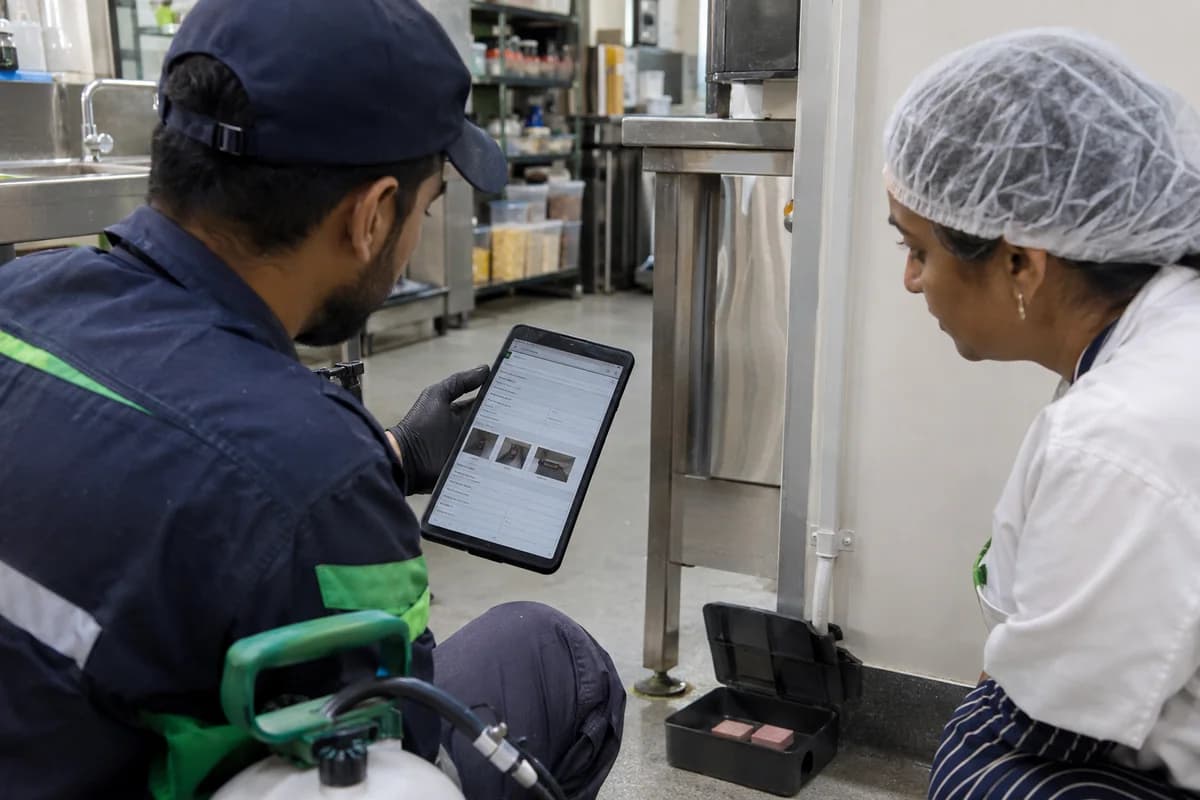
A photo of a bait station, a glue board or an entry point does more than a paragraph. Take two or three per visit and attach them to the report.
Add advice for the customer in one or two lines: seal a gap, fix a leaking tap, store grain in closed bins. Close with the date or window of the next visit.
Sign-off and storage
Ask the customer or site contact to sign on the phone or paper. Add their name. If nobody is available, note it and send the report by message afterwards.
Store reports against the site so a repeat complaint can be checked against earlier visits. Software that opens a work order, takes the entries and photos on the technician’s phone, and sends the report to the customer removes the double entry.
Put the advice to work.
Use a test copy or fictional example to turn the discussion into something your team can check.
Why the report matters
What does one row mean before totals are combined?
Choose one period in “Why the report matters” and compare it with the source records. Define the date basis and grouping before accepting a total that combines several kinds of entry.
Background reading: Microsoft: reporting grain and relationships
Service report template
A one-page form with five blocks. The first holds job details and times. The second lists findings by area and pest. The third records treatment, products and quantities. The fourth holds photo references and customer advice. The last carries the next visit date, technician signature and customer signature with name.
Open a blank worksheet to printQuestions owners ask
Should every visit have a report?
Yes, including routine AMC visits. The report is the evidence that the visit took place.
How much detail is enough?
Enough to answer three questions later: what was found, what was done and what was used. Anything beyond that slows the technician down.
Can reports be digital?
Yes. A phone form with photos and an on-screen signature works well and reaches the customer immediately.
Who keeps the reports?
The company keeps its copy against the site and contract, and the customer keeps theirs. Retention periods are best confirmed with your accountant and lawyer.