In this guide 6 sections
Clear five things before a machine leaves the yard. Haul permits for the route, a named operator with the right ticket, a matched trailer, a fuel and service check, and insurance with an inspection sign-off. Record each against the unit.
Start with the route and the permits
A tracked excavator or a motor grader is usually an oversize load on a public road. Check axle weights, overall width and every bridge on the route before anyone books a truck. Do that first, before quoting the client a start date.
Escort vehicles, night-only movement and police notice can all attach to the permit, and each one takes days to arrange. Put the permit number and expiry date on the unit’s record, not in a coordinator’s inbox.
The site end needs its own paperwork. Ask for gate hours, the access road surface and the induction slot. Find out who signs the machine in.
- Oversize or overweight haul permit with expiry date
- Escort and traffic control arrangements
- Route survey for bridges, overhead lines and tight turns
- Site induction booking and gate hours
- Landowner or client access letter
Assign the operator before the machine moves
A machine that arrives without its operator sits idle on the client’s clock. Name the operator, a relief operator and the banksman for the first week.
Check the licence or competency card against the machine type, because a person certified on a backhoe loader is not automatically cleared for a crawler crane. Note the card number and renewal month.
Confirm the operator knows the site hazards, such as buried services, overhead lines and soft ground. Hand over the lift plan or excavation plan if the job has one.
Match the transport to the machine
Read the shipping weight off the data plate, then compare it with the trailer rating. Low-loaders, extendable trailers and drop-deck rigs suit different machines, and buckets, breakers and augers often travel on a second truck.
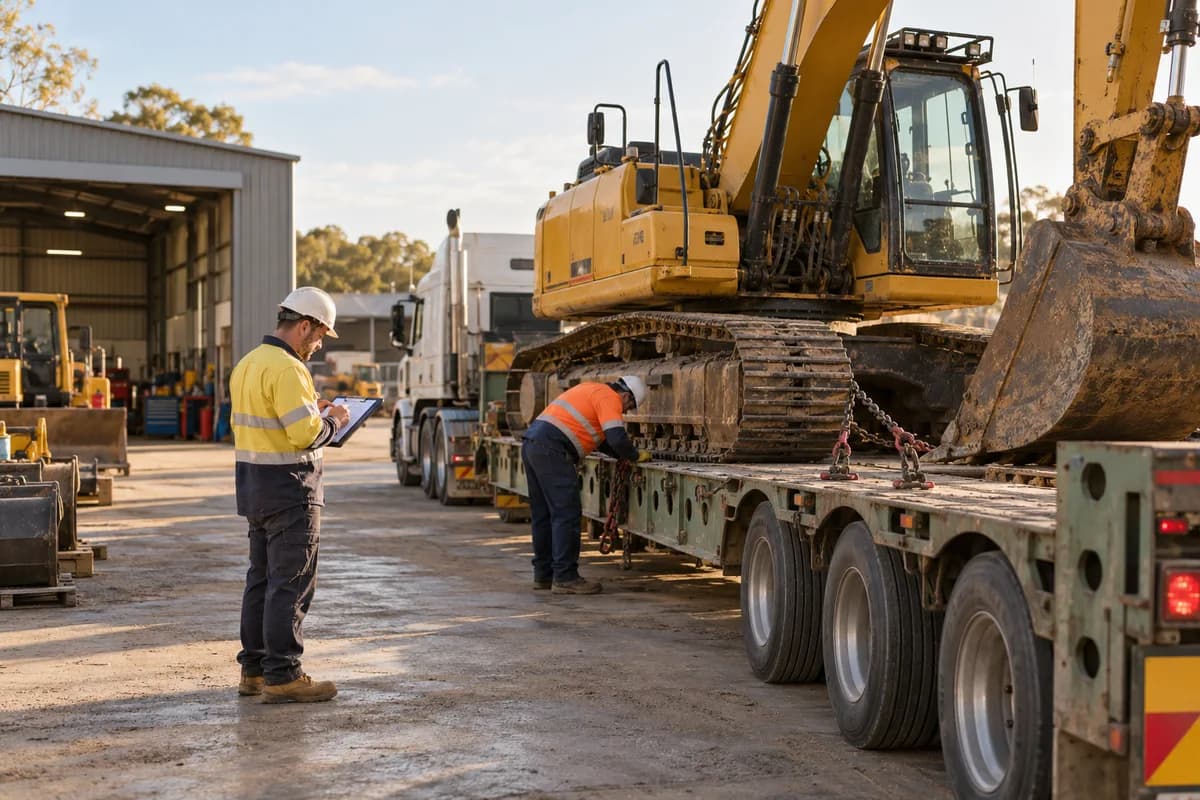
Plan the loading ramp and the lashing points. Damage during loading is common and hard to prove later, so photograph all four sides, the cab and the tracks or tyres before the chains go on.
Write pickup time, driver name and plate number on the move order. Ask the driver to message on arrival. No message, no unloading crew.
- Trailer type and rated payload
- Attachments and spare parts loaded with the unit
- Photos of condition at departure
- Driver, vehicle plate and expected arrival time
Check fuel, service and condition at the yard
Read the hour meter and record it. That reading starts the clock. It sets the next service and any charge to the job.
Look at the service sticker. If a 500 hour service falls due in the first month on site, do it in the yard, where the workshop and the parts are. Check grease points, hydraulic hose wear, track tension and the cutting edge.
Then fill the tank and plan fuel for the site, whether a bowser or drums. A machine stranded without diesel on the first morning wastes the whole haul.
Close insurance and inspection before release
Check that the policy covers the new site, the haul and any hire-in period. Contractors’ plant cover often names a location or a project, so a change of site may need notice to the insurer.
Run a pre-start inspection on a signed form and keep it against the unit with the hour reading, photos and permit. One rule works well: no signature in any box, no movement.
After arrival, repeat the walk-round with the site supervisor and file both forms. That single record settles most damage disputes.
Machine mobilisation release sheet
One sheet lists each machine on its own row, with five blocks across: permits, operator, transport, condition and insurance. Each block has a tick box, an owner, a date and a document number. The last column holds the release signature, the departure hour meter reading and the arrival reading.
Open a blank worksheet to printQuestions owners ask
How early should mobilisation planning start?
Start with the haul permit, since escorts and route approvals take the longest. Operator assignment and insurance notice come next. The condition check can wait until the week of the move.
Who signs a machine out of the yard?
Name one person, usually the plant or workshop manager. The project manager separately confirms the site is ready. Two signatures stop a machine leaving with a missing permit or an unserviced engine.
What should be photographed before loading?
All four sides, the cab interior, the hour meter, the tracks or tyres, the bucket teeth or cutting edge and any existing damage. Date-stamped photos filed against the unit settle later arguments about who caused a dent.
Can software hold this checklist?
Yes. Equipment records can carry permit expiry, operator tickets, service due hours and insurance dates per unit, then warn the planner when any of them blocks a move.