In this guide 6 sections
Buyers want a trail they can follow from the shawl in their hand back to the fibre. That means the fibre source, the artisan or workshop, the lot, the dates and any GI label or tag attached. Software ties those records to one piece, so you can produce them on request.
Why buyers ask for more than a label
Kashmir pashmina and Kani shawls carry a reputation, and plenty of imitations exist. A buyer in Europe or the Gulf cannot judge fibre by touch from another continent. So the buyer asks for paper.
The question underneath is simple. Can you show that this piece is what you say it is? A label alone is a claim. A record behind the label is evidence. Importers often send a questionnaire before the first order, and the same questions return with each reorder.
This article describes the records buyers commonly ask for. It does not advise on certification, which is decided by the relevant authorities and your own advisers.
Fibre source comes first
Pashmina begins as fine undercoat from Changthangi goats in Ladakh. Traders buy it raw or as dehaired fibre, and it moves through hands before it reaches a spinner. Buyers ask where your lot came from and when you took delivery.
Write down the supplier, the invoice, the weight received and the date at the moment of purchase. If the fibre is tested, attach the test report to the same lot.
Without that first entry, every later record rests on memory. Dyed lots deserve the same care, because shade differences between lots show up in a shipment.
- Supplier name and invoice copy
- Weight and date received
- Lot number you assign on arrival
- Test report, where one was made
Artisan, workshop and stage records
A hand-spun, hand-woven shawl passes through spinners, weavers, dyers and sometimes embroiderers. A Kani piece may be woven by a team on a single frame over many months. Buyers who pay for handwork ask who did it and where.
Keep a record for each piece naming the artisan or workshop, the village or locality, and the dates the work was handed over and returned. For a team, list the lead weaver and the number of people. Add a line for the washing and finishing unit, since a piece often changes hands there last.
Do not try to remember this at shipping time. Capture it when the piece changes hands, using a short slip.
GI labelling and how the tag meets the record
Pashmina and Kani shawls from Kashmir are covered by geographical indication registration. Qualifying pieces may carry a GI mark or tag issued through the official process. Each tag has its own number or code.
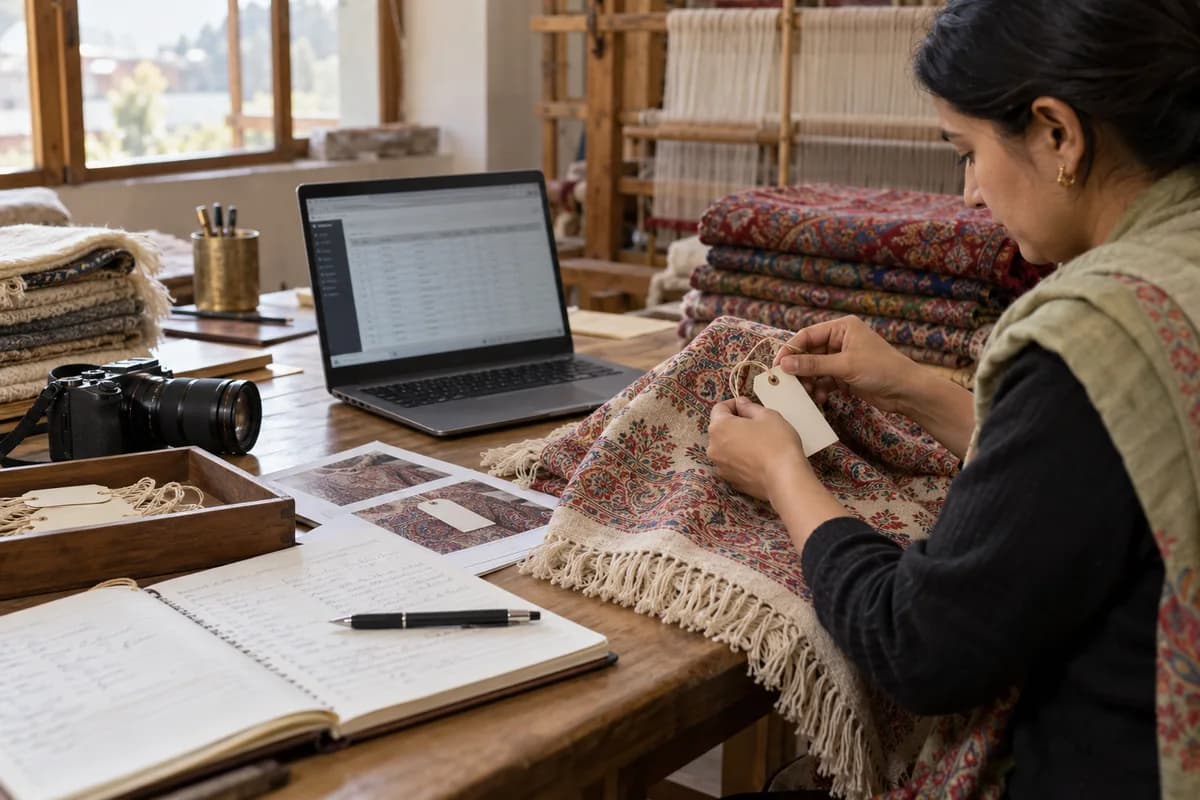
The risk is a tag detached from its story. If you hold fifty tags and fifty shawls, which goes on which? Record the tag number against the piece the day it is attached, with the date and the person who did it.
A buyer who scans or reads the tag number should reach the same piece in your records. That match is what makes the trail believable.
- Tag or label number per piece
- Date attached and by whom
- Photo of the piece with the tag in place
- Lot and artisan linked to the same entry
Let software hold the trail so you can produce it fast
A spreadsheet can start the job. It breaks when the same shawl appears in three files under three names. Software lets you give each piece one identity, then attach fibre lot, artisan, stages, tag and photos to it.
When a buyer asks, you export one sheet for the order. Each row is a piece, with its trail. That takes minutes instead of days, and it looks like a business that knows its goods.
Start small. Take the next order and record the trail for those pieces only. Then see which fields your buyer actually used. Keep the exported sheet with the order file, so a reorder starts from known records.
Shawl origin record sheet
A single printed page, one row per piece. Columns are piece number, design, fibre supplier and lot, weight received, artisan or workshop, locality, date out, date back, finishing date, tag number, photo reference and the export order. A note box at the foot lists any test report and who signed the entry.
Open a blank worksheet to printQuestions owners ask
Does software make a shawl certified?
No. Certification and GI rights are matters for the authorities and your advisers. Software only keeps your own records in order, so you can show them when asked.
Which records do buyers ask for most?
Fibre source, who made the piece and the lot or batch it came from are the usual three. Buyers who care about labelling also ask for the tag number and a photograph. Some also ask how long the piece took to make.
Can I add records for shawls I have already made?
Yes, as far as you have the facts. Mark such entries as added later and leave unknown fields blank. Do not fill gaps with guesses, because a wrong record is worse than a missing one.
Who should be allowed to edit these records?
Few people. Let the store keeper add fibre lots and the finishing team add tags, and keep a log of every change. An origin record that anyone can rewrite proves little.